
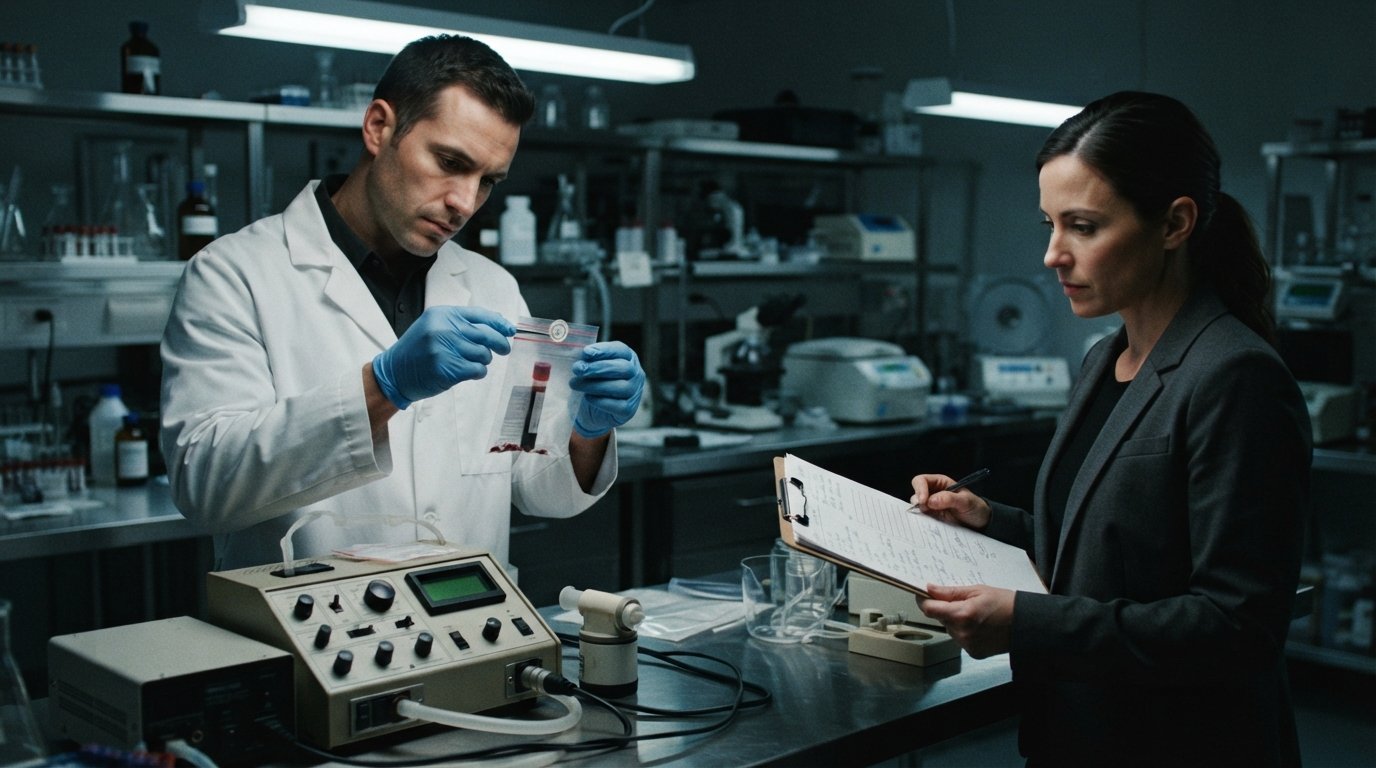
Challenging Breathalyzer Calibration and Blood Test Chain of Custody in DUI Cases
Facing DUI charges? Challenging breathalyzer calibration and blood test chain of custody can expose weaknesses in the prosecution's case. Call 8555452917 for a free evaluation.

By Draven Nyro
When you are arrested for driving under the influence (DUI), the prosecution's case often rests on chemical test results. A breathalyzer reading or a blood alcohol concentration (BAC) number can feel like an unshakable fact. But these tests are not infallible. They are performed by humans, using machines that require regular calibration and maintenance, and blood samples that must be handled with strict adherence to a documented chain of custody. Challenging breathalyzer calibration and blood test chain of custody in DUI cases is a core defense strategy that can expose weaknesses in the government's evidence. If you are facing DUI charges, understanding how these challenges work can help you protect your rights and explore every possible defense. This article explains the science, the legal standards, and the practical steps involved in questioning the reliability of breath and blood evidence.
The Science Behind Breathalyzer Calibration and Its Flaws
Breathalyzer devices estimate blood alcohol concentration by measuring the amount of alcohol in a breath sample. Most use infrared spectroscopy or fuel cell sensors to detect ethanol. For the result to be accurate, the device must be properly calibrated. Calibration is the process of adjusting the machine so that its readings match a known alcohol standard. Law enforcement agencies are supposed to follow manufacturer guidelines and state regulations for how often calibration occurs, typically every 30 to 90 days, depending on the jurisdiction. They must also keep detailed logs of calibration, maintenance, and repairs. When these logs are missing, incomplete, or show that the device was out of calibration, the breath test result may be inadmissible in court.
Even with perfect calibration, breath testing has inherent limitations. The machine assumes a fixed ratio between breath alcohol and blood alcohol, but that ratio varies from person to person. Body temperature, breathing patterns, mouth alcohol from recent drinking or even mouthwash, and environmental factors like radio frequency interference can skew results. Certain medical conditions such as acid reflux or diabetes can also produce misleading readings. A skilled DUI attorney will scrutinize the calibration records and the specific circumstances of your test to challenge the reliability of the breathalyzer result.
In many states, you have the right to obtain the calibration and maintenance records for the breathalyzer used in your case through a process called discovery. If the records are not produced, or if they reveal that the machine was not calibrated within the required time frame, your attorney can file a motion to suppress the breath test evidence. This motion asks the judge to exclude the result from trial because it is unreliable. Successfully suppressing the breath test can significantly weaken the prosecution's case, sometimes leading to a reduction or dismissal of charges.
Blood Test Chain of Custody: Why Every Link Matters
Blood tests are often considered more accurate than breath tests, but they are equally vulnerable to error if the chain of custody is broken. Chain of custody is the documented chronological history of the collection, transfer, analysis, and storage of a biological sample. It is a legal safeguard designed to ensure that the blood sample tested is the same one drawn from the defendant, and that it has not been tampered with, contaminated, or mislabeled. Every person who handles the sample must record their name, the date and time of transfer, and the purpose of the transfer. Any gap in this documentation can create reasonable doubt about the integrity of the sample.
Challenging the chain of custody involves identifying missing signatures, unexplained time gaps, improper storage temperatures, or violations of standard operating procedures. For example, if a phlebotomist drew your blood but the sample sat at room temperature for several hours before being refrigerated, fermentation could occur, artificially raising the alcohol level. If the vial was not properly sealed or labeled with your name and the date, it could be confused with another sample. If the laboratory technician who analyzed the blood cannot testify about how the sample was handled before it reached their bench, the defense can argue that the result is unreliable.
To successfully challenge the chain of custody, your attorney may need to request all related documentation, including police reports, hospital records, laboratory intake forms, and courier logs. They may also depose or cross-examine the officers, medical personnel, and lab analysts involved. In some cases, an independent forensic expert can review the records and testify about how the mishandling of the sample could have affected the test result. Because the prosecution bears the burden of proving every element of the crime beyond a reasonable doubt, a broken chain of custody can be fatal to their case.
How to Challenge Breathalyzer Calibration: A Step-by-Step Framework
If you believe the breathalyzer result in your DUI case is inaccurate, your attorney can follow a structured approach to challenge it. The goal is to create a record that shows the machine was not functioning properly or that the test was not administered according to protocol. This framework can be adapted to the specific laws and procedures of your state, but it provides a general roadmap.
- Obtain calibration and maintenance records. Your attorney will file a discovery request for all records related to the breathalyzer device, including calibration logs, repair records, and the credentials of the officer who administered the test.
- Review the records for irregularities. Look for missed calibration dates, expired simulator solutions, or evidence that the machine was not serviced after a known malfunction. Even minor deviations from the required schedule can be grounds for a challenge.
- Investigate the testing environment. Radio frequency interference from police radios, cell phones, or other electronic devices can affect breathalyzer readings. Your attorney may ask the court to suppress the result if the testing area was not free from such interference.
- Question the officer's administration of the test. The officer must observe you for a specific period before testing to ensure you do not belch, vomit, or put anything in your mouth. If the officer failed to follow the required observation period, the result may be invalid.
- File a motion to suppress. If the evidence shows the breathalyzer was not properly calibrated or the test was not administered correctly, your attorney can ask the judge to exclude the result from trial.
Each of these steps requires careful attention to detail and a thorough understanding of the applicable regulations. An experienced DUI defense attorney will know exactly what to look for and how to present the strongest possible challenge. If you are searching for a qualified lawyer, resources like FormsByLawyers can connect you with legal professionals who specialize in DUI defense and understand the intricacies of chemical testing.
Challenging Blood Test Chain of Custody: Key Steps and Legal Standards
Challenging the chain of custody of a blood sample is a fact-intensive process. It requires a meticulous review of every document and every person who touched the sample. The legal standard for admissibility varies by jurisdiction, but generally, the prosecution must show that the sample is what it purports to be and that it has not been altered in any material way. If the chain of custody is incomplete, the judge may exclude the blood test result, or the jury may be instructed to give it less weight.
Your attorney will typically start by requesting the complete chain of custody form from the prosecution. This form should list every transfer of the sample, from the moment it was drawn to the moment it was tested. Missing entries, illegible signatures, or transfers that occurred without proper documentation are red flags. The attorney will also examine the lab's standard operating procedures to see if they were followed. For instance, if the lab requires samples to be refrigerated within a certain time frame, but the records show a delay, the defense can argue that the sample may have fermented, producing a falsely high BAC.
In addition to documentary evidence, your attorney may need to cross-examine the witnesses who handled the sample. This includes the phlebotomist, the arresting officer, the evidence technician, and the lab analyst. Inconsistencies in their testimony can create doubt about the sample's integrity. For example, if the officer says he sealed the vial and placed it in an evidence locker, but the lab technician testifies that the seal was already broken when the sample arrived, the chain of custody is compromised. Your attorney can use these inconsistencies to argue that the blood test result is unreliable and should be excluded.
In some cases, the defense may hire an independent forensic toxicologist to review the lab's procedures and the chain of custody documents. This expert can identify technical errors, such as improper calibration of the lab's gas chromatograph, or contamination during the analysis. Their testimony can be powerful, especially if they can show that the errors were significant enough to affect the reported BAC. Because blood test results often carry more weight with juries than breath test results, successfully challenging the chain of custody can be a game-changer in your DUI case.
Finding Experienced DUI Defense Representation
Challenging breathalyzer calibration and blood test chain of custody requires a deep understanding of both science and law. Not every attorney has the training or resources to effectively cross-examine lab analysts or interpret calibration logs. When you are facing DUI charges, you need a lawyer who has experience with chemical testing defenses and who is willing to invest the time and effort to scrutinize every piece of evidence. At CarInjuryAccident.com, we connect individuals with a network of seasoned attorneys who specialize in DUI defense and other legal areas. Our platform offers a free, confidential case evaluation with no obligation to hire. We are not a law firm and do not provide legal advice, but we can introduce you to participating attorneys who may be able to help.
If you are ready to explore your legal options, consider reaching out to a qualified DUI defense attorney as soon as possible. The sooner you act, the more time your lawyer has to investigate the calibration records, trace the chain of custody, and build a strong defense. Remember, the prosecution's case is only as strong as its evidence. By challenging the reliability of breath and blood tests, you can level the playing field and protect your future.