
Challenging Probable Cause for a DUI Traffic Stop
Challenging probable cause for a DUI traffic stop can suppress key evidence and weaken the prosecution's case. Call (855)-545-2917 to connect with a qualified DUI attorney today.

By Kaelis Arden
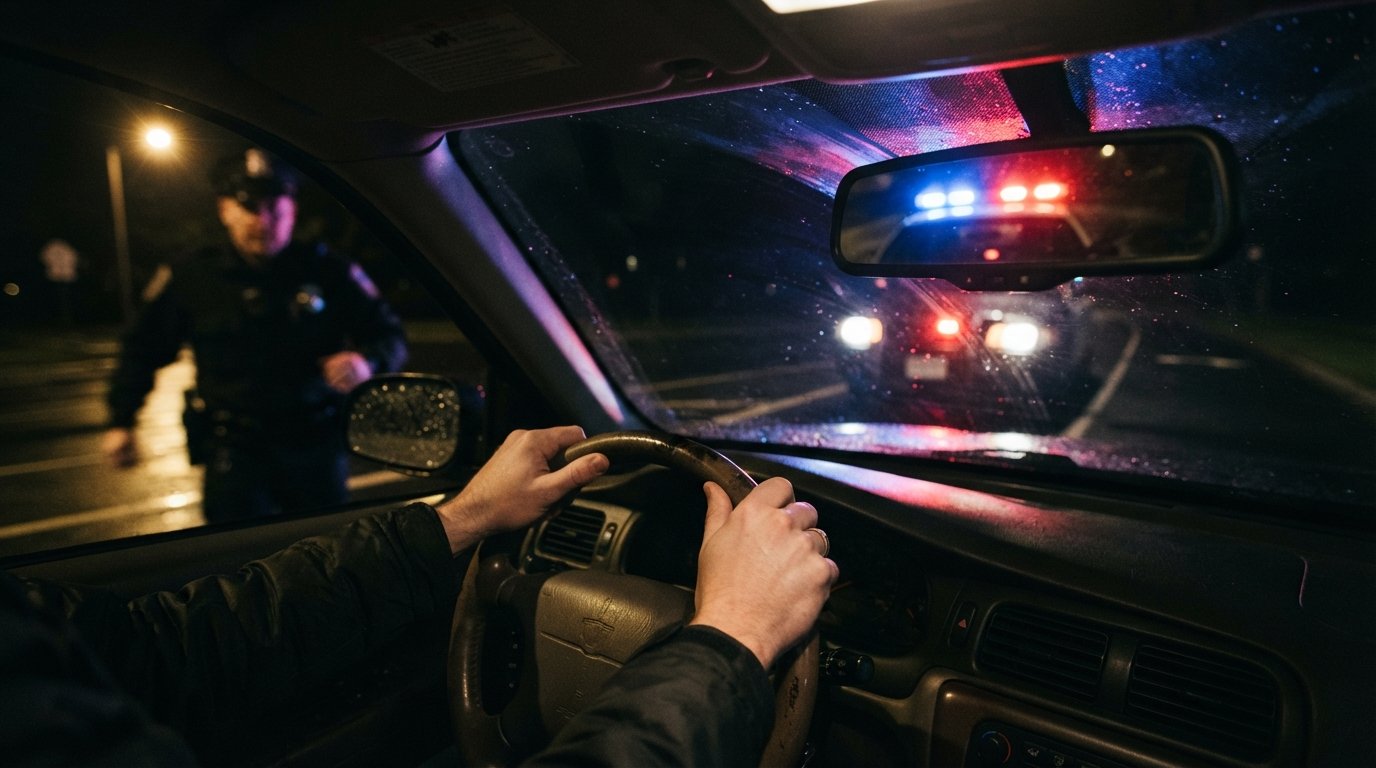
You see the flashing lights in your rearview mirror, and your heart sinks. The officer walks up, asks for your license and registration, and within minutes you are asked to step out of the car. Before you know it, you are facing a DUI charge. But what if the stop itself was never lawful in the first place? Challenging probable cause for a DUI traffic stop is often the most powerful defense available, and it can unravel the entire case against you. This article explains how courts evaluate the legality of a traffic stop, the common grounds officers cite, and how a skilled attorney can use suppression motions and video evidence to protect your rights.
Reasonable Suspicion and Probable Cause at a Traffic Stop
To understand how a DUI defense works, you first need to understand the legal standards that allow an officer to pull you over. The Fourth Amendment to the U.S. Constitution protects you from unreasonable searches and seizures. A traffic stop is considered a seizure, so it must be justified by a specific legal standard. In most cases, an officer needs reasonable suspicion that a traffic violation or criminal activity has occurred or is about to occur. Reasonable suspicion is a relatively low bar: the officer must point to specific, articulable facts, not just a hunch. For example, observing a car weaving across lane lines or running a red light can establish reasonable suspicion.
Once the vehicle is stopped, the officer may develop probable cause to arrest for DUI. Probable cause exists when the facts and circumstances would lead a reasonable person to believe that a crime has been committed. Signs such as slurred speech, the odor of alcohol, bloodshot eyes, and poor performance on field sobriety tests can build probable cause. The critical distinction is that the stop and the arrest are two separate events with two separate legal standards. Challenging probable cause for a DUI traffic stop often focuses on the initial stop, because if the stop was unlawful, everything that followed may be tainted.
Courts apply an objective standard when reviewing these issues. The officer's subjective intent does not matter; what matters is whether a reasonable officer, given the same facts, could have made the stop. This means that even if an officer was suspicious about something else, a minor traffic violation can justify the stop. However, the violation must actually be observed and must be valid under state law. A common defense strategy is to show that the alleged violation did not occur or that the officer misinterpreted the law.
Common Grounds Officers Cite for Traffic Stops
Officers rarely pull a driver over for no reason at all, but the reasons they cite are not always valid. Understanding the most common grounds for a traffic stop can help you spot weaknesses in the prosecution's case. Many DUI stops begin with a minor traffic infraction, such as a lane violation or an equipment issue, and the officer then uses that as a pretext to investigate for DUI. The legality of the stop depends on whether the infraction actually happened and whether the officer's interpretation of the law was correct.
Here are some of the most frequently cited grounds for a traffic stop in DUI cases:
- Lane violations: Weaving, drifting, or crossing the center line. Officers must be able to describe the specific movement and why it violated the law.
- Equipment issues: A broken taillight, expired registration, or a burned-out license plate lamp. These are common pretexts, but the equipment must actually be defective.
- Moving violations: Speeding, running a stop sign, or making an illegal turn. The officer's observation must be accurate and supported by evidence.
- Erratic driving: Sudden braking, driving too slowly, or almost hitting another vehicle. This can support reasonable suspicion, but it must be described with specificity.
- Tips or reports: A call from a concerned citizen reporting a drunk driver. The tip must be reliable enough to justify the stop.
Each of these grounds can be challenged. For example, if an officer claims you crossed the center line but dashcam footage shows you stayed within your lane, the stop may be invalid. Similarly, if the alleged equipment violation was not actually a violation under state law (for instance, a license plate lamp that is not required in your state), the stop could be unlawful. An experienced DUI attorney will scrutinize the officer's stated reason and compare it to the available evidence.
Reviewing Dashcam and Body Camera Footage
Video evidence has transformed DUI defense. Most patrol cars are equipped with dash cameras, and many officers wear body cameras. This footage can be the key to challenging probable cause for a DUI traffic stop. The video may show that the officer's description of your driving is inaccurate, that the stop was made without any observable violation, or that the officer's interaction with you was improper. It can also reveal whether you were actually exhibiting signs of impairment or whether the officer exaggerated them.
When reviewing footage, a defense attorney looks for several things. First, does the video corroborate the officer's report? If the officer claims you were weaving for several blocks but the video shows a single drift, that discrepancy matters. Second, does the video show any legal justification for the stop? If the officer pulled you over for a broken taillight, the video should show that the taillight was indeed broken. Third, does the footage capture the field sobriety tests and the arrest? Poorly administered tests or an officer's aggressive demeanor can undermine the prosecution's case. Finally, body camera footage may reveal statements by the officer that suggest the stop was pretextual or that the officer had already decided to arrest you before administering any tests.
In many jurisdictions, you have a right to obtain this footage through the discovery process. Your attorney can request all dashcam and body camera videos, radio transmissions, and dispatch records. If the footage is missing or was destroyed, that may also be a basis for a challenge. The sooner you involve a lawyer, the sooner the evidence can be preserved. Platforms like LawyerOffer can connect you with attorneys who understand how to obtain and analyze video evidence in DUI cases.
Suppression Motions and How They Affect the Case
If the stop was unlawful, the remedy is a motion to suppress. A suppression motion asks the judge to exclude evidence obtained as a result of the illegal stop. This includes the officer's observations, the results of field sobriety tests, breath or blood test results, and any statements you made. If the motion succeeds, the prosecution may have little or no evidence left to prove its case, which often leads to a dismissal or a favorable plea bargain.
The process for filing a suppression motion generally follows these steps:
- Investigation: Your attorney reviews the police report, video footage, and any other evidence to identify potential Fourth Amendment violations.
- Filing the motion: Your attorney files a written motion with the court, arguing that the stop was not supported by reasonable suspicion or probable cause.
- Evidentiary hearing: The judge holds a hearing where the officer testifies and your attorney cross-examines the officer. Video evidence is often presented.
- Ruling: The judge decides whether the stop was lawful. If not, the evidence is suppressed.
Suppression motions are not guaranteed to succeed, but they are one of the most effective tools in DUI defense. Even if the motion is denied, the hearing can expose weaknesses in the officer's testimony and create a record for appeal. Moreover, the mere filing of a suppression motion can pressure the prosecution to offer a better plea deal. It is important to have an attorney who understands the nuances of your state's DUI laws and Fourth Amendment jurisprudence.
Why the Stop's Legality Can Change the Entire Outcome
The legality of the initial stop is often the linchpin of a DUI case. If the stop was unlawful, everything that follows is fruit of the poisonous tree. This legal doctrine means that evidence obtained as a direct result of an illegal stop is inadmissible. Without that evidence, the prosecution may be unable to prove that you were driving under the influence. For example, if the officer had no valid reason to pull you over, the odor of alcohol and your performance on field sobriety tests cannot be used against you. Your attorney can argue that the arrest was unlawful and that the charges should be dismissed.
Even if the stop was lawful, challenging probable cause for a DUI traffic stop can extend to the arrest itself. An officer must have probable cause to believe you were driving under the influence before arresting you. If the officer arrested you based solely on the odor of alcohol and without conducting proper field sobriety tests, the arrest may lack probable cause. Similarly, if the officer administered the tests improperly or the results are unreliable, the probable cause may be undermined. A skilled attorney will examine every stage of the encounter to identify constitutional violations.
The outcome of a DUI case can also be affected by the stop's legality in less obvious ways. For instance, if the stop was prolonged beyond its original purpose, the officer may have violated your rights. An officer cannot extend a traffic stop for an unreasonable amount of time to investigate for DUI without reasonable suspicion. If the officer kept you on the side of the road for an extended period without justification, any evidence obtained during that time may be suppressed. These are complex legal issues that require careful analysis of the facts and the law.
Building a Strong Defense with Legal Representation
Challenging probable cause for a DUI traffic stop is not something you should attempt on your own. The legal standards are nuanced, and the stakes are high. A conviction can result in license suspension, fines, jail time, and a permanent criminal record. An experienced DUI attorney can evaluate the facts, obtain evidence, file suppression motions, and negotiate with prosecutors. If you are facing a DUI charge, it is in your best interest to consult with a lawyer as soon as possible.
When choosing an attorney, look for someone who focuses on DUI defense and has experience with suppression motions. Ask about their track record and their approach to challenging traffic stops. Many attorneys offer free consultations, so you can discuss your case without obligation. CarInjuryAccident.com can help you find qualified DUI attorneys in your area. Their platform connects you with seasoned legal professionals who understand the complexities of DUI defense and are committed to protecting your rights.
Remember that time is of the essence. Evidence such as video footage can be overwritten or lost, and witnesses may become unavailable. The sooner you act, the better your chances of a favorable outcome. Whether you are facing a first offense or a more serious charge, the legality of the traffic stop is a critical issue that should be thoroughly investigated.
Facing a DUI charge can feel overwhelming, but you have rights and options. By understanding how courts evaluate probable cause and by working with a knowledgeable attorney, you can challenge the stop and protect your future. Do not wait to seek legal guidance; the earlier you act, the stronger your defense will be.