
Diminished Value Claim After Car Accident Repair
Recover the lost resale value of your repaired vehicle. Call (855)-545-2917 for a free case review and pursue your diminished value claim after car accident repair.

By Aelira Voss
Your car has been repaired after a collision, and the body shop did excellent work. The paint matches, the panels align, and it drives like it did before the crash. So why is the resale value thousands of dollars lower than it was a month ago? That gap is called diminished value, and in many states you can file a diminished value claim after car accident repair to recover it. Insurers rarely volunteer this information, and some actively discourage policyholders from pursuing it. Understanding how diminished value works, who qualifies, and how to document your loss can mean the difference between accepting a lowball offer and recovering the money your vehicle actually lost.
What Diminished Value Means After a Repair
Diminished value is the difference between what your vehicle was worth immediately before the accident and what it is worth after it has been repaired. Even a flawless repair cannot erase the vehicle's history. A Carfax or AutoCheck report will show the collision, and future buyers, dealers, and appraisers will discount the price accordingly. That discount is a real financial loss, not a hypothetical one, and it exists the moment the repair is complete.
There are three generally recognized categories of diminished value. Immediate or inherent diminished value is the loss that exists simply because the vehicle now has an accident history, regardless of how well it was fixed. Repair-related diminished value arises when the quality of the repair itself is questioned, for example if aftermarket parts were used or structural work was performed. Finally, there is a broader claim for lost use or loss of use, which compensates you for the time your vehicle was unavailable. Most diminished value claims focus on the first category, inherent diminished value, because it applies to virtually every vehicle involved in a significant collision.
The amount of diminished value varies widely. A late-model luxury SUV with a $20,000 repair might lose 15 to 25 percent of its pre-accident value, while an older economy car with minor cosmetic damage might lose very little. The severity of the damage, the age and mileage of the vehicle, the market demand for that make and model, and the quality of the repair all factor into the final number. This is why a generic formula offered by an insurance adjuster is rarely accurate and why an independent appraisal matters.
Which States Allow Diminished Value Claims
Diminished value law is state-specific, and the rules fall into a few broad categories. Some states explicitly recognize diminished value as recoverable damages in third-party claims, meaning you can pursue the at-fault driver's insurer for the loss. Georgia is the most well-known example because its courts and insurance regulations have established clear frameworks for pursuing diminished value, including a commonly cited formula. Other states recognize the claim through case law rather than statute, and a few states have statutes that limit or bar first-party diminished value claims under certain policy language.
A handful of states, including some with heavily regulated insurance markets, make it difficult to recover diminished value from your own insurer under a first-party collision claim. In those states, the claim may still be viable against the at-fault party in a third-party liability claim, depending on how the courts have interpreted damages. Because the rules vary so much, the first step for any vehicle owner is to confirm the specific diminished value rules in their state before investing time and money in an appraisal.
This is also where experienced legal guidance can save you from wasted effort. A local attorney who handles property damage and personal injury claims will know whether your state recognizes diminished value, whether first-party claims are viable, and what evidence the courts and insurers expect. If you are unsure where to start, a free case evaluation through a platform like CarInjuryAccident can connect you with a participating attorney in your state who handles these claims regularly.
First-Party Versus Third-Party Diminished Value Claims
Understanding the difference between first-party and third-party claims is essential because the two paths have different rules, different leverage, and different timelines. A first-party claim is made against your own insurance company, typically under your collision coverage. You pay your deductible, your insurer pays for the repair, and then you ask them to also compensate you for the diminished value of the vehicle. The challenge is that many policies contain language that limits what the insurer owes for property damage, and some insurers argue that paying for the repair fully satisfies their obligation.
A third-party claim is made against the at-fault driver's liability insurer. In this scenario, you are not bound by your own policy's limitations. Instead, you are claiming damages caused by their insured, and diminished value is one component of those damages alongside the repair cost, rental reimbursement, and any personal injury claim. Third-party claims are generally stronger for diminished value because liability insurers are responsible for all damages their insured caused, and courts in many states have recognized diminished value as a legitimate element of those damages.
The practical difference matters. If your own insurer denies a first-party diminished value claim, you may still have a third-party claim against the at-fault driver. Conversely, if the at-fault driver is uninsured or underinsured, your own policy's uninsured motorist coverage or collision coverage may be your only route, and the policy language will control. Before accepting any settlement, review which claim path you are on and whether releasing one claim could affect the other.
Does a Repair Payout Waive Your Diminished Value Rights?
One of the most common traps in diminished value claims is settlement language. When an insurer pays for your repair, they often ask you to sign a release or a proof of loss form. Some of these documents contain broad language stating that the payment settles all claims related to the accident, including property damage. If you sign that release without reserving your diminished value claim, you may unintentionally waive your right to pursue the lost value later.
The key is to read every document carefully and to avoid signing a full release until you have resolved all parts of your claim. If the insurer pressures you to sign quickly, you can ask for the language to be modified to expressly reserve your right to pursue diminished value. In many cases, the repair payment itself is not the issue; the issue is the release language that accompanies it. A short written reservation of rights, or a conversation with an attorney before signing, can preserve your claim.
There is another wrinkle: some insurers include language in the repair estimate or payment letter stating that the payment is for the repair only and does not include diminished value. That language actually helps you, because it acknowledges that diminished value is a separate item. The danger is the opposite situation, where a general release is slipped into the paperwork. If you are unsure whether a document waives your rights, do not sign it until you have reviewed it with a legal professional.
Independent Appraisal Reports and Valuation Methods
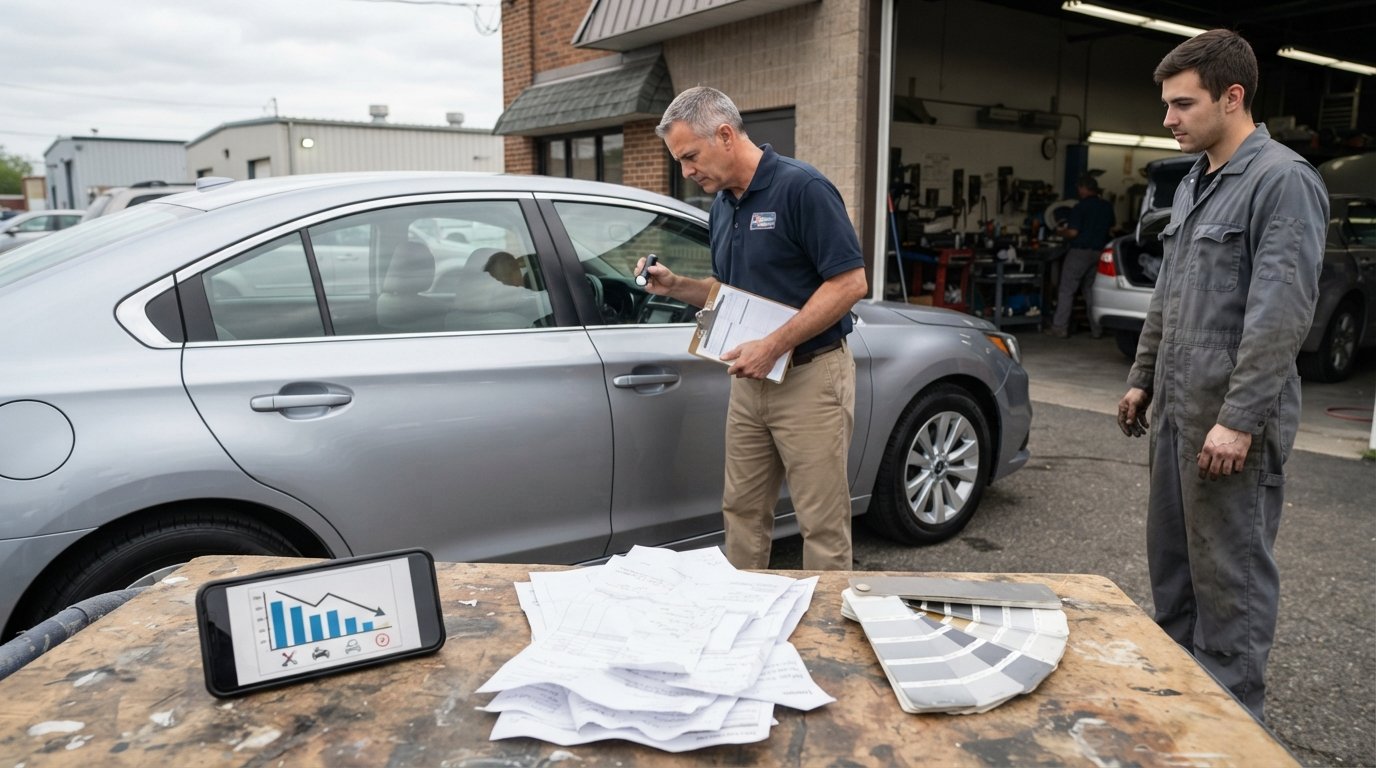
Insurers often calculate diminished value using a formula that favors them, and they may offer a small amount without any supporting documentation. To maximize your recovery, you need an independent appraisal that documents the loss with market data, repair records, and a clear methodology. An independent appraiser will inspect the vehicle, review the repair invoice, check the vehicle history report, and compare your vehicle to similar vehicles that have not been in an accident. The resulting report gives you a defensible number to present to the insurer.
There are several valuation methods an appraiser might use. The most common is the market comparison approach, which looks at actual sale prices for similar vehicles with and without accident history. Another approach is the formula method, such as the 17c formula used in Georgia, which calculates a base loss and then applies damage and mileage multipliers. A third approach is the direct loss method, which estimates the specific dollar amount a buyer would discount the vehicle based on the repair history. A strong appraisal will explain which method was used and why it is appropriate for your vehicle.
When you submit an independent appraisal to an insurer, you shift the burden of proof. Instead of accepting the insurer's number, you are presenting a documented claim. Insurers are more likely to negotiate seriously when they see a professional report, and if the claim ends up in court, the appraisal becomes key evidence. The cost of an appraisal typically ranges from a few hundred dollars to over a thousand, depending on the vehicle and the complexity of the report, but it is often recoverable as part of the claim.
Steps to File a Diminished Value Claim After Repair
Filing a diminished value claim requires organization and persistence. The process generally follows a predictable sequence, and missing a step can weaken your position. Here is a practical framework to follow after your vehicle has been repaired.
- Confirm your state's rules. Verify that diminished value is recoverable in your state and determine whether you are pursuing a first-party or third-party claim.
- Gather your documentation. Collect the repair invoice, pre-accident photos if available, post-repair photos, the vehicle history report, and any maintenance records that show the vehicle was well cared for.
- Obtain an independent appraisal. Hire a qualified appraiser who specializes in diminished value and can provide a written report with a clear methodology.
- Submit a written demand. Send the appraisal and supporting documents to the appropriate insurer with a demand letter that states the amount you are seeking and the basis for it.
- Negotiate and, if necessary, escalate. If the insurer rejects the claim or makes a low offer, respond with evidence and consider filing a complaint with your state insurance department or consulting an attorney.
Each step builds on the previous one, and the quality of your documentation often determines the outcome. Insurers respond to organized, well-supported claims and tend to dismiss vague demands. If you are handling a car accident insurance claim and want to maximize your overall payout, understanding how diminished value fits into the broader claim is essential. For a step-by-step overview of the claims process, see our guide on car accident insurance claim steps to maximize payout, which explains how property damage, diminished value, and injury claims fit together.
Combining Diminished Value With Injury Claims
Diminished value does not exist in isolation. If you were injured in the accident, your personal injury claim and your property damage claim are related but separate. The at-fault driver's liability insurer may handle both, but the adjusters and the negotiation dynamics can differ. In many cases, combining the claims into a single negotiation gives you more leverage, because the insurer faces exposure on multiple fronts and may be more willing to resolve the property damage issue to avoid litigation on the injury side.
However, combining claims requires care. A general release that settles the injury claim may also release the property damage claim if it is not drafted carefully. You want to ensure that any release specifically addresses diminished value and that you are not inadvertently giving up your property claim in exchange for an injury settlement. An attorney can structure the settlement so that each component is accounted for and your rights are preserved.
There is also a practical timing issue. Injury claims can take months or years to resolve, while diminished value claims can often be resolved more quickly. You may choose to pursue the diminished value claim separately while the injury claim continues, or you may wait and bundle them. Either approach can work, but the decision should be made with a clear understanding of the release language and the statute of limitations in your state. A personal injury attorney can advise you on the best strategy for your specific situation.
When to Involve an Attorney
Not every diminished value claim requires legal representation. If the amount is small and the insurer is cooperative, you may be able to handle it yourself with an appraisal and a demand letter. But there are situations where an attorney adds significant value. If the insurer denies a valid claim, delays unreasonably, or makes an offer that is far below the appraisal, an attorney can escalate the dispute. If the accident involved serious injuries or significant property damage, the complexity of the combined claims makes legal guidance even more important.
Attorneys who handle diminished value claims often work on contingency, meaning you pay nothing upfront and the fee comes out of the recovery. That structure makes professional representation accessible even if you cannot afford to pay hourly. For law firms and legal professionals looking to connect with clients who need this kind of representation, platforms such as AttorneyLeads provide pre-screened legal leads and practice-specific client connections. For consumers, the priority is finding an attorney who understands both property damage and injury claims and who can evaluate whether your diminished value claim is worth pursuing.
If you are unsure whether you have a claim, a free case evaluation is a low-risk way to find out. CarInjuryAccident connects individuals with participating attorneys across the country, and the review is private with no obligation to hire. The platform is not a law firm and does not provide legal advice, but it can help you understand your options and connect with a qualified professional in your state.
Diminished value is real money, and it belongs to you if your state recognizes the claim. The repair is complete, but the financial loss lingers in your vehicle's history. By acting promptly, documenting the loss, and understanding the difference between first-party and third-party claims, you can pursue the compensation you deserve and avoid signing away your rights in the process.