
DUI Checkpoint Rights and What Happens If Stopped
Know your DUI checkpoint rights and what happens if stopped, from implied consent to suppression challenges. Call (855)-545-2917 for a free case review.

By Zivara Moon
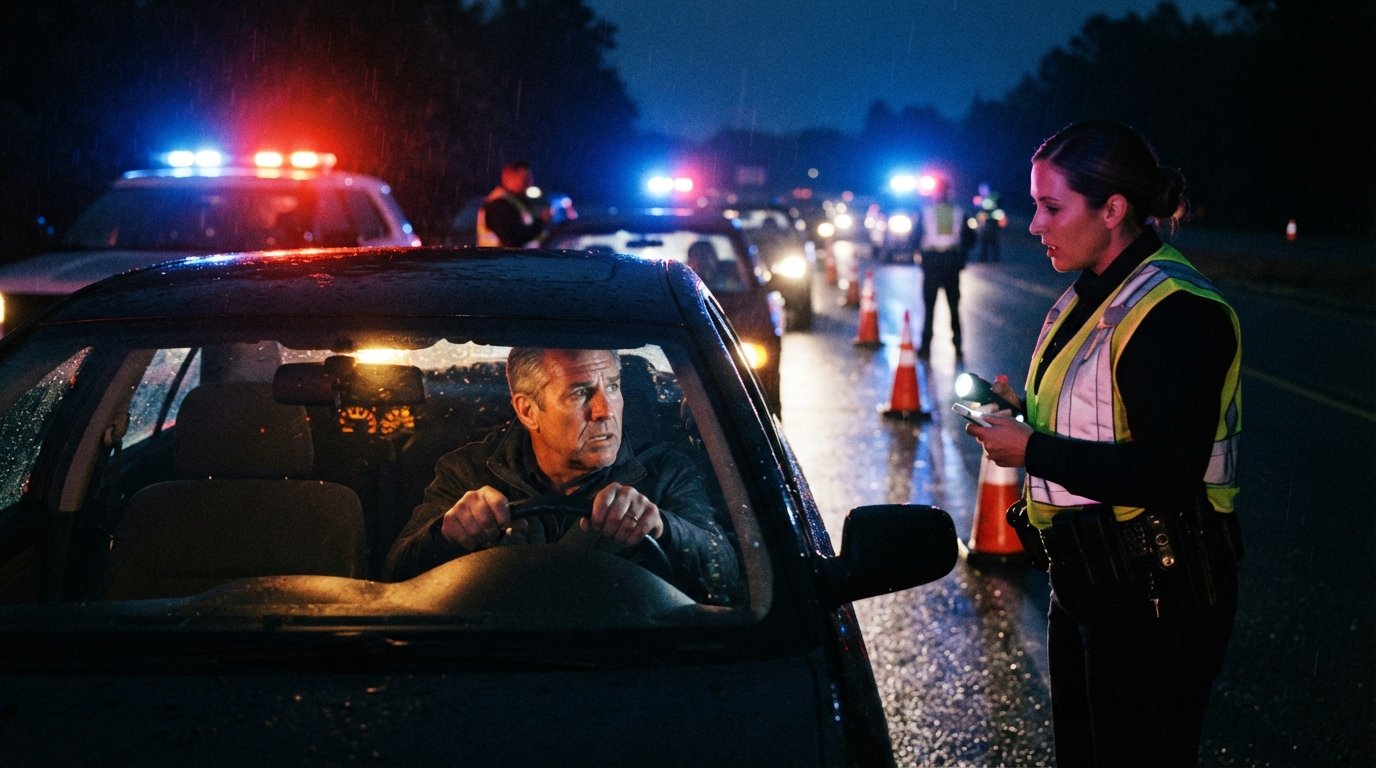
You see the flashing lights ahead, the line of cars slowing to a crawl, and the officers walking between vehicles. Your heart races even if you have had nothing to drink. Sobriety checkpoints are a fact of life on many American roads, and knowing your rights before you reach the front of that line can mean the difference between a brief inconvenience and a life-altering criminal charge. This guide walks you through the legal framework behind DUI checkpoints, what officers can and cannot ask you to do, how implied consent laws affect your choices, and what steps to take if you believe your stop crossed a legal line.
The stakes are high because a DUI conviction can affect your license, your employment, your insurance rates, and your freedom. But checkpoints are also governed by constitutional rules that vary from state to state, and those rules give you specific protections. Understanding DUI checkpoint rights and what happens if stopped is not about gaming the system; it is about knowing how to respond calmly and legally so that your rights are preserved and any later challenge has a foundation. Whether you are a first-time driver or someone with prior experience with law enforcement, this article gives you a practical framework for the moments that matter most.
Are DUI Checkpoints Legal, and What Notice Is Required?
The short answer is that sobriety checkpoints are legal in most states, but not all. The U.S. Supreme Court addressed the issue in Michigan Department of State Police v. Sitz (1990), holding that a properly conducted checkpoint does not violate the Fourth Amendment's prohibition on unreasonable seizures. The key word is "properly." The Court emphasized that the intrusion on motorists must be minimal and that the checkpoint must serve a legitimate public interest. Since that decision, states have developed their own rules, and a handful of states prohibit checkpoints entirely or restrict them so heavily that they are rarely used.
Where checkpoints are permitted, law enforcement agencies typically must follow specific procedural requirements. These often include advance public notice, a neutral formula for selecting which vehicles to stop, a safe location with adequate lighting and signage, and supervision by a ranking officer. Some states require that the checkpoint be announced in advance through media outlets or public postings. Others mandate that officers not stop vehicles arbitrarily or target specific drivers based on appearance or profile. If any of these requirements are missing, a court may later find that the checkpoint was unconstitutional, which can lead to suppression of evidence obtained during the stop.
For drivers, the practical takeaway is that the legality of a checkpoint is not always obvious at the scene. You may not know whether the agency followed its own procedures until later. That is why documenting everything you observe, from signage to officer behavior, can be valuable if you later need to challenge the stop. If you are facing charges and want to explore your options, connecting with a knowledgeable attorney through a service like GoFreeLegal can help you understand whether the checkpoint itself is vulnerable to a legal challenge.
What Officers May and May Not Ask You to Do
When you pull up to a checkpoint, the officer will typically ask for your driver's license, vehicle registration, and proof of insurance. Providing these documents is generally required by law, and refusing to do so can lead to separate citations. Beyond that initial request, the encounter becomes more nuanced. The officer may ask questions such as whether you have been drinking, where you are coming from, or whether you would consent to a search of your vehicle. You are not obligated to answer questions beyond identifying yourself, and you are not required to consent to a search. However, refusing to answer can sometimes prolong the stop or raise suspicion, so how you decline matters.
Officers may observe your appearance, smell your breath, and watch your movements for signs of impairment. They may ask you to step out of the vehicle if they have reasonable suspicion of criminal activity. They may also ask you to perform field sobriety tests, such as the walk-and-turn or the one-leg stand. In most states, you can decline these roadside tests, though some states have penalties for refusal. What officers may not do is detain you indefinitely without justification, search your vehicle without consent or probable cause, or force you to answer questions beyond basic identification. They also may not conduct a checkpoint in a way that discriminates against drivers based on race, ethnicity, or other protected characteristics.
Knowing the difference between a request and a command is essential. When an officer asks, "Would you mind stepping out of the car?" that is a request, but in practice, refusing can escalate the situation. When an officer says, "Step out of the car," that is a command backed by legal authority if reasonable suspicion exists. Your goal should be to remain polite and compliant with lawful orders while clearly and calmly declining requests that exceed legal requirements.
Roadside Tests Versus Chemical Tests: What You Should Know
The distinction between field sobriety tests and chemical tests is one of the most misunderstood aspects of a DUI stop. Field sobriety tests are physical coordination exercises conducted at the roadside. They are voluntary in most jurisdictions, meaning you can decline them, though the officer may use your refusal as evidence in a later proceeding. Chemical tests, on the other hand, involve breath, blood, or urine samples to measure blood alcohol concentration or the presence of drugs. These are governed by implied consent laws, which we will discuss in the next section.
If you decline field sobriety tests, the officer may still have probable cause to arrest you based on other observations, such as slurred speech, the smell of alcohol, or erratic driving. Once arrested, you will typically be asked to submit to a chemical test. At that point, refusing can trigger automatic license suspension and other penalties under implied consent statutes. The decision of whether to submit to a chemical test is serious and time-sensitive, and it is wise to consult with a DUI attorney as soon as possible after an arrest to understand the consequences in your state.
Some drivers wonder whether they should submit to a preliminary breath test at the roadside. These devices are not as reliable as the evidentiary breath tests used at the station, and many attorneys advise against taking them unless required by state law. Again, the rules vary widely, so knowing your state's specific requirements is crucial. The table below summarizes the general landscape, but always verify with a local attorney.
- Field sobriety tests: Usually voluntary; refusal may be used as evidence but typically does not trigger automatic license suspension.
- Preliminary breath test (roadside): Often voluntary; results may be used to establish probable cause for arrest.
- Evidentiary chemical test (breath, blood, urine): Governed by implied consent; refusal usually triggers automatic license suspension and can be used against you in court.
Understanding these categories helps you make informed decisions in a high-pressure moment. No two cases are identical, and the best choice depends on your state's laws and the specific circumstances of your stop. If you are unsure, the safest approach is to remain cooperative with lawful requests while politely declining voluntary tests, then seek legal advice immediately afterward.
Implied Consent Laws and the Consequences of Refusing Tests
Every state has an implied consent law, which means that by obtaining a driver's license, you have automatically consented to chemical testing if you are lawfully arrested for DUI. This is not a suggestion; it is a legal fiction that courts have upheld. When you refuse a chemical test after a lawful arrest, the consequences are often swift and severe. Your license may be suspended automatically for a period ranging from several months to several years, depending on the state and whether you have prior refusals. You may also face fines, mandatory education programs, and enhanced penalties if you are ultimately convicted.
Beyond the administrative penalties, a refusal can be used against you in court. Prosecutors may argue that you refused because you knew you were intoxicated, and juries often draw negative inferences from refusals. In some states, refusal is a separate criminal offense. This is why attorneys often advise clients to submit to a chemical test after arrest, even if the results are unfavorable, because the collateral consequences of refusal can be worse than the DUI charge itself. However, there are exceptions, such as when the arrest itself was unlawful or when the testing equipment was not properly maintained.
The interplay between implied consent and checkpoint rights is complex. At a checkpoint, you are not yet under arrest, so implied consent does not apply in the same way. You can typically decline voluntary roadside tests without triggering automatic license suspension. But once the officer places you under arrest, the implied consent law kicks in. Knowing this timeline helps you understand when your choices carry the heaviest penalties. If you are arrested, the most important step is to contact a DUI defense attorney who can review the stop, the arrest, and the testing procedures for any constitutional or procedural defects.
Documenting the Stop for a Later Suppression Challenge
If you believe your checkpoint stop violated your rights, the best thing you can do is document as much as possible, as soon as possible. Memory fades, and details that seem trivial at the time can become critical evidence later. A suppression challenge asks the court to exclude evidence obtained during an unconstitutional stop, and if successful, it can lead to dismissal of charges. But the challenge depends on a clear record of what happened.
Here is a step-by-step approach to documenting a checkpoint stop effectively:
- Note the location and time: Write down the exact location, including cross streets, and the time of the stop. If you can safely take a photo of the checkpoint setup, do so.
- Record officer identifiers: Note the officer's name, badge number, and agency. If there are multiple officers, record as many as you can.
- Describe the checkpoint procedures: Were there signs? Was there a neutral stopping pattern, or did officers appear to choose vehicles arbitrarily? Were other cars being waved through?
- Document your interactions: Write down what you were asked, what you said, and what tests you were asked to perform. Note any requests to search your vehicle and whether you consented.
- Preserve any recordings: If you have a dash camera or passenger recordings, save them immediately. If you were given paperwork, keep it in a safe place.
After documenting the stop, contact an attorney who handles DUI cases in your area. An experienced lawyer can review your notes, request the checkpoint's operational plan and officer training records, and determine whether the stop complied with state and federal requirements. If you are unsure where to start, a platform like CarInjuryAccident.com can connect you with participating attorneys who focus on DUI defense and related matters. You can also read more about protecting your rights after a crash in our guide on passenger accident rights after a crash, which shares similar principles about documentation and timely legal action.
Practical Steps to Take If You Are Stopped at a Checkpoint
Knowing what to do in the moment can reduce stress and protect your legal position. The following steps are not legal advice, but they reflect general best practices that defense attorneys often recommend. Always consult with a lawyer about your specific situation.
First, slow down and pull over safely when directed. Keep your hands visible on the steering wheel and avoid making sudden movements. Have your license, registration, and insurance ready before the officer reaches your window. Be polite and concise. You can say, "Officer, I am happy to provide my documents, but I do not consent to a search of my vehicle." This preserves your rights without being confrontational.
If you are asked to perform field sobriety tests, you can politely decline, but understand that the officer may still arrest you based on other observations. If you are arrested, you should submit to a chemical test to avoid the automatic penalties of refusal, unless your attorney advises otherwise. Once you are released, write down everything you remember and contact a DUI attorney immediately. The sooner you act, the better your chances of identifying any legal issues with the stop.
Finally, remember that you are not alone in this process. Many drivers face checkpoint stops every year, and most result in no charges. But if you are charged, having the right legal representation can make a significant difference. Services like CarInjuryAccident.com offer free, confidential case evaluations and can introduce you to attorneys who handle DUI cases in your state. There is no obligation to hire, and the review is private.
DUI checkpoint rights and what happens if stopped is a topic that every driver should understand before they encounter flashing lights in the rearview mirror. The law balances public safety with individual liberties, and knowing where that balance lies helps you respond appropriately. Stay calm, be respectful, document what you can, and seek legal guidance early. Your rights are worth protecting, and the steps you take in the first hours after a stop can shape the outcome of your case for months or years to come.