
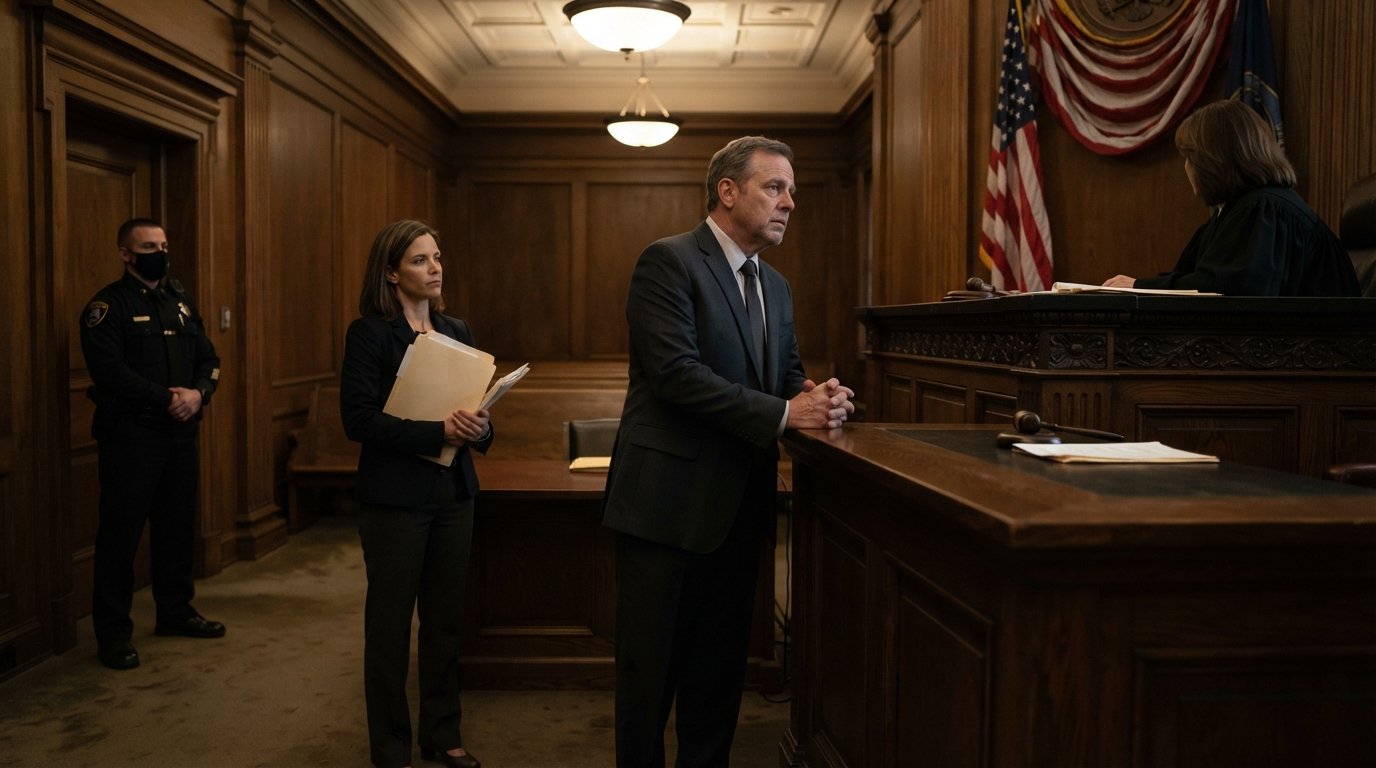
DUI Probation Violation Hearing: What to Expect in 2026
Facing a DUI probation violation hearing? Learn what to expect and how to prepare. Call (855)-545-2917 to connect with a qualified attorney today.

By Evren Kairo
You received a notice to appear for a DUI probation violation hearing. Maybe you missed a required alcohol test, failed a breathalyzer, or traveled outside your county without permission. The summons feels like a threat, and the uncertainty can be overwhelming. Understanding the process ahead is the first step to protecting your rights and your freedom. This guide explains what happens at a DUI probation violation hearing, from the evidence the court will consider to the possible outcomes, so you can walk in prepared and make informed decisions.
What Triggers a DUI Probation Violation Hearing
Probation is a privilege, not a right. When a judge grants probation after a DUI conviction, they attach conditions designed to keep the community safe and encourage rehabilitation. Violating any of those conditions can lead to a formal hearing. The hearing is not a new criminal trial; it is a proceeding to determine whether you broke the rules of your supervision. Common triggers include missed appointments with a probation officer, positive drug or alcohol tests, failure to complete court-ordered treatment, and traveling outside the jurisdiction without approval. Sometimes a new arrest, even for a minor offense, can spark a violation hearing.
In many jurisdictions, the probation officer files a petition or motion to revoke or modify probation. The court then schedules a hearing. You may receive a written notice listing the alleged violations. If you are on informal probation, you might get a letter; if on formal probation, your probation officer may arrest you or ask the court to issue a warrant. The key point is that the hearing focuses on your compliance, not on whether you committed the original DUI.
Because the stakes are high, it is wise to consult an attorney as soon as you learn of a possible violation. A lawyer can review the allegations, gather evidence, and represent you at the hearing. If you need help finding qualified counsel in your area, services like AttorneyLeads connect you with experienced DUI defense attorneys who understand local court procedures.
Common Probation Violations in DUI Cases
DUI probation conditions vary by state and judge, but certain violations appear frequently. Knowing the most common pitfalls can help you avoid them or prepare a defense if you are accused.
- Missed or failed alcohol tests: Many DUI probations require random or scheduled breath, blood, or urine tests. Skipping a test or testing positive for alcohol or drugs is a violation.
- Failure to complete treatment or education: Courts often order DUI school, counseling, or rehabilitation programs. Not finishing the program or missing sessions can trigger a violation.
- Travel without permission: Probation may restrict travel outside the county or state. Leaving without your probation officer's approval is a violation.
- New criminal offense: An arrest for any new crime, even a minor traffic offense, can lead to a violation hearing.
- Missed meetings with probation officer: Failing to report as scheduled or not informing your officer of changes in address or employment can be a violation.
Each of these violations carries different consequences. For example, a single missed test might result in a warning or modified conditions, while a new DUI arrest could lead to revocation and jail time. The context matters, and an attorney can help present mitigating circumstances.
Probation Violation vs. New Criminal Charge
A probation violation hearing is not the same as a criminal trial for a new offense. In a criminal trial, the prosecution must prove guilt beyond a reasonable doubt. At a probation violation hearing, the standard is typically lower: preponderance of the evidence, meaning it is more likely than not that you violated a condition. This lower burden makes violations easier for the prosecution to prove, which is why having legal representation is critical.
Additionally, you do not have the same rights at a violation hearing as you do at trial. For example, there is no absolute right to a jury trial, and the rules of evidence are often relaxed. Hearsay evidence may be admissible in some jurisdictions. The judge decides whether a violation occurred and what the consequence will be. If you are also facing a new criminal charge, you may have two separate proceedings: one for the new charge and one for the probation violation. An attorney can coordinate defenses across both cases.
It is also important to note that a probation violation hearing can happen even if you are not convicted of a new crime. The court only needs to find that you violated a condition, not that you committed a new offense. For instance, you might be found in violation for failing to complete community service, even if you were never charged with a crime.
Evidence and Burden of Proof at a Violation Hearing
At the hearing, the prosecution or probation department presents evidence to convince the judge that you violated a condition. This evidence can include police reports, test results, probation officer notes, witness testimony, and your own statements. Because the burden of proof is lower, the judge has broad discretion to consider various types of evidence.
You have the right to present evidence and witnesses in your defense. You might argue that you did not receive proper notice of the condition, that the test was flawed, or that you had a valid excuse for missing an appointment. An attorney can help you gather documentation, such as medical records, proof of completion of programs, or evidence of a misunderstanding. The judge will weigh the evidence and make a ruling.
It is crucial to understand that you do not have to prove your innocence; the prosecution must prove the violation. However, presenting a strong defense can influence the judge's decision and the severity of the consequences. In some cases, the judge may continue the hearing to allow you to complete a required program or provide additional evidence.
Possible Outcomes of a DUI Probation Violation Hearing
The judge has several options if they find that you violated probation. The outcome depends on the nature of the violation, your criminal history, and the judge's discretion. Here are the most common outcomes:
- Reinstatement of probation: If the violation was minor or you had a good excuse, the judge may simply reinstate your probation with the same terms. You might receive a warning and continue as before.
- Modified probation: The judge may add stricter conditions, such as more frequent testing, additional community service, or mandatory counseling. This is a middle ground that allows you to stay out of jail while addressing the violation.
- Revocation and jail time: For serious violations or repeated noncompliance, the judge may revoke probation and sentence you to jail or prison. The length of the sentence depends on the original DUI penalty and the violation.
- Alternative sanctions: Some judges prefer alternatives to incarceration, such as electronic monitoring, house arrest, or an intensive outpatient program. These options can be negotiated by an attorney.
The judge may also order you to pay fines or restitution, attend additional treatment, or perform community service. In some cases, the judge might terminate probation early if you have completed all requirements and the violation was technical. An experienced attorney can advocate for the least punitive outcome and help you present mitigating factors, such as progress in treatment or stable employment.
How Counsel Can Negotiate Alternatives to Revocation
Having a lawyer at your side can make a significant difference in the outcome of a DUI probation violation hearing. An attorney can challenge the evidence, negotiate with the prosecutor, and present persuasive arguments to the judge. For example, if you missed a test because of a family emergency, your lawyer can provide documentation and argue for reinstatement rather than revocation. If you relapsed, your attorney might propose an intensive treatment program instead of jail time.
Attorneys also understand local court practices and the preferences of individual judges. They can advise you on what to expect and how to prepare. In some jurisdictions, there are diversion programs or specialty courts for DUI offenders that offer treatment instead of incarceration. Your lawyer can help you access these options. If you are facing a violation hearing, consider reaching out to a qualified DUI attorney through platforms like CarInjuryAccident.com, which connects individuals with experienced legal professionals in their area.
Additionally, counsel can help you avoid common mistakes, such as speaking to the probation officer without representation or admitting to a violation unintentionally. They can also ensure your rights are protected throughout the process. The cost of an attorney is often far less than the cost of jail time, lost employment, and other consequences.
Preparing for Your Hearing: Practical Steps
Preparation is key to a successful outcome. Start by reviewing the notice of violation and any documents from your probation officer. Gather evidence that supports your defense or shows your compliance, such as completion certificates, pay stubs, or medical records. Write down your recollection of events and any witnesses who can support your story. Avoid contacting the alleged victim or witnesses without legal advice. Dress appropriately for court, arrive early, and be respectful to the judge and court staff.
If you cannot afford an attorney, you may qualify for a public defender, but eligibility varies. In some jurisdictions, you have the right to counsel at a probation violation hearing if jail time is possible. Do not hesitate to ask the court about your options. Finally, be honest with your attorney and follow their advice. The goal is to resolve the violation with minimal disruption to your life.
Remember that a probation violation hearing is a serious matter, but it is not the end of the road. With the right preparation and legal guidance, you can navigate the process and work toward a positive resolution.
Facing a DUI probation violation hearing can feel daunting, but understanding the process empowers you to make informed decisions. From the lower burden of proof to the range of possible outcomes, knowing what to expect helps you prepare effectively. Whether you are accused of a missed test or a new offense, seeking legal advice early can protect your rights and open doors to alternatives to revocation. Take the first step today by consulting with a knowledgeable attorney who can guide you through the hearing and advocate for your future.