How to Gather Evidence After Car Accident: Key Steps
After a car accident, the moments that follow can be chaotic. You may feel shaken, disoriented, or unsure of what to do next. Yet what you do in those first minutes can significantly affect your ability to recover compensation for injuries, vehicle damage, and other losses. The key is to gather evidence, and you need to do it methodically. Whether the accident is minor or severe, having a solid record of what happened protects your legal rights and strengthens your claim. This guide explains how to gather evidence after a car accident so you can build a compelling case, whether you are filing an insurance claim or pursuing a personal injury lawsuit.
Why Evidence Matters After a Car Accident
Evidence is the foundation of any car accident claim. It tells the story of what happened, who was at fault, and how the collision impacted your life. Without it, you are left with conflicting accounts and a word against word scenario. Insurance companies and courts rely on evidence to determine liability and calculate damages. If you fail to document the scene properly, you may lose the opportunity to prove the other driver’s negligence.
Consider a common scenario: you are rear-ended at a stoplight. The other driver says you stopped suddenly, but you know you were stationary. If you have photos showing your position, skid marks, and damage patterns, those images can contradict the other driver’s story. In our guide on can you claim injury after a car accident, we explain how evidence supports your injury claim. The more thorough your evidence, the easier it is for your attorney to negotiate a fair settlement or present your case in court.
What to Do Immediately After the Collision
Your safety comes first. Move to a safe location if possible, turn on your hazard lights, and check for injuries. Call 911 to report the accident, even if it seems minor. A police report is a crucial piece of evidence because it contains the officer’s observations, statements from both parties, and a preliminary fault assessment. When the police arrive, provide a factual account of what happened. Do not speculate or admit fault, even if you think you may have contributed. Let the investigation determine responsibility.
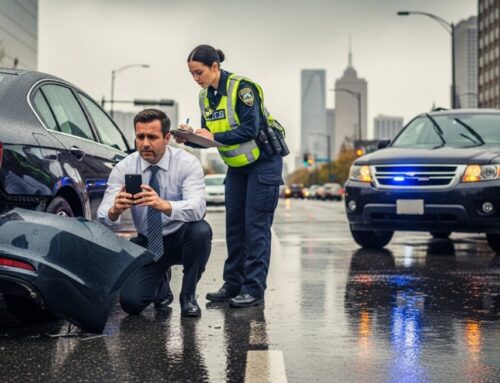
While waiting for law enforcement, begin your own evidence collection. Use your smartphone to take photos and videos of everything. The more detail, the better. Capture the entire scene from multiple angles, including traffic signs, signals, road conditions, and weather. Photograph all vehicles involved, showing their overall position and close-ups of the damage. If there are visible injuries, document them, but avoid disturbing the scene. Also, take note of any witnesses. Their contact information can be invaluable if you need statements later.
Photographing the Accident Scene: A Step by Step Approach
Photographs serve as a visual record that can convey what words cannot. To ensure your photos are useful, follow a systematic approach. Start wide, then zoom in. First, take shots of the entire accident scene from all four sides. Then, move closer to capture the vehicles and their positions relative to each other. Finally, take close-ups of the damage to each vehicle, including the license plates. If there is debris, broken glass, or vehicle parts on the road, photograph those as well.
Beyond the vehicles, photograph the surrounding environment. Look for traffic lights, stop signs, lane markings, and any obstructions that may have contributed to the crash. If the accident occurred at an intersection, take photos from each corner. If it was dark or rainy, note the lighting and road conditions. You should also capture the odometer readings of your vehicle and the other car, if possible. These details can help establish the speed at impact and the severity of the collision.
Do not rely solely on your memory. Even hours after the event, you may forget important details. By taking comprehensive photos at the scene, you create a permanent record that you can reference later. In our article on can you get compensation after a car accident, we emphasize the value of photographic evidence in proving the extent of your damages.
Collecting Witness Statements and Contact Information
Witnesses can provide an unbiased account of the accident. They may have seen the sequence of events from a different angle or noticed details you missed. Approach witnesses politely and ask if they are willing to share what they saw. Record their names, phone numbers, and email addresses. If possible, ask them to write a brief statement or allow you to record their account on your phone. A witness statement that corroborates your version of events can be persuasive to insurance adjusters and juries.
Do not limit your search to bystanders. Passengers in your vehicle and the other driver’s vehicle can also serve as witnesses, though their testimony may be biased. Still, their observations can be useful. Also, note the presence of any dashcams in nearby vehicles. If someone has a dashcam, ask for the footage. In many cases, drivers are willing to share video evidence, especially if it captures the accident. Dashcam footage can provide an objective, real time view of the crash, which is often the strongest form of evidence available.
Documenting the Police Report and Your Injuries
Once the police arrive, obtain the officer’s name, badge number, and the report number. You can typically request a copy of the police report a few days after the accident. Review it carefully for accuracy. If there are errors, such as incorrect contact information or a misstatement about the events, note them and request a correction. The police report often includes a diagram of the accident scene and the officer’s opinion on fault, which can be critical in settlement negotiations.
Your injuries are another essential piece of evidence. If you are injured, seek medical attention immediately, even if you feel fine. Some injuries, such as whiplash or concussions, may not show symptoms until hours or days later. A medical evaluation creates a record of your injuries and links them to the accident. Keep copies of all medical records, including doctor’s notes, imaging results, and treatment plans. Also, document your recovery process. Take photos of any visible injuries, such as bruises or cuts, and keep a daily journal of your pain levels, limitations, and how the injuries affect your daily life. This documentation helps quantify your pain and suffering, which is a key component of a personal injury claim. For more information on this, see our guide on can you claim pain and suffering after a car accident.
Gathering Financial Evidence: Medical Bills and Lost Wages
Beyond the physical evidence, you need to document your financial losses. These are known as special damages in legal terms. They include medical expenses, lost wages, and any out of pocket costs related to the accident. Collect all bills, receipts, and invoices for treatment, medication, and transportation to medical appointments. If you missed work due to your injuries, obtain a letter from your employer stating the number of days missed and your hourly or salaried rate. This documentation proves the economic impact of the accident.
You should also keep track of any property damage. Get repair estimates for your vehicle, and if it is totaled, obtain a valuation from the insurance company or an independent appraiser. If you had to rent a car while your vehicle was being repaired, keep those receipts as well. All of this information helps your attorney calculate the full extent of your damages. The more organized you are, the smoother the claims process will be.
Preserving Electronic Evidence and Social Media
Electronic evidence, such as GPS data, cell phone records, and vehicle telematics, can be crucial in determining fault. If your car has an event data recorder (EDR), often called a black box, it may capture data about speed, braking, and steering before the crash. This information can be obtained with the owner’s consent or through a subpoena. Similarly, if you or the other driver used a navigation app, the data may show your route and speed at the time of the accident. These records can corroborate or refute statements about the accident.
Social media can also be a double edged sword. While you might be tempted to post about the accident, it is wise to avoid sharing details publicly. Insurance companies often monitor claimants’ social media accounts to look for inconsistencies. For example, if you claim severe back pain but post photos of yourself hiking, your credibility may be damaged. Keep your social media profiles private and refrain from posting about the accident until your case is resolved. If you need to communicate with friends, do so privately.
Working with an Attorney to Maximize Your Evidence
Gathering evidence on your own is a great start, but an experienced personal injury attorney can take your case to the next level. Attorneys have the resources to conduct a thorough investigation, hire accident reconstruction experts, and subpoena records that are not accessible to the public. They can also interview witnesses under oath and preserve evidence that might otherwise be lost. When you work with a lawyer, you benefit from their knowledge of the legal process and their ability to negotiate with insurance companies on your behalf.
At CarInjuryAccident, we connect you with seasoned attorneys who specialize in personal injury cases. Our team can help you navigate the complexities of your claim, from evaluating the strength of your evidence to representing you in court if needed. We understand the challenges you face after an accident, and we are here to support you. To discuss your case with a qualified attorney, call us at 855-545-2917 for a free consultation.
Frequently Asked Questions
What if I cannot take photos at the scene due to injury?
If you are seriously injured, your health takes priority. Ask a passenger, a witness, or a family member to take photos for you. If that is not possible, request that the police officer document the scene thoroughly. You can also obtain traffic camera footage or dashcam videos from nearby businesses. After you receive medical care, you can return to the scene to take photos, but the condition may have changed. In such cases, an attorney can help you obtain evidence through official channels.
How long do I have to gather evidence after a car accident?
It is best to gather evidence immediately, as memories fade and physical evidence can disappear. Skid marks wash away, witnesses move, and vehicles are repaired. However, you can still collect evidence after the fact. For example, you can obtain a copy of the police report, request medical records, and track down witnesses. The statute of limitations for personal injury claims varies by state, typically ranging from one to three years, so you have time, but the sooner you act, the stronger your case.
Gathering evidence after a car accident is not just about protecting your claim; it is about ensuring that justice is served. By documenting the scene, collecting witness statements, and preserving financial records, you give your attorney the tools they need to fight for the compensation you deserve. If you have been in an accident, do not wait. Start gathering evidence today, and consider reaching out to a legal professional who can guide you through the process. Your recovery and your future may depend on it.