
How to Read a Police Report After a Car Accident
A police report can make or break your car accident claim. Know how to read a police report after a car accident to spot errors and protect your compensation.

By Orion Hale
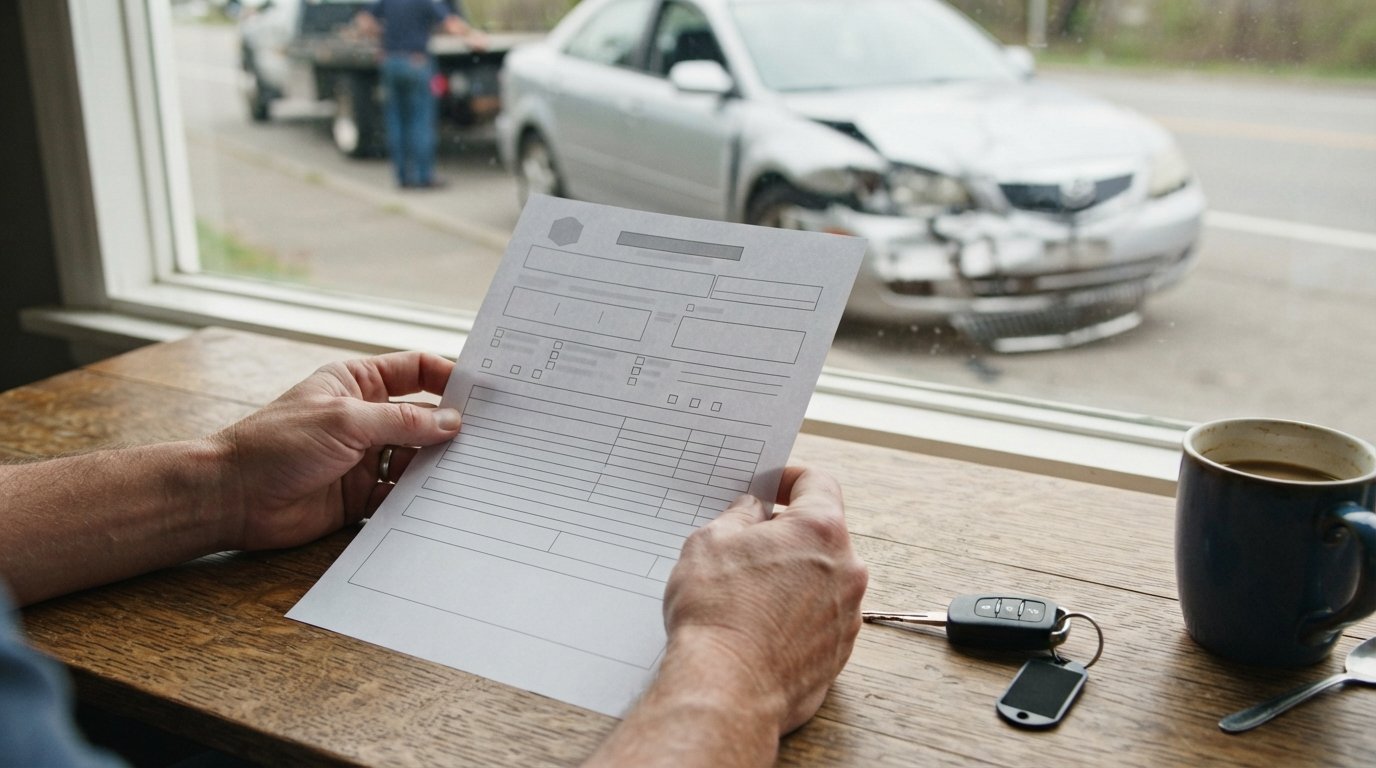
A police report is often the single most important document in a car accident claim, yet many people glance at it once and file it away without understanding what it actually says. That report can shape how insurers evaluate fault, how much compensation you receive, and whether your case holds up if it goes to court. Learning how to read a police report after a car accident is not about becoming a legal expert. It is about knowing where the critical details live, spotting errors that could hurt you, and understanding the language officers use to describe what happened.
Whether you were rear-ended at a stoplight, sideswiped on the highway, or hit by a distracted driver, the report tells a story that insurers and attorneys will scrutinize. If any part of that story is wrong, incomplete, or misleading, you could end up paying the price through a reduced settlement or a denied claim. This guide walks you through every section of a typical crash report so you can read it with confidence and act on what you find.
Why the Police Report Matters More Than You Think
A police report is an official record created by a law enforcement officer who responded to the scene. It captures the officer's observations, statements from the drivers and witnesses, road and weather conditions, and a preliminary judgment about contributing factors. Insurance adjusters treat it as a neutral, third-party account, which gives it enormous weight during claim negotiations. When your version of events conflicts with the report, the adjuster will almost always side with the document.
That does not mean the report is always accurate. Officers write dozens of reports each week, sometimes in a hurry, sometimes with incomplete information. Names get misspelled, vehicle descriptions get swapped, and fault determinations get assigned based on who spoke first or who seemed more credible at the scene. If you do not read the report carefully, you may never notice these problems until it is too late to correct them.
Beyond the insurance claim, the report also feeds into the legal process. Attorneys use it to evaluate the strength of a case, identify witnesses, and reconstruct the sequence of events. If you are considering legal representation, having a clear understanding of your report before that first consultation puts you in a much stronger position. You can request a free case evaluation through CarInjuryAccident.com to connect with participating attorneys who can review your report and explain your options without obligation.
The Anatomy of a Standard Crash Report
Most states use a standardized crash report form, often based on the Model Minimum Uniform Crash Criteria (MMUCC). While the exact layout varies, the core sections are remarkably consistent. Knowing what each section contains helps you navigate the document efficiently and spot issues quickly.
Here is a breakdown of the major sections you will typically find:
- Header and administrative information: Report number, agency name, date and time of the crash, and the responding officer's name and badge number.
- Parties and vehicles: Names, addresses, driver's license numbers, insurance details, and vehicle descriptions for everyone involved.
- Narrative and statements: The officer's written description of what happened, plus statements from drivers, passengers, and witnesses.
- Diagram and scene data: A sketch of the collision, road layout, traffic controls, and environmental conditions.
- Violations and contributing factors: Any citations issued, suspected violations, and the officer's assessment of what caused the crash.
Each of these sections can contain details that either support or undermine your claim. The narrative, for example, may include a witness statement that contradicts the other driver's account. The violations section may show that the other driver was cited for running a red light, which is powerful evidence of fault. The diagram may reveal that the point of impact was in your lane, not theirs. Reading each section with a critical eye is essential.
Start With the Basics: Identifying Information and Accuracy
Before you dive into the narrative, verify that the basic identifying information is correct. This sounds trivial, but errors here can cause real problems later. If your name is misspelled or your insurance policy number is wrong, the adjuster may have difficulty matching the report to your claim. If the other driver's insurance information is incorrect, you may struggle to file a third-party claim at all.
Check the date, time, and location of the crash. Even small discrepancies can matter. If the report says the crash happened at 4:15 PM but your phone records show you were still at work until 4:30, that inconsistency could be used to question your credibility. Similarly, if the location is listed as a different intersection than where the crash actually occurred, the diagram and narrative may not make sense.
Verify the vehicle descriptions as well. Make, model, color, and license plate numbers should match what you remember. If the report lists the other vehicle as a blue sedan when it was actually a black SUV, that error could create confusion about which vehicle was where. While these mistakes are often correctable, catching them early saves time and prevents headaches down the road.
Reading the Narrative Section Like a Professional
The narrative is the heart of the police report. It is where the officer summarizes what happened based on observations and interviews. This section is also where biases, misunderstandings, and incomplete information can creep in. Reading it critically means paying attention not just to what is said, but also to what is omitted.
Look for the following elements as you read:
- Who is identified as at fault: The officer may state a preliminary opinion about who caused the crash. This is not legally binding, but it carries weight with insurers.
- Statements from each party: Compare what you said with what the other driver said. Note any contradictions or claims that seem inconsistent with the physical evidence.
- Witness accounts: Independent witnesses are often the most credible source. If a witness supports your version of events, that is a significant advantage.
- Officer observations: Look for notes about skid marks, vehicle damage, road conditions, or signs of impairment. These details can corroborate or undermine fault claims.
- Missing information: If the narrative does not mention a key fact you told the officer, that omission could hurt you. You may need to supplement the record with your own statement or evidence.
One common issue is that officers sometimes write the narrative from a single perspective, especially if one driver was more cooperative or articulate. If the narrative reads like the other driver's version of events with little input from you, that is a red flag. You may need to provide a written statement or gather additional evidence to balance the record.
Another issue is vague language. Phrases like "driver stated" or "appeared to be" suggest the officer is reporting what someone claimed rather than what the officer independently verified. This distinction matters because insurers may treat unverified statements as facts. If the other driver claimed you were speeding but the officer did not independently confirm it, that claim should not carry the same weight as a citation for speeding.
Understanding the Diagram and Scene Data
The diagram is a visual representation of the crash scene. It shows the position of vehicles, the direction of travel, road markings, traffic signals, and the point of impact. For anyone trying to understand how to read a police report after a car accident, the diagram is often the most intuitive section because it translates words into a picture.
Check the diagram against your memory of the crash. Does the point of impact match where you felt the collision? Are the vehicle positions consistent with the damage you observed? If the diagram shows the other car in its own lane when you know it crossed the center line, that discrepancy is worth challenging. Diagrams are not infallible, and officers sometimes sketch them quickly based on limited information.
Also pay attention to road and weather conditions noted in this section. If the report says the road was dry but it had been raining, that could affect skid mark analysis or stopping distance calculations. If the report notes that a traffic signal was malfunctioning, that could support a claim that the other driver failed to yield. These environmental details can be surprisingly important in disputed cases.
Citations, Violations, and Contributing Factors
This section is where the officer records any citations issued and notes suspected violations. If the other driver received a ticket for running a stop sign, following too closely, or driving under the influence, that is strong evidence of fault. Conversely, if you received a citation, you need to understand what it means for your claim and whether it can be challenged.
Not every crash results in a citation, even when fault is clear. Officers have discretion, and sometimes they decline to issue tickets when the evidence is ambiguous or when both parties share some responsibility. The absence of a citation does not mean no one was at fault. It simply means the officer did not feel the evidence met the threshold for a ticket at that moment.
Contributing factors are also listed in this section. These might include speeding, distracted driving, impairment, fatigue, or equipment failure. If the report lists a contributing factor that applies to you, such as "failed to yield," you need to understand how that affects your claim. In comparative negligence states, even a small percentage of fault assigned to you can reduce your compensation. In contributory negligence states, any fault on your part could bar recovery entirely.
Common Errors and How to Correct Them
Police reports contain errors more often than most people realize. Officers are human, and they work under pressure with incomplete information. Some errors are minor and easily corrected. Others are significant and require formal action to fix.
Common errors include:
- Misspelled names or incorrect contact information
- Wrong insurance policy numbers or vehicle descriptions
- Inaccurate statements attributed to you or other parties
- Incorrect fault determinations based on incomplete evidence
- Missing witness information or omitted statements
If you find an error, contact the records department of the agency that filed the report. Ask about the process for submitting a correction or supplement. Some departments allow you to file a written statement that becomes part of the official record. Others require you to request an amended report, which the officer may or may not agree to produce.
If the error is significant, such as an incorrect fault determination, you may need legal help to challenge it. An attorney can request a supplemental report, gather additional evidence, and present your version of events to the insurer. Even if the report cannot be changed, your attorney can build a case that overcomes the report's conclusions.
How Insurers Use the Report Against You
Insurance adjusters are trained to look for anything in the police report that can reduce the amount they pay. They will highlight statements that suggest you were partially at fault, question injuries that are not mentioned in the report, and use any inconsistency to undermine your credibility.
For example, if the report notes that you said you were "fine" at the scene, the adjuster may argue that you were not seriously injured. If the report does not mention that you complained of neck pain, the adjuster may claim your injury developed later and is unrelated to the crash. These tactics are common, and they are effective if you do not have documentation to counter them.
This is why reading your report carefully and addressing problems early is so important. If the report omits your injury complaints, you can provide medical records showing you sought treatment within hours of the crash. If the report misstates your statement, you can provide a written correction. The sooner you act, the easier it is to prevent the report from being used against you.
When you are evaluating attorney reviews or choosing legal representation, look for professionals who understand how to interpret police reports and challenge inaccurate conclusions. A helpful resource is this guide on how to read car accident lawyer reviews the right way, which explains what to look for when vetting potential attorneys.
When to Get Professional Help Reading Your Report
You do not need a lawyer to read a police report, but there are situations where professional help makes a significant difference. If the report assigns fault to you when you believe the other driver was responsible, if you suffered serious injuries, or if the insurer is disputing your claim based on the report, an attorney can help.
Attorneys who handle car accident cases read police reports every day. They know which details matter, which errors are correctable, and how to present a compelling case even when the report is unfavorable. They can also gather additional evidence, such as surveillance footage, witness statements, or expert accident reconstruction, to challenge the report's conclusions.
If you are not sure whether you need legal representation, consider a free consultation. Many personal injury attorneys offer no-obligation case reviews, and platforms like CarInjuryAccident.com can connect you with participating attorneys in your area. These consultations give you a chance to ask questions, understand your rights, and decide whether to pursue a claim. For additional legal forms and resources, you can also explore FormsByLawyers, a platform that connects individuals with legal professionals.
Remember that the police report is one piece of evidence among many. It is important, but it is not the final word. With the right documentation and legal support, you can overcome an unfavorable report and pursue the compensation you deserve.
Reading a police report after a car accident is a skill that pays off in tangible ways. It helps you catch errors before they become problems, understand how insurers will evaluate your claim, and make informed decisions about your next steps. Take the time to read every section carefully, compare it against your own recollection, and act quickly if something is wrong. Your diligence now can protect your rights and your recovery later. FormsByLawyers