
Open Container Charge While Parked: DUI Defense Tactics
Facing an open container charge while parked DUI allegation? Call (855)-545-2917 to connect with a qualified DUI attorney and protect your rights.

By Serina Vale
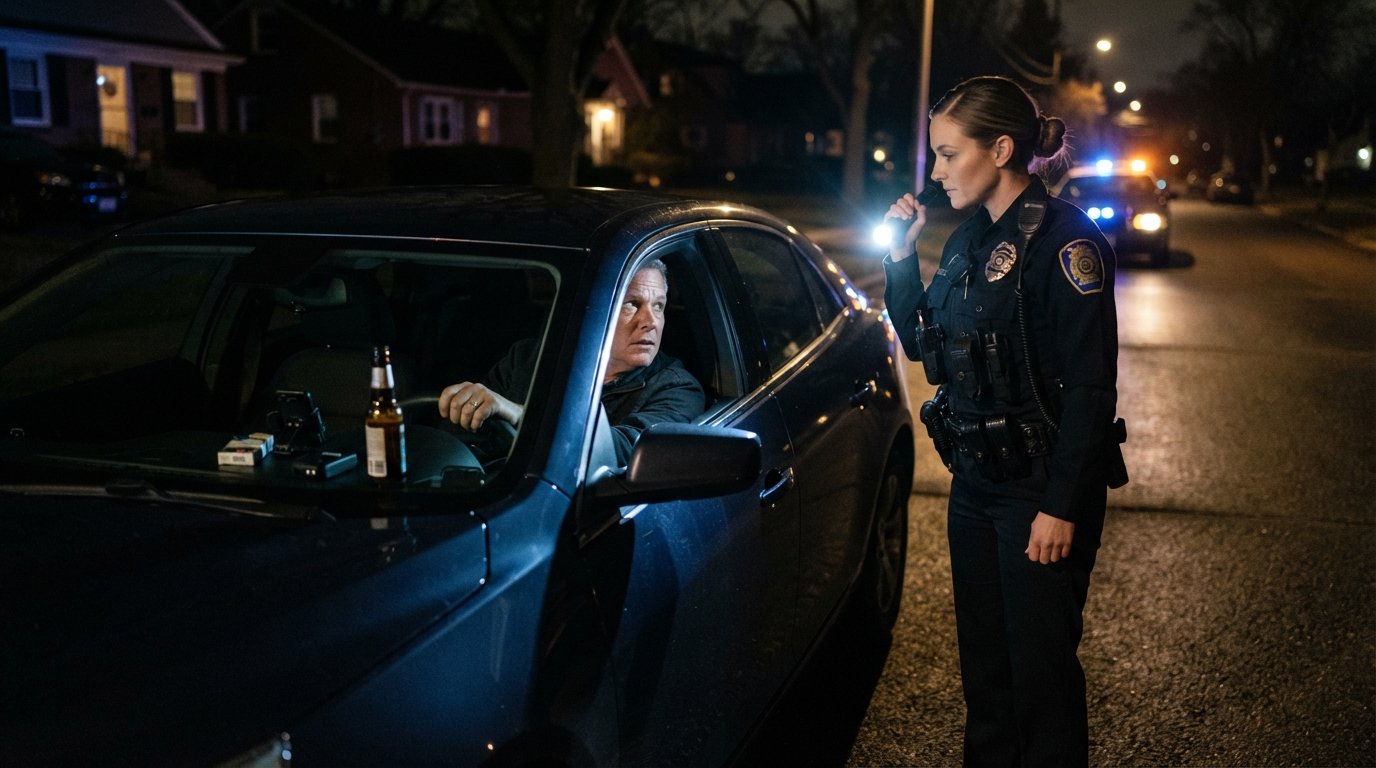
You parked your car, turned off the engine, and were sitting inside with an open beer when an officer approached. Now you face an open container charge and possibly a DUI. The situation feels hopeless, but it is not. The law draws critical distinctions between being in physical control of a vehicle and actually driving, and those distinctions form the backbone of a strong defense. This article explains how to challenge an open container charge while parked DUI allegation, from attacking the physical control standard to suppressing evidence obtained through an unlawful search. If you are facing charges, understanding these defenses is the first step toward protecting your rights. For a free case evaluation with a participating DUI attorney, visit LawyerOffer to connect with qualified legal help.
Understanding the Open Container Charge and DUI Distinction
An open container charge and a DUI are separate offenses, but they often arise from the same traffic stop. An open container violation typically prohibits having an unsealed alcoholic beverage in the passenger area of a vehicle while it is on a public road. A DUI, by contrast, requires proof that you were operating or in physical control of the vehicle while impaired. When you are parked, the open container charge may still apply, but the DUI charge becomes far more contestable because the prosecution must prove you were in control of the vehicle, not merely present in it.
The distinction matters because many drivers assume that being parked automatically defeats a DUI. That is not always true. In some states, sitting behind the wheel with the engine running, even while parked, can satisfy the physical control element. However, the defense can attack that element by showing you had no intention of driving, had taken steps to ensure you would not drive, or were not in a position to operate the vehicle. The open container charge itself may also be challenged if the container was not accessible to the driver or if the vehicle was not on a public roadway as defined by statute.
For example, if you were parked in a private driveway with the engine off and the keys in your pocket, the prosecution's case for DUI weakens considerably. The open container charge might still stand if the vehicle was on a public road, but the DUI requires additional proof. This is why a thorough understanding of your state's physical control statute is essential. An experienced attorney can review the specific facts of your case and identify the weakest points in the prosecution's evidence.
Physical Control and Actual Physical Control Standards
The concept of "actual physical control" is the cornerstone of most DUI statutes. It extends liability beyond actual driving to situations where a person is in a position to operate the vehicle. Courts across the country have developed tests to determine whether a parked individual was in physical control. These tests typically consider factors such as whether the engine was running, where the keys were located, whether the person was in the driver's seat, and whether the vehicle was on a public road. No single factor is dispositive; courts look at the totality of the circumstances.
Defense strategies often focus on negating the physical control element. If you were parked and had no intention of driving, evidence of that intention can be powerful. For instance, if you had called a taxi or a friend for a ride, or if you were waiting for a designated driver, those facts suggest you were not in control. Similarly, if you were in the passenger seat with the keys in the glove compartment, the prosecution's argument that you were in control becomes much harder to sustain.
Some states apply a more lenient standard for parked vehicles. In these jurisdictions, a person who is parked and not attempting to drive may not be considered in physical control, especially if the vehicle is off the roadway. Other states are stricter and may find physical control even when the car is parked if the engine is running or the keys are in the ignition. Understanding your state's approach is critical. An attorney can explain how local courts have interpreted the physical control standard and tailor a defense accordingly.
Engine Running and Keys in Ignition: Do They Matter?
Whether the engine is running or the keys are in the ignition can significantly influence a physical control determination. Many courts view a running engine as strong evidence that the driver could immediately operate the vehicle. However, this is not absolute. If you were parked with the engine running for climate control but had no intention of moving, you can argue that the running engine was not indicative of control. The key is to provide context: why was the engine on? Were you waiting for someone? Were you simply listening to the radio?
Keys in the ignition present a similar issue. Prosecutors argue that having keys in the ignition means you were ready to drive. The defense can counter by showing that the keys were in the ignition for another reason, such as charging a phone or using the accessory mode, and that you were not in a position to drive. In some cases, the location of the keys (e.g., in a purse, pocket, or console) can be more important than whether they were in the ignition. If the keys were not readily accessible to the driver, the physical control argument weakens.
It is also worth noting that some states have specific statutory provisions addressing parked vehicles with open containers. For example, some laws allow passengers to consume alcohol in a parked vehicle, while others prohibit it entirely. The interplay between the open container statute and the DUI statute can create defenses. If the open container was in the possession of a passenger, not the driver, the driver may not be liable for the open container charge, and the DUI charge may fail for lack of control. An attorney can analyze these nuances and build a defense that exploits inconsistencies in the prosecution's case.
Witness Accounts of Driving Before the Stop
In many parked DUI cases, the prosecution's evidence includes witness statements that the defendant was driving before the stop. These accounts can be powerful, but they are not always reliable. Witnesses may be mistaken about who was driving, or they may have observed the vehicle at a different time. A skilled defense attorney will scrutinize witness statements for inconsistencies, biases, and opportunities for misidentification.
For example, if a witness claims they saw you driving and then parking, but you were actually in the passenger seat the entire time, the witness's account can be challenged. Similarly, if the witness observed the vehicle from a distance or in poor lighting, their identification may be unreliable. The defense can also present its own witnesses, such as friends or family members who can testify that you were not driving. In some cases, surveillance footage or dashcam video can contradict the prosecution's witnesses.
Even if the witnesses are credible, their testimony may not establish physical control at the time of the stop. The prosecution must prove that you were in control when the officer arrived, not just that you had driven earlier. If you had parked and exited the vehicle, or if you had turned off the engine and placed the keys in the glove box, the physical control element may be lacking. The timing of the witness observations relative to the stop is crucial. An attorney can cross-examine witnesses to highlight gaps in their timeline and create reasonable doubt.
Suppression Issues for Warrantless Vehicle Searches
The Fourth Amendment protects against unreasonable searches and seizures. When an officer searches your vehicle without a warrant, the search must fall within an exception to the warrant requirement. Common exceptions include search incident to arrest, plain view, consent, and probable cause coupled with exigent circumstances. If the search that uncovered the open container or evidence of intoxication was unlawful, the evidence may be suppressed.
For instance, if you were parked and not suspected of a crime, the officer may not have had probable cause to search your vehicle. If the officer searched without consent or a warrant, the open container evidence could be excluded. Similarly, if the officer conducted a breath or blood test without proper justification, the results might be suppressed. Suppression motions are a critical tool in DUI defense, and they can lead to dismissal of charges if the evidence is excluded.
It is important to note that the automobile exception allows officers to search a vehicle without a warrant if they have probable cause to believe it contains contraband or evidence of a crime. However, probable cause must be based on specific, articulable facts, not a mere hunch. If the officer's probable cause was based on an illegal stop or an unlawful search, the evidence may be tainted. An attorney can review the police report and body camera footage to identify any Fourth Amendment violations and file a motion to suppress.
How an Open Container Count Affects DUI Penalties
An open container charge can have a significant impact on DUI penalties. In many jurisdictions, the presence of an open container at the time of a DUI arrest triggers enhanced penalties, such as mandatory minimum jail time, higher fines, or longer license suspensions. Some states require an open container to be charged as a separate offense, which can add points to your driving record and increase insurance costs. The interplay between the two charges can also affect plea bargaining and sentencing.
However, the open container charge is not automatically fatal to your case. If the open container was not in your possession or was not accessible to you, you may be able to defeat the charge. For example, if the open container was in the back seat and you were the only occupant in the front, the prosecution may have difficulty proving you had control over it. Similarly, if the container was empty or had been open for a long time, it may not support an inference that you were drinking and driving.
Defense strategies for the open container charge often mirror those for the DUI charge. Challenging the legality of the stop and search, disputing physical control, and presenting alternative explanations for the open container can all be effective. In some cases, the open container charge may be dropped as part of a plea agreement, especially if the DUI charge is weak. An experienced DUI attorney can negotiate with prosecutors to reduce or dismiss the open container count, minimizing the overall penalties.
Building a Defense Strategy for Your Parked DUI Case
Building a successful defense requires a systematic approach. Start by gathering all available evidence, including police reports, witness statements, and any video footage. Then, analyze the stop and search for constitutional violations. Next, evaluate the physical control evidence and identify weaknesses in the prosecution's case. Finally, consider the open container charge and whether it can be challenged independently.
Here are key steps to take:
- Document everything: Write down your recollection of events as soon as possible, including where you were parked, whether the engine was running, where the keys were, and what you told the officer.
- Request discovery: Your attorney can obtain the police report, body camera footage, and any other evidence the prosecution intends to use.
- Challenge the stop: If the officer lacked reasonable suspicion to approach your parked vehicle, the subsequent evidence may be suppressed.
- Attack physical control: Show that you were not in a position to drive, had no intention of driving, and had taken steps to avoid driving.
- Negotiate: In some cases, pleading to a lesser charge (such as an open container violation) may be preferable to a DUI conviction, but this depends on the specific facts and your record.
Each case is unique, and the best strategy depends on the details. An attorney can help you navigate the complexities and make informed decisions. For cases involving prescription medications, similar defense principles may apply, as discussed in drug DUI charge with prescription medication defense.
Remember that the prosecution must prove every element of the offense beyond a reasonable doubt. By creating reasonable doubt about physical control or the legality of the search, you can significantly improve your chances of a favorable outcome. Even if the open container charge is difficult to defeat, reducing the DUI to a lesser offense can save you from severe penalties.
When to Seek Legal Help for an Open Container DUI
Facing an open container charge while parked DUI allegation is stressful, but you do not have to face it alone. The sooner you consult with an experienced DUI attorney, the better your chances of preserving evidence and building a strong defense. An attorney can evaluate your case, explain your options, and represent you in court. If you are unsure where to start, consider reaching out to a legal information platform like LawyerOffer to connect with qualified professionals in your area.
Many attorneys offer free consultations, so you can discuss your case without financial obligation. During the consultation, be honest and provide as much detail as possible. The attorney can then advise you on the best course of action, whether that means fighting the charges at trial, negotiating a plea, or seeking dismissal. Time is of the essence, as evidence can be lost and memories can fade. Protect your rights by seeking legal guidance early.
In conclusion, an open container charge while parked DUI defense requires a careful examination of physical control, search and seizure laws, and witness credibility. With the right strategy, you can challenge the prosecution's case and achieve a more favorable outcome. Do not wait to get help.