
Parking Lot Accident Fault and Injury Claim Rules
Hurt in a parking lot crash? Learn fault and injury claim rules, then call (855)-545-2917 for a free case review.

By Orion Hale
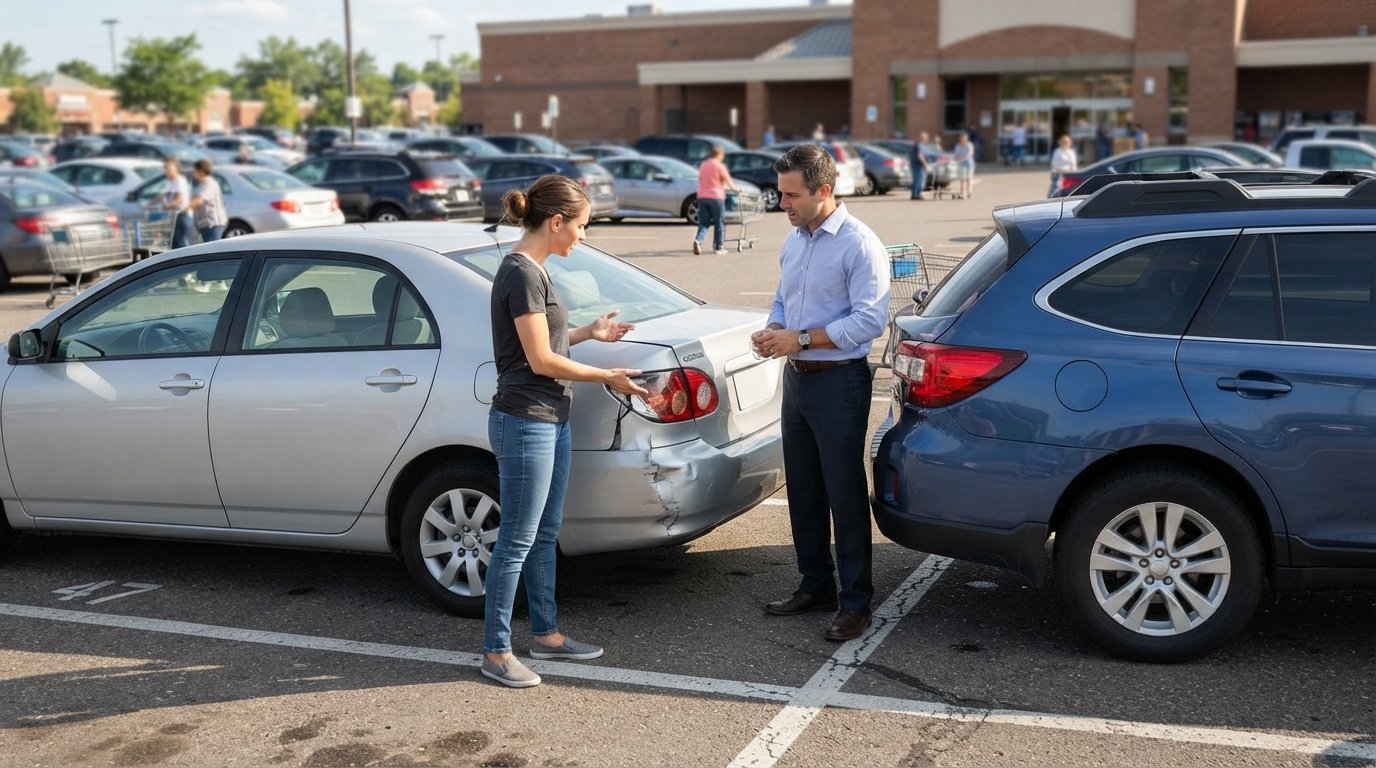
You are backing out of a grocery store space when another driver cuts behind you. The crunch of metal is followed by a jolt, and now you are standing in the aisle wondering who will pay for the damage and your aching neck. Parking lot collisions feel minor, but the fault rules and injury claim process are anything but simple. Private property crashes follow different police reporting rules, insurance companies fight hard over comparative fault, and soft tissue injuries often show up hours later. This guide breaks down the parking lot accident fault and injury claim rules you need to protect your recovery.
Who Is At Fault in a Parking Lot Accident?
Fault in a parking lot crash is not automatic. Unlike a rear-end collision on a highway where the trailing driver is almost always liable, parking lot accidents require a careful look at right-of-way rules, vehicle positioning, and local traffic laws. Most states apply ordinary negligence principles, meaning the driver who failed to exercise reasonable care is responsible for the resulting harm. However, many parking lot scenarios involve shared blame, and that is where claims get complicated.
The most common parking lot collision is a backing accident. A driver reversing from a space strikes a vehicle traveling down the aisle or another car also backing out. In most cases, the reversing driver is found primarily at fault because they have a duty to yield to traffic already in the aisle. But if the aisle driver was speeding, distracted, or driving the wrong way, fault may be split. Similarly, if both drivers were backing at the same time, comparative fault rules often divide responsibility between them.
Aisle right-of-way disputes are another frequent source of conflict. Parking lot aisles are not public roads, so standard vehicle code rules do not always apply directly. Courts and insurers often look at who had the clearer path, who signaled, and who entered the intersection of travel first. Stop signs painted on private property are not legally enforceable in the same way as public road signs, but they still serve as evidence of expected conduct and can influence a fault determination.
Backing, Aisle, and Right-of-Way Rules That Matter
When you are hurt in a low-speed parking lot crash, the other driver's insurer will try to pin blame on you using these common arguments. Understanding the rules ahead of time helps you counter them:
- Backing driver yields: A driver leaving a parking space must yield to vehicles already in the aisle. If you were struck while driving down the aisle, the backing driver usually bears the majority of fault.
- Aisle traffic has priority: Vehicles traveling in the main aisle generally have the right-of-way over cars entering or exiting spaces.
- Distraction matters: If either driver was on the phone, adjusting the radio, or otherwise inattentive, that distraction can shift or share fault.
- Parking lot speed: Even without posted limits, drivers must operate at a safe speed for conditions. Excessive speed in a crowded lot supports a negligence claim.
These rules are starting points, not guarantees. A qualified attorney can review the specific facts, local ordinances, and any available video to build a stronger fault argument. If you are unsure how your state handles shared fault, a car accident law firm can maximize your injury claim by identifying the evidence that shifts blame away from you.
How Police Reports Differ for Private Property Crashes
One of the biggest surprises for parking lot crash victims is that police may not respond at all. In many jurisdictions, law enforcement only responds to private property collisions when there is an injury, a hit-and-run, or significant property damage. If no one is hurt and both vehicles are drivable, officers may tell you to exchange information and file a report online or at the station. This is a critical difference from public road crashes, where a police report is standard.
Even when an officer does respond, the report may be less detailed than you expect. Private property reports often focus on exchanging insurance information and documenting vehicle positions rather than assigning fault. Some states use a simplified crash exchange form instead of a full investigation. Do not assume the report will resolve the fault question. Insurance adjusters will conduct their own liability review, and the absence of a police fault determination can actually make your claim harder to prove.
If you are injured, request that an officer come to the scene. Tell the dispatcher that you feel pain or that someone is hurt. If police do not respond, file a self-report with your state's motor vehicle department if required, and notify your insurer promptly. Keep a copy of every document. The report, or the lack of one, becomes part of the evidence record, and gaps in that record can be used against you later.
Evidence That Places Vehicles and Proves Fault
Because parking lot crashes often lack independent witnesses and detailed police reports, physical and digital evidence becomes the backbone of your claim. Security cameras are the most valuable asset. Many stores, banks, and shopping centers record their lots, and footage can show exactly who was moving, who was distracted, and who had the right-of-way. The challenge is that footage is often overwritten within days or weeks. Send a written preservation request to the property owner and any nearby businesses immediately after the crash.
Receipts and transaction records can also place vehicles at the scene and establish timing. If you have a receipt from a store, it corroborates your presence and the time of the crash. The other driver's receipt, obtained through discovery, can do the same. Photos of vehicle damage, skid marks, debris, and the surrounding lot layout help reconstruct the collision. Note the location of signs, aisles, and parking space lines. If your vehicle has a dashcam or telematics system, preserve that data before it is overwritten.
Witness statements matter, but parking lot witnesses are often transient. Ask anyone who saw the crash for their name and phone number before they leave. If a store employee witnessed the collision, ask management to document the employee's account. In disputed fault cases, an attorney can issue subpoenas for video, receipts, and employment records that you cannot access on your own.
Soft Tissue Injuries After Low-Speed Impacts
Low-speed does not mean low injury. Parking lot crashes frequently cause whiplash, neck strain, back sprains, and headaches that do not appear until hours or even days after the collision. The sudden jolt of a 5 mph impact can still force your body through a rapid acceleration and deceleration cycle, stretching ligaments and muscles beyond their normal range. Adrenaline at the scene can mask pain, which is why many victims decline medical attention and later regret it.
Insurance adjusters know this pattern and often argue that delayed symptoms are unrelated to the crash or exaggerated. To protect your injury claim, see a doctor within 24 to 48 hours of the accident, even if you feel only mild discomfort. Document your symptoms in a journal, including when they started and how they affect your daily activities. Follow your treatment plan and keep every appointment record, imaging result, and prescription receipt.
Soft tissue injuries can also lead to longer-term conditions such as chronic neck pain, limited range of motion, and headaches that interfere with work. A medical expert can connect your symptoms to the crash mechanism using the damage severity, vehicle positions, and biomechanical principles. Without that link, the insurer will treat your injury as pre-existing or speculative. If you are struggling to get fair treatment, an attorney can retain the right experts and pressure the insurer to recognize the full scope of your harm.
Comparative Fault When Both Drivers Were Distracted
Distraction is everywhere in parking lots. Drivers are checking phones, programming GPS, eating, or managing children. When both drivers were distracted, fault becomes a comparative analysis. Most states use some form of comparative fault, meaning each driver's responsibility is weighed as a percentage. Under pure comparative fault, you can recover damages even if you were 90 percent at fault, though your award is reduced by your share. Under modified comparative fault, you may be barred from recovery if you were 50 or 51 percent at fault, depending on the state.
This is why the other driver's insurer will work hard to prove you were distracted. They may request your phone records, social media activity, and vehicle data. If you were on your phone at the moment of impact, expect the adjuster to argue that your distraction caused or contributed to the crash. Even glancing at a text can reduce your recovery. The same logic applies to the other driver, and your attorney can use discovery to obtain their phone records and telematics data to establish shared or primary fault.
Comparative fault rules vary significantly by state, and the difference between a 49 percent and 51 percent fault finding can mean the difference between a full recovery and nothing. An experienced personal injury attorney can evaluate the evidence, apply your state's rule, and negotiate from a position of strength. If you are also dealing with a DUI charge from the same incident, the legal issues multiply, and you may need separate counsel for the criminal and civil matters.
Steps to Protect Your Parking Lot Injury Claim
The actions you take in the first hours and days after a parking lot crash shape the value of your claim. Follow these steps to preserve evidence and your rights:
- Call police if you are injured. Request an officer and tell the dispatcher you feel pain. If police do not respond, file a self-report if your state requires it.
- Exchange information and photograph everything. Capture vehicle damage, license plates, the lot layout, signs, and any visible injuries. Get witness names and numbers.
- Seek medical care promptly. Delayed treatment gives the insurer ammunition to dispute your injury. Follow your doctor's recommendations.
- Notify your insurer and preserve evidence. Report the crash, request video preservation from nearby businesses, and save receipts, dashcam footage, and repair estimates.
- Consult an attorney before giving a recorded statement. Insurance adjusters may ask for a statement that later undermines your claim. Get legal advice first.
If you are a law firm looking to connect with motivated clients in these situations, platforms like AttorneyLeads provide exclusive, pre-screened legal leads for personal injury and other practice areas. For injured drivers, the priority is different: get medical care, document the scene, and avoid signing anything from the other insurer without review.
How an Attorney Changes the Outcome
Parking lot accident claims are deceptively complex. The absence of a clear police fault determination, the presence of comparative fault arguments, and the delayed onset of soft tissue injuries create openings for insurers to deny or undervalue claims. An attorney levels the playing field by gathering evidence quickly, retaining medical and accident reconstruction experts, and negotiating with adjusters who know they are being watched. Many personal injury attorneys work on contingency, meaning you pay nothing upfront and only pay if they recover compensation for you.
If you were hurt in a parking lot crash and are unsure who was at fault, do not wait for the insurer to decide for you. The parking lot accident fault and injury claim rules favor the driver who documents the scene, seeks timely medical care, and understands comparative fault. Protect your health first, then protect your claim. A free case evaluation can clarify your options and help you decide whether legal representation is worth it for your situation.