
Recreational Vehicle Accident Injury Claim Coverage: What Pays?
Recreational vehicle accident injury claim coverage can be complex. Call (855)-545-2917 to connect with an attorney and protect your right to compensation.

By Arden Flux
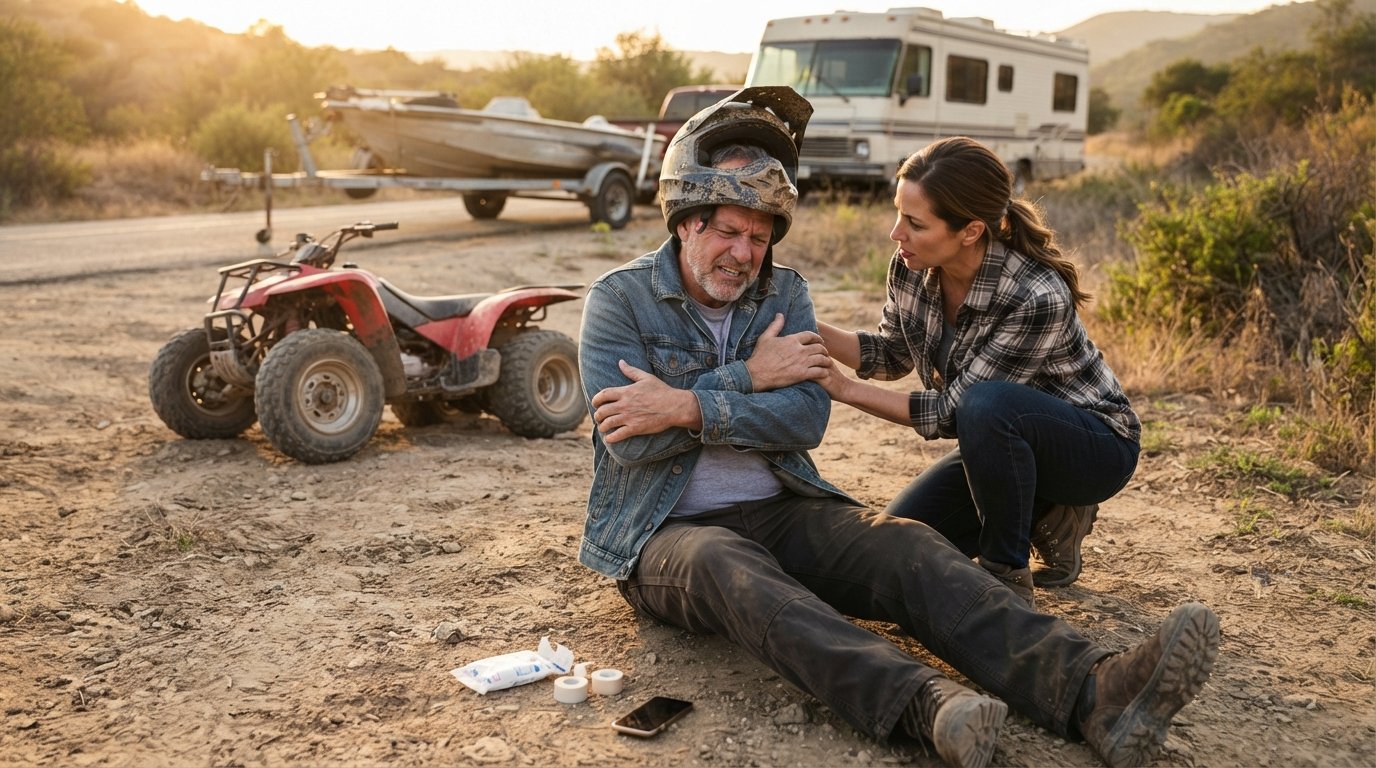
Your weekend ride on an ATV, a family boat outing, or a cross-country RV trip can turn into a financial nightmare when a crash sends someone to the hospital. The first question that surfaces after the dust settles is simple but urgent: which insurance policy actually pays for the injuries? Recreational vehicle accident injury claim coverage is rarely straightforward because these vehicles blur the lines between homeowner policies, auto policies, and specialty insurance. Understanding how these policies interact, who is liable, and what gaps exist can mean the difference between a paid claim and a pile of medical bills.
This article breaks down the coverage landscape for ATVs, boats, and RVs. It explains how operators and owners are treated differently, where rental and borrowed vehicles leave you exposed, and the steps that give you the best shot at a fair recovery. If you have been hurt in an off-road or watercraft crash, the information below helps you ask the right questions and pursue the right policies.
How Homeowners, Auto, and Specialty Policies Interact
Most people assume their auto insurance follows them everywhere. It does not. A standard personal auto policy covers vehicles designed for public roads. An ATV, a boat, or a motorhome often falls outside that definition, or it is covered only in limited situations. Homeowners insurance sometimes steps in, but typically only for liability, not for the injured operator's own medical bills. Specialty policies exist precisely to fill these gaps, and they come in several forms.
The interaction between policies follows a rough hierarchy. First, look for a specialty policy on the recreational vehicle itself. Second, examine the owner's homeowners or umbrella policy for liability coverage. Third, check whether any auto policy extends to the vehicle in question. When multiple policies respond, they often dispute priority, which is why injury claims in this area become complicated fast.
Here is a quick breakdown of how common policies treat recreational vehicles:
- Homeowners insurance: Usually provides liability coverage for ATVs used off-road, but often excludes injuries to the operator and may cap coverage for high-powered vehicles.
- Personal auto policy: Generally covers RVs and motorhomes only if they are specifically listed, and it rarely covers ATVs or boats.
- Specialty vehicle policy: Covers the vehicle itself, liability, and sometimes medical payments, but only if the policy was purchased and the premium paid.
- Umbrella policy: Kicks in after underlying limits are exhausted, but only if the recreational vehicle is not excluded.
Because these rules vary by state and by policy language, reading the declarations page and exclusions is essential. An experienced attorney can map the policies that apply to your crash and identify which insurer should be paying.
Operator Negligence vs. Owner Liability: Who Controls the Claim?
In a recreational vehicle crash, two separate legal theories often collide: operator negligence and owner liability. Operator negligence focuses on how the person driving or piloting the vehicle behaved. Did they speed, ignore terrain warnings, operate under the influence, or fail to supervise a minor? Owner liability focuses on the person who owns the vehicle. Did they lend it to an inexperienced rider, fail to maintain it, or allow a known unsafe operator to use it?
These theories matter because they point to different insurance policies. If the operator was negligent, their liability policy responds. If the owner was negligent, the owner's policy responds. In many crashes, both parties share fault, and that is when insurers begin pointing fingers at each other.
Consider a typical ATV crash. A teenager borrows a neighbor's ATV, loses control on a hill, and injures a passenger. The passenger may claim against the teenager's family homeowners policy for negligent operation and against the neighbor's policy for negligent entrustment. If the neighbor knew the teenager had never ridden before, the owner liability claim strengthens. If the teenager was sober and experienced, the operator claim may dominate. Sorting out these theories requires evidence, witness statements, and often accident reconstruction.
For a deeper look at how fault is allocated when several parties and vehicles are involved, see our guide on who is responsible in multi vehicle accident claims. The same principles of comparative fault apply to recreational vehicle crashes, even when the vehicles never touch a public road.
Rental and Borrowed Recreational Vehicle Coverage Gaps
Renting a jet ski, pontoon boat, or RV feels simple: swipe a card, sign a waiver, and go. The coverage picture is anything but simple. Rental companies typically carry commercial liability policies that protect the business, not the renter. If you injure someone while operating a rented vehicle, the rental company's insurer may deny your claim and look to your personal policies instead. Many personal auto and homeowners policies exclude rented recreational vehicles above a certain size or horsepower.
Borrowed vehicles create a similar trap. When you borrow a friend's boat or ATV, you may assume their insurance covers you. Sometimes it does, under permissive use provisions. Often it does not, especially if the policy lists only named operators or excludes certain riders. The result is a coverage gap that only becomes visible after a crash.
Before renting or borrowing, take these steps to protect yourself:
- Ask the owner or rental company for proof of insurance and confirm whether permissive users are covered.
- Check your own homeowners and auto policies for exclusions on watercraft, ATVs, and rented RVs.
- Consider purchasing a short-term specialty policy or rental insurance add-on for high-risk activities.
- Document the vehicle's condition and any safety instructions you receive before operating it.
- Confirm whether the rental agreement shifts liability to you for injuries to passengers or third parties.
These steps do not guarantee coverage, but they create a record and reduce the chance that an insurer denies your claim based on an exclusion you never knew existed.
Injury Claim Steps Unique to Off-Road and Watercraft Crashes
Recreational vehicle crashes differ from ordinary car accidents in several ways. There may be no police report, no traffic citation, and no independent witnesses. The scene may be remote, the vehicle may be unregistered, and the injuries may be catastrophic because of limited safety equipment. These factors change how you build an injury claim.
Start by securing evidence immediately. Photograph the vehicle, the terrain or water conditions, and any visible injuries. Collect contact information from everyone present, including passengers and bystanders. If a boat was involved, note the hull identification number and registration. If an ATV was involved, record the vehicle identification number. Preserve the vehicle if possible, because a mechanical defect could be a key issue.
Next, seek medical treatment and document everything. Off-road injuries often include spinal cord damage, traumatic brain injury, and fractures that require long-term care. A complete medical record establishes the link between the crash and your injuries, which insurers will scrutinize. Keep track of lost wages, rehabilitation costs, and any modifications needed at home.
Then, identify all potential policies. This includes the operator's policy, the owner's policy, your own policies, and any umbrella coverage. Send written notice to each insurer promptly, because late notice can void coverage. If multiple insurers dispute which policy pays, an attorney can file a declaratory judgment action or negotiate a global settlement that allocates fault and coverage fairly.
Finally, be cautious with early settlement offers. Insurers know that recreational vehicle claims involve complex coverage questions, and they may offer a quick check before you understand the full extent of your injuries. A free case evaluation from a qualified attorney can reveal whether the offer is fair or whether additional policies should be pursued.
When Multiple Insurers Dispute Which Policy Pays
Coverage disputes are common in recreational vehicle injury claims. One insurer says the homeowners policy is primary. Another says the auto policy applies. A third argues that a specialty policy was never triggered. These disputes can delay your recovery for months or years.
There are several ways to resolve them. First, review the "other insurance" clauses in each policy. These clauses determine priority when multiple policies cover the same loss. Second, look for exclusions that might remove a policy from the equation entirely. Third, consider whether an umbrella policy provides excess coverage after primary limits are exhausted. If the insurers still cannot agree, litigation may be necessary.
Attorneys who handle these cases often use a coverage analysis early on. They map every policy, identify the applicable limits, and send targeted demand letters. If an insurer acts in bad faith by delaying or denying a valid claim, additional remedies may be available. For law firms seeking to connect with clients facing these complex disputes, platforms like AttorneyLeads provide pre-screened legal leads that can help build a practice focused on recreational vehicle injury claims.
If you are the injured party, do not wait for the insurers to sort it out on their own. The longer the dispute drags on, the more likely you are to face financial pressure and accept a low offer. An attorney can push for a resolution and, if necessary, file suit to force the issue.
Building a Strong Recreational Vehicle Accident Injury Claim
A strong claim starts with a clear theory of liability and a complete picture of available insurance. Whether you were hurt on an ATV trail, a boat, or an RV, the same core principles apply: identify the responsible parties, document the evidence, and pursue every applicable policy. Recreational vehicle accident injury claim coverage is not automatic, and insurers will not volunteer information about policies that might pay.
Working with an attorney who understands both personal injury law and insurance coverage can make a significant difference. At CarInjuryAccident.com, we connect injured people with a network of experienced attorneys across the country. A free, no-obligation case evaluation can help you understand your options and take the next step toward fair compensation. Call (855)-545-2917 or visit our site to get started.