
Under 21 DUI Zero Tolerance Laws Explained
Under 21 DUI zero tolerance laws explained: a single drink can trigger a charge. Understand the BAC limits and penalties that protect your future.

By Author 79
Getting a driver's license at 16 or 17 feels like freedom. One mistake behind the wheel, however, can turn that freedom into a legal nightmare faster than most young drivers realize. Every state in the country enforces a special set of rules for drivers under the age of 21, and those rules work very differently from the DUI laws that apply to adults. The most important difference is this: for underage drivers, the legal limit is not 0.08 percent. It is effectively zero.
These statutes, known collectively as zero tolerance laws, mean that a young driver can be arrested for DUI with a blood alcohol concentration of just 0.01 or 0.02 percent, an amount that could come from a single drink or even certain medications and mouthwashes. Understanding how these laws work, what penalties they carry, and what steps to take after a charge is essential for any young driver and their family.
What Zero Tolerance Actually Means for Drivers Under 21
The term zero tolerance sounds absolute, and in practice it is close to it. Congress passed the National Highway Systems Designation Act in 1995, which tied federal highway funding to states adopting a maximum BAC of 0.02 percent or lower for drivers under 21. Every state complied, and today all 50 states plus the District of Columbia enforce some version of a zero tolerance standard for underage drivers. Illinois uses a true 0.00 standard, while most other states set the threshold at 0.01 or 0.02 percent.
This is a critical distinction from adult DUI law. For drivers 21 and older, prosecutors generally must prove the driver was impaired or had a BAC at or above 0.08 percent. For underage drivers, impairment is irrelevant. If a chemical test shows any measurable alcohol above the state threshold, the case is essentially made. A young driver who had one beer at a friend's house, waited an hour, and felt completely fine can still be charged and convicted.
It also matters that zero tolerance laws are typically separate from standard DUI statutes. That means an underage driver can face two parallel cases: a zero tolerance charge based purely on BAC, and a standard DUI charge if there is evidence of actual impairment. The zero tolerance charge is easier for the state to prove, which is why it is often the primary charge filed in underage cases.
How Zero Tolerance Laws Differ From Standard DUI Charges
The most obvious difference is the BAC threshold, but the differences run deeper into how these cases are investigated, prosecuted, and punished. Standard DUI cases often hinge on field sobriety tests, dash camera footage, officer observations, and witness testimony. Zero tolerance cases usually hinge on a single number from a breath or blood test.
Penalties also diverge. Adult first-offense DUI often carries jail time, heavy fines, and lengthy license suspensions, but many states offer diversion programs, plea reductions, or restricted licenses. Underage zero tolerance penalties are usually structured differently. They tend to focus on license suspension, fines, community service, and mandatory alcohol education rather than long jail sentences, though jail remains possible in aggravated cases.
Another key difference involves implied consent laws. When a driver receives a license, they consent in advance to chemical testing if lawfully arrested for DUI. Refusing a test triggers automatic license consequences in nearly every state. For underage drivers, a test refusal can be treated as harshly as a failed test, and in some states the refusal itself creates a longer suspension than a positive result would have.
State-by-State BAC Thresholds and Penalty Examples
Because zero tolerance is a federal funding mandate rather than a single federal law, the details vary significantly by state. The table below illustrates how a few representative states structure their underage DUI thresholds and first-offense consequences.
- California: 0.01 percent BAC threshold. First offense typically brings a one-year license suspension, fines, and mandatory DUI education.
- Texas: 0.00 percent for minors. First offense can mean up to a 60-day license suspension, community service, and alcohol awareness classes.
- Florida: 0.02 percent. First offense usually results in a six-month suspension and possible fines, with longer suspensions for higher BAC readings.
- New York: 0.02 percent. First offense carries a six-month suspension and a mandatory screening and assessment.
- Illinois: 0.00 percent. First offense triggers a minimum two-year suspension for drivers under 21, one of the strictest in the country.
These variations matter enormously for anyone facing a charge. A penalty that is a slap on the wrist in one state can be a career-altering event in another. Because the stakes differ so much depending on where the arrest occurred, having a local attorney who understands the specific statutes, local court practices, and available diversion programs is often the difference between a manageable outcome and a devastating one.
It is also worth noting that many states impose additional consequences beyond the criminal case. These can include mandatory ignition interlock devices, higher insurance premiums for years, and in some cases, civil liability if the underage driver caused an accident while intoxicated. For families dealing with the aftermath of a crash involving an underage drunk driver, understanding both the criminal and civil sides of the situation is important, and resources like the guide on understanding mass torts in lawsuits can help clarify how group claims and coordinated litigation sometimes arise from serious accidents.
What Happens During an Underage DUI Stop
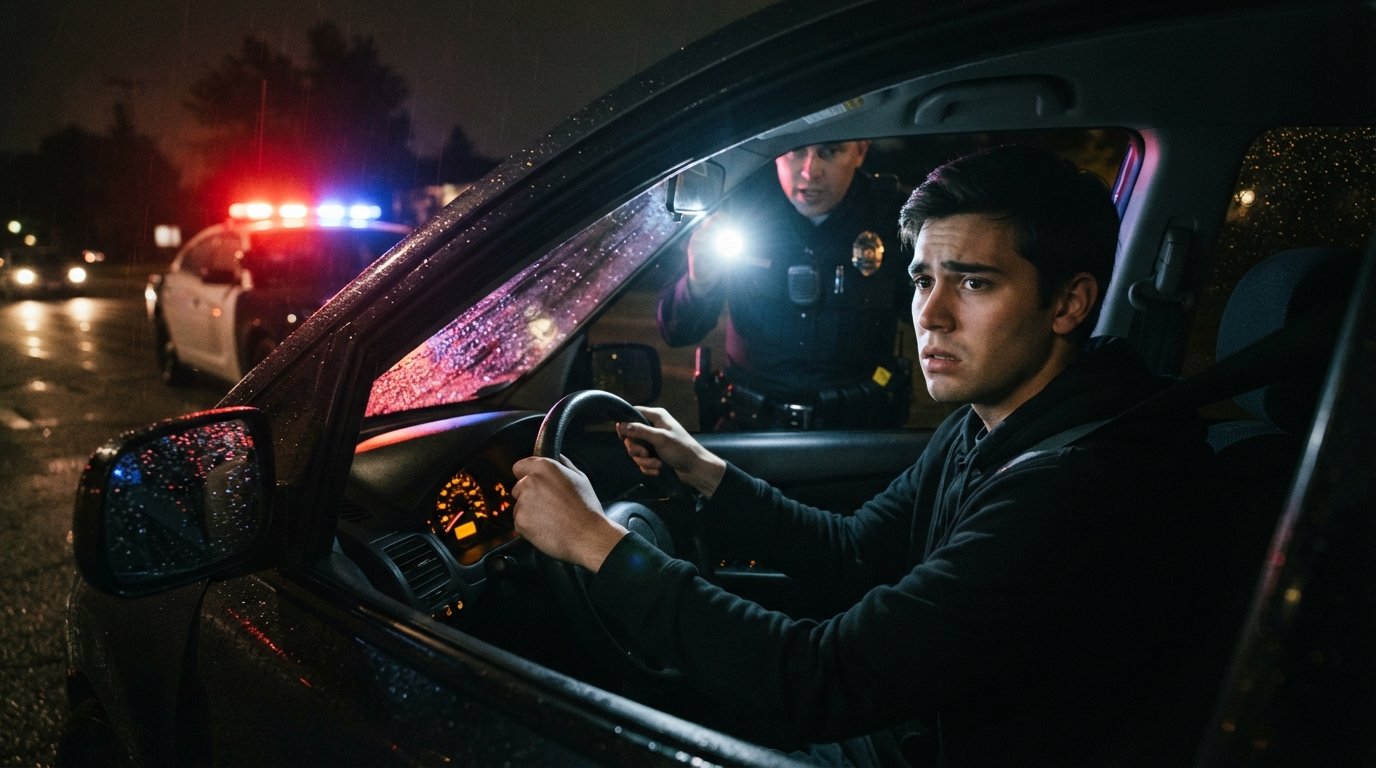
The sequence of events during a traffic stop can dramatically affect the outcome of an underage DUI case. Knowing what to expect helps young drivers and their parents respond appropriately rather than making the situation worse.
- Initial stop: An officer pulls the vehicle over for a traffic violation, erratic driving, or a sobriety checkpoint. At this stage, the officer is observing the driver's appearance, speech, and behavior.
- Investigation: The officer may ask questions, request the driver step out of the vehicle, and administer field sobriety tests such as the walk-and-turn or one-leg stand. For underage drivers, even a small indication of alcohol can justify further testing.
- Chemical testing: If the officer has probable cause, they will request a breath or blood test. Under implied consent laws, refusing the test carries automatic license penalties.
- Arrest and booking: If the test result exceeds the state threshold, the driver is typically arrested, booked, and released to a parent or guardian pending a court date.
- License action: In many states, the license suspension begins almost immediately, separate from the criminal case, and a hearing must be requested within a short window (often 10 to 15 days) to challenge it.
That last point about the license hearing window is one of the most overlooked aspects of underage DUI cases. Families often focus entirely on the court date and miss the deadline to challenge the administrative suspension, which can result in a longer loss of driving privileges than necessary. An attorney can handle both tracks simultaneously and ensure no deadline is missed.
Long-Term Consequences Beyond the Courtroom
The immediate penalties are only part of the story. An underage DUI conviction follows a young person for years and can affect nearly every aspect of adult life. College admissions officers, scholarship committees, and employers routinely ask about criminal history, and a DUI on a juvenile or adult record can close doors that would otherwise be open.
Insurance consequences are equally severe. After an underage DUI, premiums can double or triple, and some insurers will drop the driver entirely. In many states, the driver must carry SR-22 or similar high-risk insurance for three to five years, which is significantly more expensive than standard coverage. If the underage driver was involved in an accident that injured someone else, the financial exposure grows even larger through civil lawsuits.
There is also the academic and athletic angle. Many colleges have conduct codes that trigger disciplinary proceedings for off-campus DUI arrests, and student athletes can face suspension or loss of eligibility. For students relying on scholarships, a DUI conviction can jeopardize funding that took years to earn.
Defenses and Legal Options for Underage DUI Charges
Despite how strict zero tolerance laws appear, they are not unbeatable. Several defenses apply specifically to underage DUI cases, and an experienced attorney will evaluate all of them before advising a client to accept a plea.
One common defense challenges the legality of the traffic stop itself. If the officer lacked reasonable suspicion to pull the vehicle over, evidence gathered afterward can be suppressed. Another challenges the accuracy or administration of the chemical test, including issues with calibration, chain of custody, or the qualifications of the person who performed the test.
Rising BAC defenses can also matter. If the driver consumed alcohol shortly before driving and the test was administered later, the BAC at the time of driving may have been lower than the reading suggests. This is a complicated argument that requires expert testimony, but it has succeeded in cases where the timing was favorable.
Finally, many states offer diversion or deferral programs for first-time underage offenders. Completing these programs can result in the charge being dismissed or reduced, which can make a substantial difference in long-term consequences. Eligibility depends on the state, the facts of the case, and whether the driver has prior offenses.
Finding the right attorney for a case like this matters more than most people realize. Platforms like CarInjuryAccident.com connect individuals facing DUI charges with a network of seasoned attorneys through a patented selection process that identifies top-rated legal professionals, and the initial case review is free and carries no obligation. For families who are unsure where to start, using a legal resource that vets attorneys on the front end saves time and reduces the risk of hiring the wrong representation. Legal professionals who want to reach clients in these situations can also explore tools like FormsByLawyers to connect with people seeking help.
Steps to Take After an Underage DUI Charge
The hours and days after an underage DUI arrest are critical. What a family does in that window often determines how the case unfolds over the following months.
First, do not ignore the paperwork. Court dates, license hearing deadlines, and arraignment notices all have strict timelines, and missing any of them can result in additional penalties. Second, write down everything that happened while the memory is fresh, including what the officer said, what tests were administered, and whether the driver was read their rights. Third, avoid posting anything about the incident on social media, since prosecutors routinely review public posts.
Fourth, contact an attorney before making any statements to police or prosecutors, even if the case seems minor. Fifth, if the underage driver was involved in an accident that injured someone, notify the insurance company but do not give a recorded statement without legal guidance. Finally, begin researching the specific zero tolerance statute in the state where the arrest occurred, since the rules and penalties vary so widely.
Parents play an important role in this process. Supporting a young driver through an underage DUI case does not mean excusing the behavior, but it does mean ensuring they have proper representation and understand the seriousness of what is at stake. The consequences of a conviction can shape education, employment, and financial stability for years, so treating the charge as a minor inconvenience is a mistake.
Zero tolerance laws exist for a reason: young, inexperienced drivers are far more likely to be involved in fatal crashes when alcohol is present, even at very low BAC levels. The laws are strict by design, and courts enforce them accordingly. But strict does not mean hopeless. With the right information and the right legal help, many underage drivers are able to resolve their cases with consequences that do not permanently derail their futures.