
Vocational Expert Testimony at a Disability Hearing
Vocational expert testimony can decide your disability case. Call (855)-545-2917 to prepare your work history and strengthen your hearing strategy.

By Lucian Vex
When a Social Security disability claim reaches the hearing level, the testimony of a vocational expert (VE) can be the deciding factor in whether benefits are approved or denied. You may have spent months building medical evidence, only to sit in a hearing room and hear a stranger describe your work history and capabilities in terms that feel foreign. Understanding what the VE does, how the administrative law judge (ALJ) questions them, and how to prepare your own work history can give you a significant advantage in presenting your case. This article explains the role of vocational expert testimony at a social security disability hearing, the importance of the residual functional capacity (RFC) wording, and the strategies you can use to strengthen your position.
What a Vocational Expert Does at a Social Security Disability Hearing
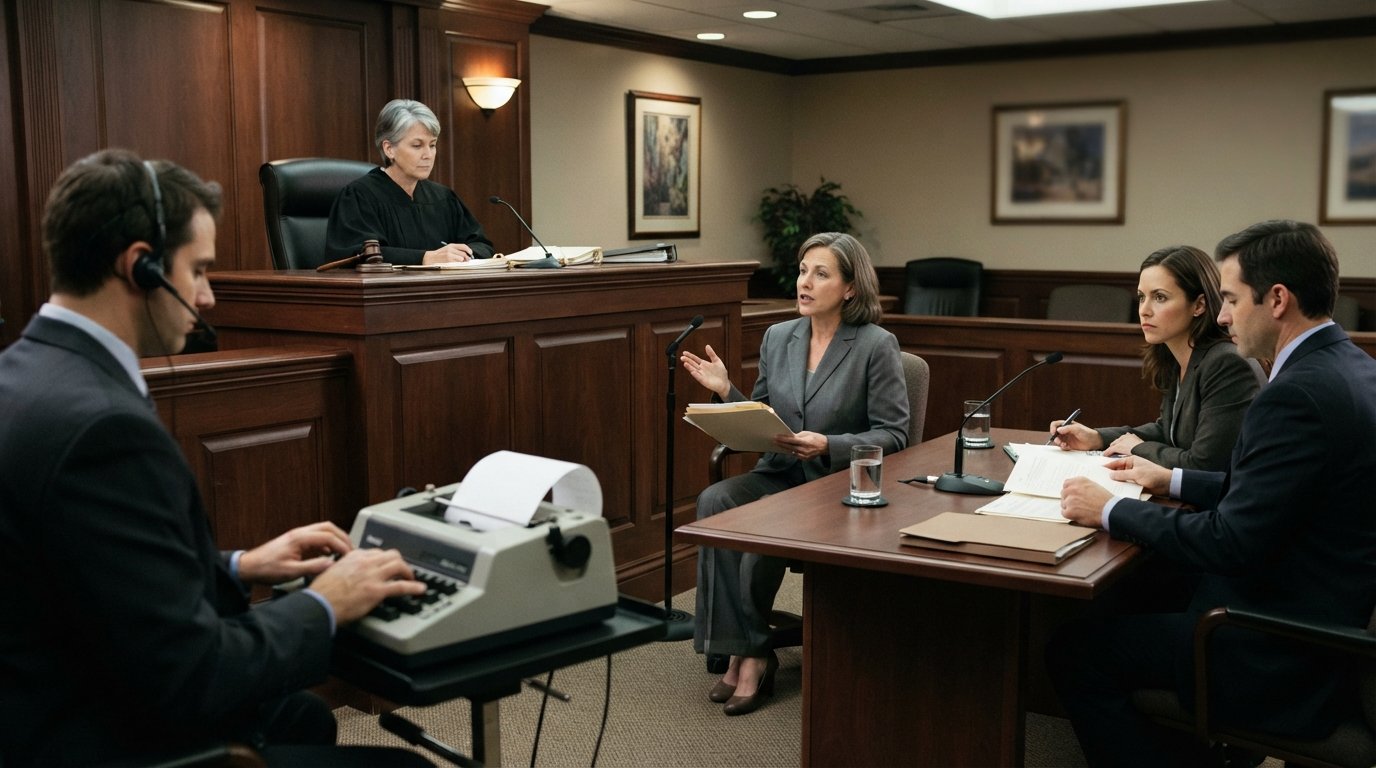
A vocational expert is a professional who testifies about the jobs that exist in the national economy and whether a claimant can perform any of them given their medical limitations. The VE does not treat you or evaluate your medical condition. Instead, they analyze your past work, your age, education, and skill level, and then respond to hypothetical questions posed by the ALJ. Their answers help the judge determine if you can return to your past relevant work or adjust to other work.
The VE typically begins by classifying your past jobs according to the Dictionary of Occupational Titles (DOT), assigning each a skill level and physical demand category. For example, a job might be classified as light, unskilled work or medium, semi-skilled work. The VE also identifies any transferable skills you may have acquired that could apply to other occupations. At the hearing, the ALJ will ask the VE whether a hypothetical person with your RFC can perform your past work or any other jobs in the economy. The VE's response, based on the hypothetical, often carries substantial weight in the final decision.
How the Judge Phrases Hypothetical Questions and Why RFC Wording Matters
The hypothetical questions posed by the ALJ are critical because they translate your medical limitations into vocational terms. The RFC is a summary of what you can still do despite your impairments, and the judge will incorporate those limitations into the hypothetical. If the RFC is worded imprecisely or omits a key restriction, the VE may testify that jobs exist, leading to a denial. Conversely, if the RFC accurately reflects your most restrictive limitations, the VE may conclude that no jobs are available.
For instance, a hypothetical might state: "Assume an individual of the claimant's age, education, and work experience who can lift 20 pounds occasionally, stand and walk for six hours in an eight-hour day, and sit for six hours, but who requires a sit-stand option every 30 minutes and is limited to simple, routine tasks with no public contact." The VE would then assess whether such a person could perform the claimant's past work or other jobs. The specific wording, such as the frequency of breaks, the need for a cane, or the inability to concentrate for extended periods, can change the outcome entirely.
Your representative should carefully review the RFC and propose additional limitations or corrections during the hearing. If the VE's testimony is based on an incomplete hypothetical, your attorney can object or ask the VE to consider additional restrictions. In our guide on preparing for your Social Security disability hearing, we explain how to gather the evidence needed to support these limitations.
Transferable Skills and Past Relevant Work in Plain Terms
Past relevant work is any job you performed in the last 15 years that lasted long enough for you to learn the duties, typically at the substantial gainful activity level. The VE will categorize your past work and determine whether you can still perform it, either as you actually did it or as it is generally performed in the national economy. If you cannot return to your past work, the VE will then consider whether you have transferable skills that allow you to adjust to other work.
Transferable skills are work habits and abilities you learned in prior jobs that can be used in a different occupation. For example, a former office manager might have skills in scheduling, supervising, and record-keeping that could transfer to an administrative support role. However, if you have only unskilled work experience, you are generally not expected to have transferable skills. The VE will testify about the skill level of your past work and whether those skills can be applied to jobs within your RFC.
To prepare for cross-examination on this point, you should list all your past jobs from the last 15 years, including the job title, the dates you worked, and a detailed description of your duties. Be specific about the physical and mental requirements: how much weight you lifted, how long you stood, whether you supervised others, and the level of judgment required. This information allows your representative to challenge the VE's classification if it is inaccurate. For example, if the VE classifies your job as light when you actually performed medium work, your attorney can correct the record. Providing this detail upfront can prevent the VE from overestimating your skills or understating your limitations.
How to Prepare Your Work History for Cross-Examination
Preparation is key to effectively cross-examining a vocational expert. Before the hearing, you and your representative should review your work history and the VE's expected testimony. You can request the VE's resume and any reports they submitted in advance. During the hearing, listen carefully to the VE's answers and take notes if needed. If the VE misclassifies a job or overlooks a limitation, your attorney can ask clarifying questions.
Here are practical steps to get ready:
- Compile a detailed work history: List each job from the past 15 years with the job title, dates, and a full description of your duties, including the physical and mental demands.
- Identify potential transferable skills: Think about the skills you used and whether they could apply to other jobs, and be ready to explain why they might not transfer given your limitations.
- Review the RFC with your attorney: Ensure that all your limitations are accurately stated and that the hypothetical questions will include them.
- Prepare questions for the VE: Your attorney may ask the VE about the basis for their testimony, the reliability of the job data, and whether the jobs they cite are consistent with the DOT.
- Practice your testimony: Be ready to answer questions about your daily activities and work history clearly and consistently.
By taking these steps, you can help ensure that the vocational expert testimony is based on accurate information and that your limitations are fully considered.
Grid Rules Versus Vocational Testimony for Older Claimants
The Social Security Administration uses a set of medical-vocational guidelines, often called the "grid rules," to determine disability for claimants who are unable to perform their past relevant work. The grid rules consider age, education, and RFC to direct a finding of disabled or not disabled without the need for vocational testimony. For older claimants, the grid rules can be particularly favorable. For example, a person aged 55 or older with limited education and unskilled work experience may be found disabled under the grid rules even if they can perform light work.
However, when a claimant's limitations do not fit exactly into a grid rule, or when the ALJ finds that the claimant retains the ability to perform a significant range of work, vocational testimony becomes necessary. The VE will testify about the number of jobs that exist in the national economy that the claimant can perform. For older claimants, the VE's testimony can sometimes be challenged by arguing that the grid rules should apply, or that the jobs cited are not consistent with the claimant's limitations. Your representative may also argue that the VE's testimony conflicts with the DOT or that the job numbers are unreliable.
Understanding the interplay between the grid rules and vocational testimony can help you and your attorney decide on the best strategy. If you are close to a grid rule that would direct a finding of disabled, your attorney may focus on establishing the exact RFC and vocational factors that trigger that rule. If the grid rules do not apply, the focus shifts to cross-examining the VE to show that no jobs exist within your limitations.
When to Seek Professional Help for Your Disability Hearing
Navigating a Social Security disability hearing can be complex, especially when vocational expert testimony is involved. A skilled attorney can help you prepare your work history, review the RFC, and cross-examine the VE effectively. If you are facing a disability denial, consider reaching out to GoFreeLegal, a free legal help and attorney-matching service that connects individuals with participating attorneys in Social Security disability matters. They can help you understand your options and prepare for your hearing at no upfront cost.
At CarInjuryAccident.com, we connect you with a network of seasoned attorneys through our patented attorney selection process. Request a free, confidential case evaluation to discuss your disability claim and get the guidance you need. There is no obligation to hire, and the review is completely private.
Remember, the vocational expert's testimony can make or break your case. By understanding how the VE operates, preparing your work history, and ensuring the RFC is accurate, you can improve your chances of a favorable outcome. Whether you are at the initial application stage or preparing for a hearing, knowledgeable representation can make a significant difference in your disability claim.