What To Do After A Serious Car Accident: Key Steps

In the moments following a serious car accident, your mind may race with confusion, pain, and fear. The scene is chaotic: twisted metal, blaring sirens, and the sudden realization that life has changed in an instant. What you do in the next hour, day, and week can determine not only your physical recovery but also your financial and legal future. Taking the right steps immediately after a collision protects your health, preserves critical evidence, and strengthens any potential claim. This guide walks through the essential actions you must take after a serious car accident, from the scene of the crash to securing professional legal representation.
Prioritize Safety and Medical Attention First
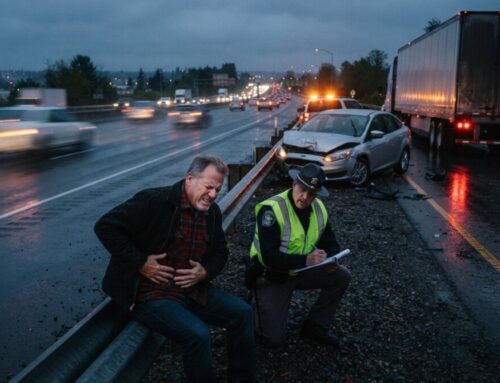
Your health and the health of others involved must be the absolute priority. If you are physically able, check yourself for injuries. Adrenaline can mask serious harm, so do not assume you are unharmed because you feel okay. Next, check on passengers and occupants of other vehicles. Call 911 immediately to report the accident and request emergency medical services. Do not move anyone who is unconscious or complaining of neck or back pain unless there is an immediate danger like fire or flooding. Moving an injured person can worsen spinal injuries.
Once emergency responders arrive, accept medical evaluation even if you believe your injuries are minor. Paramedics can identify hidden trauma such as internal bleeding, concussions, or soft tissue damage. Refusing treatment at the scene can later be used by insurance adjusters to argue that your injuries were not serious. A medical record created immediately after the crash creates a direct link between the accident and your injuries. This documentation is vital for any future claim. In our guide on what to do after a car accident: key steps, we explain how early medical documentation strengthens your case.
Document the Scene Thoroughly
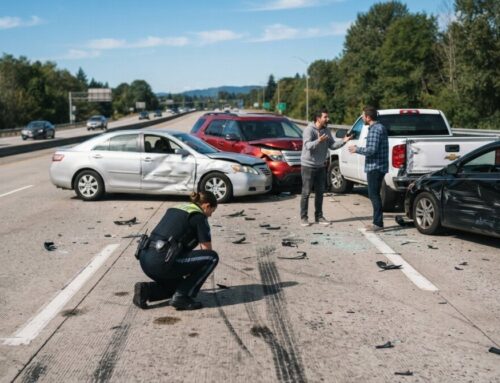
After ensuring everyone is safe and medical help is on the way, begin gathering evidence. Use your smartphone to take photos and videos of the entire scene. Capture multiple angles of the vehicles involved, showing damage, license plates, and the position of cars relative to road markings. Photograph skid marks, debris, traffic signs, weather conditions, and road hazards. If there are visible injuries, photograph them as well. This visual record provides an unbiased account of the crash that your memory may not retain accurately weeks later.
Exchange information with all drivers involved. Collect names, phone numbers, insurance company names, policy numbers, driver’s license numbers, and vehicle registration details. Also, gather contact information from any witnesses. Witnesses can provide independent accounts that support your version of events. Do not discuss fault at the scene. Even a simple apology or statement like “I didn’t see you” can be used against you later. Stick to factual exchanges of information and let law enforcement determine fault. For a deeper look at scene documentation, see our article on what happens after a car accident: key steps.
Notify Law Enforcement and Obtain a Police Report
Always request that law enforcement respond to the scene of a serious accident. A police report is an official document that contains the officer’s observations, statements from drivers and witnesses, and a preliminary determination of fault. This report becomes a cornerstone of your insurance claim or lawsuit. When the officer arrives, provide a clear and concise account of what happened. Stick to the facts: the direction you were traveling, the speed, the actions of the other driver, and the point of impact. Do not speculate or guess.
Ask the officer for the report number and instructions on how to obtain a copy. In many jurisdictions, reports are available within a few days to a week. Secure a copy as soon as possible and review it for accuracy. If there are errors, contact the agency to request corrections. An inaccurate police report can harm your case. Insurance companies rely heavily on these reports when evaluating liability and settlement amounts.
Report the Accident to Your Insurance Company
You should notify your own insurance company about the accident promptly, but be careful about what you say. Provide only the basic facts: the date, time, location, and the other driver’s information. Do not give a recorded statement without first consulting an attorney. Insurance adjusters are trained to ask questions that can minimize your claim. Phrases like “I feel fine” or “I think I was going the speed limit” can be twisted to reduce your payout. Simply report that a serious accident occurred and that you are seeking medical treatment.
Your insurance policy likely requires you to cooperate with the investigation. However, cooperation does not mean waiving your rights. If the adjuster pressures you for a recorded statement or asks you to sign medical releases, politely decline and say you will provide that information after consulting legal counsel. Remember that the insurance company’s goal is to settle your claim for as little as possible. Protecting your interests means slowing down and seeking professional advice before committing to any statements.
Preserve Evidence and Avoid Social Media
In the days and weeks after a serious accident, evidence can disappear. Preserve your vehicle exactly as it is. Do not repair it or clean it until an attorney or insurance adjuster has inspected it. Save all clothing worn at the time of the crash, as fabric can contain paint transfer, glass fragments, or other trace evidence. Keep a journal documenting your pain, physical limitations, emotional struggles, and how the injuries affect your daily life. This personal record provides powerful testimony about the non-economic damages you have suffered.
Equally important is what you should not do. Avoid posting anything about the accident on social media platforms such as Facebook, Instagram, Twitter, or TikTok. Insurance companies now routinely monitor claimants’ social media accounts for evidence that contradicts their injury claims. A photo of you smiling at a family gathering or standing at a store can be used to argue that your injuries are not severe. Even a private message can be subpoenaed. The safest approach is to stay off social media entirely until your case is resolved.
Seek Comprehensive Medical Treatment
After the emergency room visit, follow up with your primary care physician and any specialists recommended. Serious car accidents often cause injuries that develop over time, such as whiplash, herniated discs, traumatic brain injuries, and soft tissue damage. Attend all scheduled appointments and follow your doctor’s treatment plan. If you are prescribed physical therapy, chiropractic care, or pain management, adhere to those recommendations. Gaps in treatment can be interpreted as evidence that your injuries were not as serious as claimed.
Keep a file of all medical records, bills, prescription receipts, and correspondence with healthcare providers. This documentation will be essential when calculating damages for medical expenses, lost wages, and pain and suffering. Do not ignore mental health symptoms. Anxiety, depression, post-traumatic stress disorder (PTSD), and sleep disturbances are common after serious accidents. Mental health treatment is a legitimate part of your recovery and should be included in your claim. For a comprehensive overview of the entire process, refer to our guide on what to do after a minor car accident: key steps, which also applies to serious crashes with adjustments for severity.
Understand Your Legal Rights and Options
Serious car accidents often involve complex legal issues such as liability disputes, multiple parties, uninsured or underinsured motorists, and significant damages. You have the right to seek compensation for medical expenses, lost income, property damage, pain and suffering, and other losses. However, navigating the legal system without professional help is risky. Insurance companies have teams of adjusters and attorneys working to protect their bottom line. You need someone on your side who understands the tactics they use.
Consulting with a personal injury attorney who specializes in car accident cases is one of the most important steps you can take. An experienced lawyer can evaluate your case, advise you on the value of your claim, handle all communications with insurance companies, and represent you in court if necessary. Most personal injury attorneys work on a contingency fee basis, meaning they only get paid if you win. This arrangement makes legal representation accessible even if you are facing financial strain after the accident.
When to Hire an Attorney
You should consider hiring an attorney immediately if any of the following apply:
- You sustained serious injuries requiring hospitalization, surgery, or ongoing treatment.
- Liability is disputed or multiple parties are involved.
- The at-fault driver is uninsured or underinsured.
- The insurance company has offered a low settlement or denied your claim.
- Your case involves a government entity, commercial vehicle, or rideshare company.
An attorney can level the playing field and ensure that your rights are protected throughout the claims process. They can also identify additional sources of compensation you may not have considered, such as uninsured motorist coverage or umbrella policies.
Calculating Damages and Building Your Case
Compensation in a serious car accident case is divided into two categories: economic damages and non-economic damages. Economic damages are tangible financial losses with clear dollar amounts. These include medical bills, future medical care costs, lost wages, loss of earning capacity, property damage, and out-of-pocket expenses. Non-economic damages are subjective losses that affect your quality of life. They include physical pain, emotional distress, loss of enjoyment of life, loss of consortium, and permanent disability or disfigurement.
Building a strong case requires gathering all evidence of these damages. Your attorney will work with medical experts, economists, and vocational specialists to quantify both current and future losses. They will also negotiate with insurance adjusters to demand a fair settlement. If a fair settlement cannot be reached, your attorney can file a lawsuit and take your case to trial. The vast majority of personal injury cases settle out of court, but having the option to litigate gives you leverage in negotiations.
Handling Insurance Bad Faith Tactics
Insurance companies sometimes engage in bad faith practices to avoid paying legitimate claims. These tactics include unreasonably delaying the investigation, denying a claim without a valid reason, offering a settlement far below the claim’s value, misrepresenting policy provisions, or refusing to communicate with the claimant. If you suspect bad faith, document every interaction with the insurance company, including dates, names of representatives, and summaries of conversations. Bad faith claims can result in additional damages beyond the original policy limits.
An experienced attorney can identify bad faith behavior and take legal action to hold the insurer accountable. State laws vary on what constitutes bad faith and what penalties apply. In some states, you may be entitled to treble damages or punitive damages if the insurer acted in bad faith. Do not tolerate unfair treatment. You paid your premiums expecting protection, and you deserve to have your claim handled honestly and promptly.
Frequently Asked Questions
How long do I have to file a lawsuit after a serious car accident?
The time limit, known as the statute of limitations, varies by state. In most states, you have between one and six years from the date of the accident to file a personal injury lawsuit. Some states have shorter deadlines for claims against government entities. Missing the deadline can permanently bar you from recovering compensation. Consult an attorney as soon as possible to ensure you meet all filing deadlines.
Can I still recover compensation if I was partially at fault?
Many states follow comparative negligence rules, which allow you to recover compensation even if you were partially at fault. However, your award is reduced by your percentage of fault. For example, if you were 20% at fault and your damages total $100,000, you would receive $80,000. Some states have a 50% or 51% bar, meaning you cannot recover if you are equally or more at fault than the other driver. An attorney can explain how your state’s laws apply to your case.
What if the other driver has no insurance?
If the at-fault driver is uninsured or underinsured, your own uninsured/underinsured motorist (UM/UIM) coverage can step in to pay for your damages. This coverage is optional in some states but highly recommended. If you do not have UM/UIM coverage, your options may be limited to suing the driver personally, which can be difficult if they lack assets. An attorney can help explore all possible avenues for compensation.
How much is my car accident case worth?
Every case is unique, and the value depends on factors such as the severity of your injuries, the clarity of liability, the amount of medical expenses and lost wages, the impact on your quality of life, and the insurance policy limits available. There is no standard formula. An experienced attorney can provide a realistic assessment based on similar cases in your jurisdiction and negotiate for the maximum compensation you deserve.
Recovering from a serious car accident is a long journey that requires patience, diligence, and the right support. By taking immediate action to protect your health and evidence, reporting the accident properly, seeking ongoing medical care, and consulting with a knowledgeable attorney, you position yourself for the best possible outcome. You do not have to face this challenge alone. Legal professionals are available to guide you through every step, from filing your claim to negotiating a fair settlement or representing you in court. Your focus should be on healing, while your legal team handles the complexities of your case. Call us at 855-545-2917 to speak with an experienced car accident attorney who can evaluate your case and help you pursue the compensation you need to rebuild your life. Acting quickly protects your rights and maximizes your recovery.