Who Is Responsible in Multi Vehicle Accident Claims
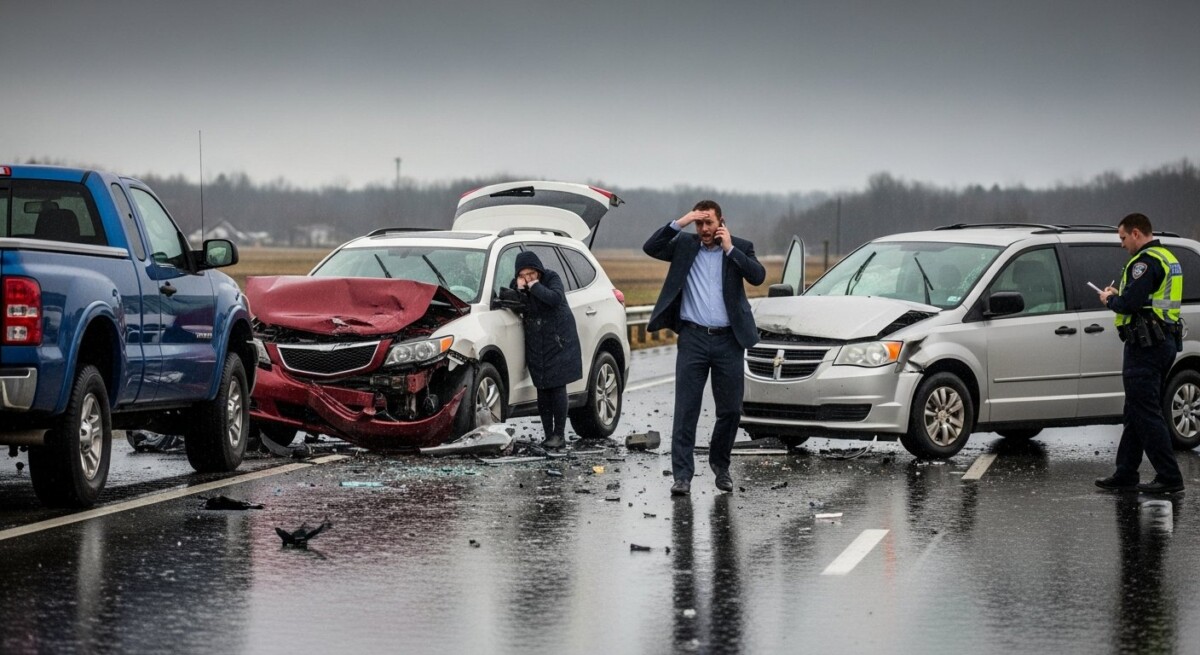
Determining who is responsible in a multi vehicle accident can feel like untangling a knot of conflicting stories, insurance policies, and traffic laws. Unlike a simple two-car collision, a pileup on a highway or a chain-reaction crash at an intersection often involves three, four, or even dozens of drivers. Each driver may point fingers at others, and insurance companies often try to shift blame to minimize their own payouts. Understanding how liability is assigned in these complex crashes is critical for protecting your rights and securing the compensation you need for medical bills, lost wages, and vehicle repairs.
In this guide, we break down the rules and strategies that determine fault in multi-vehicle wrecks. We also explain the legal doctrines that apply, the role of evidence, and the steps you should take immediately after the crash. If you have been injured in a pileup, knowing who is responsible in a multi vehicle accident is the first step toward a successful claim.
How Liability Is Determined in a Multi-Vehicle Crash
Liability in a multi-vehicle accident is rarely black and white. Most jurisdictions follow a comparative fault system, meaning each driver can be assigned a percentage of blame. For example, Driver A might be 60 percent at fault for speeding, while Driver B is 40 percent at fault for failing to brake in time. In pure comparative fault states, each driver can recover damages proportional to the other driver’s fault, even if they are partially at fault themselves. In modified comparative fault states, a driver cannot recover anything if they are 50 or 51 percent or more at fault.
Another common framework is the last clear chance doctrine, which can shift liability to the driver who had the final opportunity to avoid the crash but failed to do so. In a pileup, a driver who rear-ends the car ahead is often presumed negligent, but that presumption can be rebutted if the rear driver proves the lead driver stopped suddenly or had malfunctioning brake lights. The key is that fault is not automatically split equally. Each driver’s actions, inactions, and even their vehicle’s condition are examined.
In our guide on finding a local vehicle accident lawyer after a crash, we explain how an attorney can gather the evidence needed to build your case. A lawyer will interview witnesses, analyze police reports, and work with accident reconstruction experts to pinpoint exactly who is responsible in a multi vehicle accident.
Common Causes of Multi-Vehicle Accidents
Understanding what typically causes these crashes helps clarify fault. The most frequent scenarios include:
- Chain-reaction rear-ends: One driver hits the car in front, which then pushes into the next car. The driver who started the chain is often primarily liable, but each following driver may share fault if they failed to maintain a safe following distance.
- Highway pileups in fog or rain: Reduced visibility leads to multiple collisions. Liability may fall on drivers who were driving too fast for conditions, but also on the lead driver who stopped abruptly without warning.
- Intersection crashes involving multiple lanes: A driver runs a red light and hits two or more cars crossing legally. That driver is typically fully liable for all damages.
- Construction zone accidents: Merging confusion or sudden lane closures cause drivers to collide. Fault may be shared among drivers who failed to yield or merge properly, as well as the construction company if signage was inadequate.
Each scenario requires a careful review of traffic laws, witness statements, and physical evidence. For instance, if a driver is cited for reckless driving, that citation can be powerful evidence of fault. However, even without a citation, a skilled attorney can still build a strong case by proving that a specific driver’s negligence was the primary cause of the pileup.
The Role of Insurance in Multi-Vehicle Claims
Insurance companies handle multi-vehicle claims by first determining each driver’s percentage of fault. They then apply that percentage to the total damages. If you are 30 percent at fault and your total damages are $100,000, you can recover $70,000 from the other at-fault drivers. However, if the other drivers have low policy limits, you might not be able to collect the full amount. That is why uninsured and underinsured motorist coverage is vital in multi-vehicle accidents. It can fill the gap when a liable driver does not have enough insurance to cover your losses.
Another complication is that multiple insurance companies may be involved. Each insurer will try to shift blame to other drivers or even to you. They may use contradictory statements from witnesses or argue that you contributed to the crash by failing to brake or swerve. To counter these tactics, it is essential to have a clear, consistent account of what happened. Do not give a recorded statement to any insurance company without first consulting an attorney. Anything you say can be used to reduce your share of compensation.
Steps to Take Right After a Pileup
Your actions in the immediate aftermath of a multi-vehicle accident can significantly affect your claim. Follow these steps to protect your rights and strengthen your case:
- Ensure safety and call 911: Move to a safe location if possible, and call for emergency medical help. Do not leave the scene.
- Document everything: Take photos and videos of the accident scene, all vehicles involved, road conditions, traffic signs, and any visible injuries. Capture the positions of the cars before they are moved.
- Exchange information: Collect names, phone numbers, insurance details, and license plate numbers from every driver and witness. Do not discuss fault with anyone at the scene.
- Get medical attention: Even if you feel fine, see a doctor. Some injuries like whiplash or internal bleeding may not show symptoms immediately.
- Notify your insurance company: Report the accident promptly, but stick to the facts. Do not admit fault or speculate about what happened.
- Consult an attorney: Before speaking with any other insurance adjuster, contact a lawyer who handles multi-vehicle accidents. They can advise you on how to preserve evidence and avoid common pitfalls.
These steps create a paper trail that can be used to establish who is responsible in a multi vehicle accident. Without thorough documentation, insurance companies may fill the gaps with their own version of events, which often favors their bottom line.
Legal Doctrines That Affect Multi-Vehicle Liability
Two legal doctrines frequently come into play in pileup cases: joint and several liability and several liability. In states with joint and several liability, any defendant found at fault can be held responsible for the entire amount of damages, even if they were only partially at fault. This rule helps plaintiffs recover full compensation when one defendant is wealthy or has high insurance limits, while another defendant is uninsured. However, many states have modified or abolished joint and several liability, replacing it with several liability, where each defendant pays only their share of fault.
Another important concept is the sudden emergency doctrine. If a driver is faced with an unexpected situation not of their own making, such as a car swerving into their lane, and they react reasonably, they may not be held liable for the resulting crash. However, this defense is not automatic. The driver must prove that their reaction was what a reasonable person would do under the same circumstances. In a multi-vehicle accident, several drivers may claim sudden emergency, making the case even more complex.
Given these nuances, it is critical to work with an attorney who understands the specific laws in your state. For instance, if you live in a pure comparative fault state like California, you can recover damages even if you are 99 percent at fault, though your recovery will be reduced by 99 percent. In a modified comparative fault state like Texas, you cannot recover if you are 51 percent or more at fault. A local lawyer can explain how these rules apply to your situation.
How an Attorney Can Help Prove Fault
Proving fault in a multi-vehicle accident often requires more than just a police report. Attorneys use several tools to build a compelling case. They may hire accident reconstruction experts who can analyze skid marks, vehicle damage patterns, and debris fields to determine the sequence of events. They can also obtain data from the event data recorders (black boxes) in modern vehicles, which record speed, braking, and steering inputs seconds before the crash.
Witness testimony is another crucial piece of evidence. An attorney can interview witnesses while their memories are fresh and cross-reference their statements with physical evidence. Surveillance footage from nearby businesses, traffic cameras, or dashcams can provide an unbiased account of the crash. In today’s world, many drivers have dashcams, and a lawyer can request that all parties preserve that footage immediately.
An attorney also handles all communication with insurance companies, ensuring that your rights are protected. They can negotiate for a fair settlement that accounts for all your damages, including future medical expenses, lost earning capacity, and pain and suffering. If negotiations fail, they can file a lawsuit and take the case to trial. For more on this process, see our article on finding the right motor vehicle accident lawyer near you.
Frequently Asked Questions
Can I still recover damages if I was partially at fault?
Yes, in most states you can still recover damages even if you were partially at fault. Your recovery will be reduced by your percentage of fault. For example, if you are 20 percent at fault and your total damages are $50,000, you can recover $40,000 from the other at-fault drivers.
What if one of the drivers in the pileup is uninsured?
If an uninsured driver is at fault, you can file a claim under your own uninsured motorist coverage. This coverage is designed to protect you when the at-fault driver lacks insurance. It is advisable to carry high limits of uninsured motorist coverage, especially in multi-vehicle scenarios where multiple drivers may be uninsured.
How long do I have to file a claim after a multi-vehicle accident?
The statute of limitations varies by state, typically ranging from one to six years from the date of the accident. In most states, the limit for personal injury claims is two years. It is important to file your claim within this window, or you may lose your right to recover damages forever.
Do I need a lawyer for a multi-vehicle accident claim?
While it is possible to handle a claim on your own, the complexity of multi-vehicle accidents makes legal representation highly advisable. An attorney can navigate the multiple insurance companies, gather expert evidence, and ensure that you are not unfairly blamed for the crash. Many personal injury lawyers offer free consultations and work on a contingency fee basis, meaning you pay nothing unless they recover compensation for you.
Final Thoughts on Multi-Vehicle Accident Liability
Multi-vehicle accidents are among the most challenging types of car crash cases. Determining who is responsible in a multi vehicle accident requires a thorough investigation, a deep understanding of traffic laws, and the ability to negotiate with multiple insurance companies. The process can be overwhelming, especially if you are recovering from injuries. However, you do not have to face it alone. With the right legal guidance, you can hold the negligent drivers accountable and secure the compensation you need to move forward. If you have been involved in a pileup, reach out to a qualified attorney as soon as possible to protect your rights and begin building your case. For further guidance, check out our resource on how to find a vehicle accident lawyer.