How to Prove Fault in a Car Accident: Evidence Guide
After a car accident, determining who is legally responsible can make the difference between a fair settlement and a denied claim. Proving fault is not always straightforward: insurance adjusters, police officers, and lawyers rely on a combination of physical evidence, witness accounts, and legal rules to assign liability. Without a clear proof of fault, you risk being held partially or fully responsible for damages you did not cause. This guide explains the practical steps and evidence types you need to establish fault and strengthen your case.
Why Proving Fault Matters for Your Claim
Fault directly determines which insurance company pays for your medical bills, lost wages, property damage, and pain and suffering. In states with comparative negligence laws, your compensation is reduced by your percentage of fault. For example, if you are found 20 percent at fault, your recovery is cut by that amount. Proving the other driver was solely or primarily at fault maximizes your payout. It also protects you from being sued by the other party. A strong fault argument forces insurers to settle on your terms. Without solid evidence, you may have to rely on your own coverage or face lengthy litigation.
Understanding the link between fault and compensation is critical. For a deeper look at what you can recover, read our article on car accident compensation and how it works.
Key Types of Evidence to Prove Fault
The most convincing fault evidence comes from multiple sources. Collecting the right evidence immediately after an accident gives you the best chance of establishing liability. Below are the primary forms of evidence that lawyers and adjusters trust.
- Police reports: Officers document the scene, cite traffic violations, and often state a preliminary opinion on who caused the crash. These reports carry significant weight with insurers and in court.
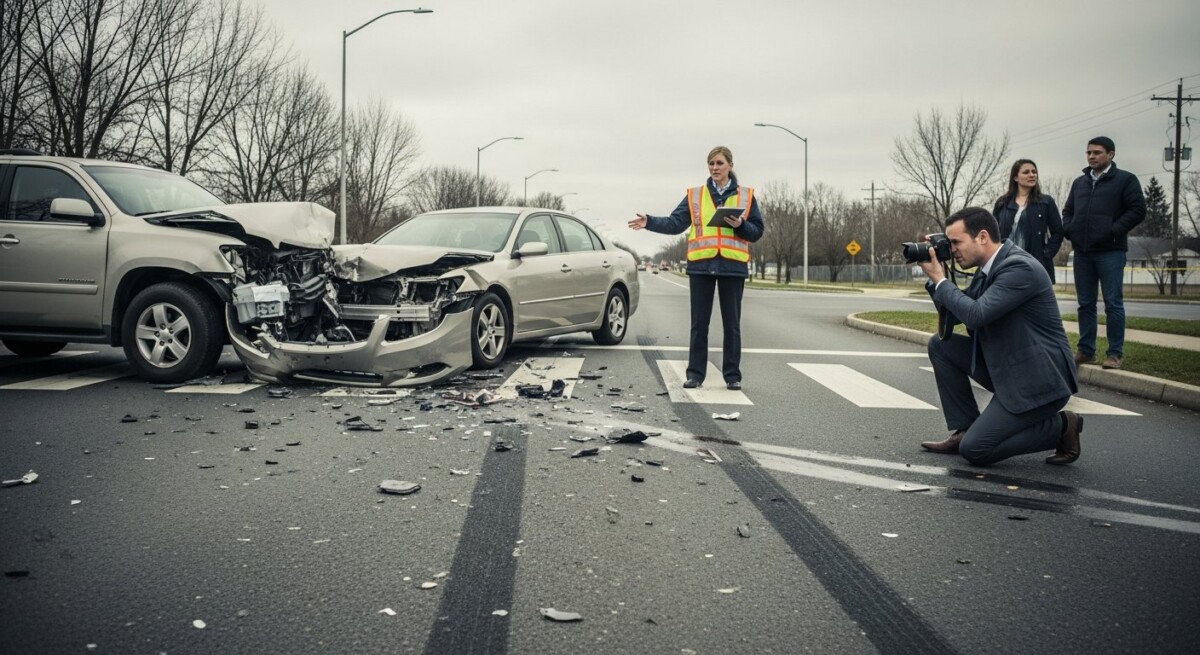
- Photographs and videos: Images of vehicle damage, skid marks, traffic signals, road conditions, and weather provide an unbiased record. Dashcam footage can be especially powerful.
- Witness statements: Bystanders or passengers who saw the accident can corroborate your version of events. Collect names and contact information at the scene.
- Medical records: Documentation of injuries and treatment helps prove that the crash caused harm, which supports your claim of negligence.
- Vehicle data: Event data recorders (black boxes) and smartphone telemetry can reveal speed, braking, and steering inputs moments before impact.
Each piece of evidence builds a narrative. A police report alone may not be enough if it is contested. Combining photos, witness testimony, and vehicle data creates a compelling case. For step-by-step instructions on filing your claim after gathering evidence, see our guide on how to file a car accident insurance claim.
Steps to Gather Evidence After a Car Accident
Time is your enemy after a crash. Evidence disappears quickly: skid marks fade, witnesses leave, and memories blur. Follow these steps immediately after ensuring safety and calling emergency services.
- Call the police. Even for minor accidents, a police report creates an official record. Provide the officer with your honest account and point out any visible evidence like debris or lighting.
- Take photos and videos. Shoot wide-angle shots of the entire scene, close-ups of damage, road conditions, traffic signs, and the other vehicle’s license plate. Capture the positions of both cars before they are moved.
- Collect witness information. Ask anyone who saw the crash for their name, phone number, and email. If they are willing, ask them to describe what they saw in their own words.
- Exchange information. Get the other driver’s name, insurance details, and phone number. Note the make, model, and color of their vehicle.
- Seek medical attention. Even if you feel fine, get checked by a doctor. Adrenaline can mask injuries, and delaying treatment weakens the link between the accident and your injuries.
After securing the evidence, notify your insurance company promptly. Be cautious about giving recorded statements without legal advice. Insurers may use your words against you later.
How Fault Is Determined in Different Scenarios
Traffic laws and common accident patterns often dictate fault. Knowing the standard rules helps you anticipate how an adjuster or judge will view your case.
Rear-End Collisions
The driver who strikes a vehicle from behind is almost always at fault. The law assumes that driver failed to maintain a safe following distance or was distracted. Exceptions exist only if the lead driver suddenly reversed or had malfunctioning brake lights without warning.
Left-Turn Accidents
A driver turning left across traffic must yield to oncoming vehicles. If a left-turning car is hit by a straight-moving car, the turner is usually at fault. The exception occurs when the straight-moving driver runs a red light or exceeds the speed limit.
Intersection Collisions
Fault depends on right-of-way rules. If both drivers enter on a green light, the one who failed to yield to traffic already in the intersection is liable. Running a stop sign or red light almost always assigns fault to the violator.
Multi-Vehicle Pileups
These crashes involve complex chains of fault. Each driver may have a percentage of liability based on their actions. Evidence like skid marks and black box data becomes essential to untangle the sequence of impacts.
No matter the scenario, consulting an experienced attorney can help you navigate these nuances. Many car accident victims maximize their recovery by working with a lawyer. Find out why in our article on why hire a car accident lawyer for maximum compensation.
The Role of Insurance Companies and Legal Help
Insurance adjusters are trained to minimize payouts. They may pressure you into accepting a quick settlement or twist your words to assign partial fault. They will examine your evidence looking for gaps or inconsistencies. If you lack strong proof, they may deny your claim or offer far less than you need.
Having legal representation levels the playing field. A lawyer knows what evidence to gather, how to preserve it, and how to present it persuasively. They can also negotiate with adjusters on your behalf and take the case to court if necessary. At CarInjuryAccident, we connect you with seasoned attorneys who specialize in car accident claims. Our patented attorney selection process identifies top-rated legal professionals who fight for your rights.
Remember that statutes of limitations apply. In most states, you have two to three years from the date of the accident to file a lawsuit. Acting quickly ensures your evidence stays fresh and your claim remains viable.
Frequently Asked Questions
What is the most important piece of evidence to prove fault?
No single piece guarantees success, but a police report combined with photographic evidence and witness statements creates the strongest foundation. Many attorneys consider dashcam footage the gold standard because it provides an unbiased, real-time record.
Can I prove fault without a police report?
Yes, but it is harder. You can rely on photos, witness statements, and vehicle data. However, without an official report, insurers may be more skeptical. Always call the police even for minor accidents.
How long do I have to collect evidence after a car accident?
Gather as much as possible at the scene. Witness memories fade within days, and physical evidence like tire marks can disappear. Aim to collect everything within 24 hours. After that, focus on medical records and obtaining the police report.
What if the other driver admits fault at the scene?
Get that admission in writing or recorded (if legal in your state). Even a verbal admission can be used as evidence, but having a signed statement or audio recording strengthens your case considerably.
Do I need a lawyer to prove fault?
You are not required to hire one, but it is highly recommended. A lawyer understands the legal standards, knows how to collect and preserve evidence, and can counter insurance company tactics. The potential increase in settlement usually far exceeds the cost of legal fees.
If you have been in a car accident and need help proving fault, contact our team. We can connect you with a seasoned attorney who will evaluate your case and guide you through the process. Your recovery depends on establishing liability, and we are here to help you build that case.