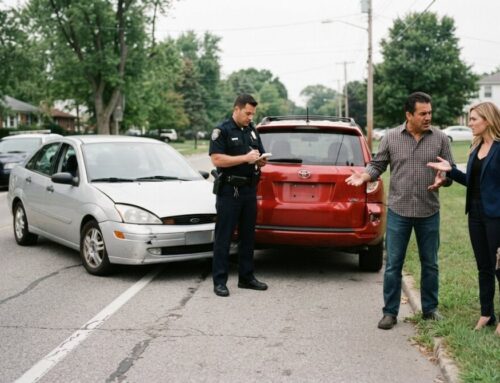
How to Win a Rear End Collision Claim

Being hit from behind is one of the most common and unsettling car accident scenarios. You might feel fine immediately after the impact, only to wake up the next day with a stiff neck or a throbbing headache. Beyond the physical pain, you now face the daunting process of dealing with insurance companies, medical bills, and vehicle repairs. If you have been in this situation, understanding how to navigate a rear end collision claim is critical to securing the compensation you need. The actions you take in the days and weeks following the crash can dramatically influence the outcome of your case, and knowing your rights can prevent you from making costly mistakes.
This guide walks you through the entire process, from the immediate steps at the scene to negotiating a fair settlement. You will learn how fault is determined, what damages you can recover, and how to handle tricky insurance adjuster tactics. While the legal system can feel overwhelming, having a clear roadmap helps you move forward with confidence. Remember, you are not alone in this process, and professional legal help is available to level the playing field.
Why Rear End Collisions Are Unique in Personal Injury Law
Rear end collisions carry a legal presumption that is different from most other car accidents. In the vast majority of cases, the driver who rear-ends another vehicle is considered at fault. This is because all drivers have a legal duty to maintain a safe following distance and to be attentive to the road ahead. When a driver fails to stop in time, it is generally presumed that they were either following too closely, speeding, distracted, or otherwise negligent.
However, this presumption is not absolute. There are situations where the driver in front may share some fault. For example, if your brake lights were not working, you suddenly reversed into the car behind you, or you made an abrupt stop without any reasonable cause, the other driver’s insurance company might argue that you contributed to the accident. Additionally, if a third vehicle caused the chain reaction, fault could be shared among multiple parties. Understanding these nuances is essential, as they can affect the value of your claim and your ability to recover damages.
Because of this presumption of fault, insurance companies often try to settle rear end collision claims quickly and for as little money as possible. They know that liability is rarely disputed, so their focus shifts to minimizing your injuries or arguing that you are exaggerating your symptoms. This is why having a strategic approach is vital, and knowing what to do immediately after the crash sets the foundation for a strong claim.
For a detailed breakdown of liability rules and common exceptions, you can review our comprehensive guide on who is at fault in a rear end collision. This resource explains the legal standards in plain language.
Immediate Steps to Strengthen Your Rear End Collision Claim
Your actions at the scene of the accident can either protect your claim or undermine it. Even if you feel fine and the damage looks minor, you should always follow a specific protocol. Adrenaline can mask pain, and some injuries, like whiplash, take hours or days to become apparent. The following steps are critical to building a solid case.
1. Call the Police and Seek Medical Attention
Always call the police to the scene, even for what seems like a fender bender. A police report creates an official record of the accident, including the officer’s observations and any citations issued. This report is often the first piece of evidence an insurance company or jury will review. If the other driver was cited for following too closely or distracted driving, it significantly strengthens your claim.
After the police are called, seek medical attention. If you are transported by ambulance, that creates a clear link between the accident and your injuries. If you decline transport, visit an emergency room, urgent care center, or your primary care physician within 24 to 48 hours. This establishes a contemporaneous record of your injuries, which is crucial for proving causation. If you wait too long, the insurance company will argue that your injuries were pre-existing or not related to the crash.
2. Document the Scene Thoroughly
While you are waiting for the police, use your smartphone to take photos and videos of everything. Capture the damage to both vehicles from multiple angles, the surrounding road conditions, traffic signs, and any skid marks on the pavement. If there are witnesses, ask for their contact information and get brief statements if they are willing. Witness testimony can be invaluable if the other driver changes their story later.
Exchange information with the other driver, including their name, phone number, insurance company, policy number, and driver’s license number. Avoid discussing fault at the scene, even if you feel the other driver was clearly at fault. Simply state the facts to the police and let them compile the report.
3. Report the Accident to Your Insurance Company
You should notify your own insurance company about the accident as soon as possible, even if you plan to file a claim against the other driver’s policy. Most auto insurance policies require prompt notification of any accident. However, you should be careful about what you say. Provide the basic facts and the other driver’s information, but do not give a recorded statement until you have consulted with an attorney. Insurance adjusters are trained to get you to say things that can later be used to minimize your payout.
Calculating Damages in a Rear End Collision Claim
Once you have received medical treatment and your vehicle is assessed, you can begin to calculate the full extent of your damages. In a rear end collision claim, you are entitled to seek compensation for both economic and non-economic losses. Understanding these categories is essential because insurance companies often try to offer a quick settlement that only covers your immediate vehicle repairs, ignoring your long-term medical needs.
Economic damages are the tangible financial losses you have incurred. This includes medical bills for emergency room visits, doctor appointments, physical therapy, chiropractic care, prescription medications, and any future medical treatment you will need. It also includes lost wages if you missed work due to your injuries, loss of earning capacity if your injuries prevent you from returning to your previous job, and the cost of vehicle repairs or the actual cash value of your car if it was totaled.
Non-economic damages are more subjective but equally important. They compensate you for the pain and suffering you endured, the loss of enjoyment of life, emotional distress, and the impact on your relationships. For example, if your injuries prevent you from playing with your children or participating in a hobby you love, you deserve compensation for that loss. The value of these damages often depends on the severity of your injuries and the long-term prognosis, which is why having a medical expert’s testimony is critical.
In some cases, if the other driver’s conduct was especially reckless, such as driving under the influence or texting while driving, you may also be entitled to punitive damages. These are designed to punish the at-fault driver and deter similar behavior, but they are not available in every claim.
The Settlement Process: How to Negotiate a Fair Offer
After you have completed your medical treatment or reached maximum medical improvement, your attorney will send a demand letter to the at-fault driver’s insurance company. This letter outlines your injuries, medical expenses, lost wages, and pain and suffering, and it states the amount of compensation you are demanding. The insurance company will respond with a low counteroffer, and this is where the negotiation begins.
Insurance adjusters are in the business of protecting their company’s bottom line, not your well-being. They will often use tactics such as delaying the process, disputing medical necessity, or arguing that you could have recovered faster. This is why it is so important to have a documented chain of medical treatment and to follow your doctor’s orders exactly. If you miss appointments or stop treatment prematurely, the adjuster will use that against you.
Your attorney will handle all communications with the insurance company, ensuring that you do not accidentally say something that undermines your claim. The negotiation process can take several weeks or even months, depending on the complexity of your case and the willingness of the insurer to offer a fair amount. Patience is key, as accepting a lowball offer early can leave you with insufficient funds for future medical expenses.
If the insurance company refuses to offer a reasonable settlement, the next step is to file a lawsuit. While most rear end collision claims never go to trial, the threat of a lawsuit can push the insurer to increase their offer. Having an experienced attorney who is prepared to litigate your case shows the insurance company that you are serious about getting the compensation you deserve.
For a step-by-step explanation of the entire post-accident process, including evidence gathering and deadlines, refer to our in-depth article on what to do after a rear end collision.
Common Mistakes That Can Ruin Your Claim
Even well-intentioned accident victims can make errors that significantly reduce the value of their claim. Being aware of these pitfalls can help you avoid them and preserve your legal rights. Here are the most frequent mistakes we see in rear end collision cases:
- Delaying medical treatment: Waiting days to see a doctor gives the insurer a reason to claim your injuries were not caused by the accident.
- Giving a recorded statement: Insurance adjusters may twist your words to suggest you were not injured or that you share fault. You have the right to refuse until your attorney is present.
- Signing a medical release: A broad release allows the insurer to access your entire medical history, which they will comb through for any pre-existing condition to blame.
- Posting on social media: Photos of you at a party or engaging in physical activity can be used to argue that your injuries are not as severe as you claim.
- Accepting the first settlement offer: Initial offers are almost always far below the true value of your claim. Consult an attorney before agreeing to anything.
Avoiding these mistakes is much easier when you have professional guidance. An attorney can act as a buffer between you and the insurance company, ensuring that your rights are protected at every turn.
When to Hire an Attorney for Your Rear End Collision Claim
You may be wondering if you need a lawyer for a rear end collision claim, especially if your injuries seem minor. While it is possible to handle a simple claim on your own, there are several scenarios where professional legal representation is strongly recommended. If you have suffered any injury that required medical attention, if the accident involved multiple vehicles, or if the insurance company is disputing liability or the severity of your injuries, you should consult with an attorney.
An experienced personal injury lawyer brings more than just legal knowledge; they bring negotiating skill and resources. They can hire accident reconstruction experts, obtain medical experts to testify about your future care needs, and handle all the paperwork and deadlines, which are easy to miss when you are recovering from an injury. Most importantly, studies show that accident victims who hire an attorney receive significantly higher settlements than those who go it alone.
At CarInjuryAccident, we connect you with seasoned attorneys who specialize in personal injury cases, including rear end collisions. Our patented attorney selection process identifies top-rated legal professionals in your area who have a track record of success. We make the process of finding the right lawyer easy and stress-free, so you can focus on your recovery.
Frequently Asked Questions About Rear End Collision Claims
How long do I have to file a rear end collision claim?
Every state has a statute of limitations for personal injury claims, which typically ranges from two to four years. However, there are exceptions, such as claims against government entities, which have much shorter deadlines. It is best to consult an attorney as soon as possible to ensure you do not miss any critical filing deadlines.
What if I do not feel injured right after the accident?
Many serious injuries, like whiplash, concussions, and soft tissue damage, do not manifest until days after the crash. Even if you feel fine at the scene, it is essential to see a doctor within 48 hours. A medical professional can identify hidden injuries and create a record that links your symptoms to the accident.
Can I claim compensation if I was partially at fault?
Yes, in most states you can still recover damages even if you share some fault, as long as you are not more than 50% at fault. However, your settlement will be reduced by your percentage of fault. For example, if you are found to be 20% at fault, your final settlement will be reduced by 20%. An attorney can help you argue that the other driver was entirely at fault to maximize your recovery.
How much is my rear end collision claim worth?
The value of your claim depends on several factors, including the severity of your injuries, the cost of your medical treatment, the impact on your ability to earn an income, and the pain and suffering you experienced. There is no standard formula, but an experienced attorney can evaluate your damages and estimate a fair range based on similar cases in your jurisdiction.
Take the Next Step Toward Fair Compensation
Dealing with a rear end collision claim can be exhausting, but you do not have to face it alone. The right legal partner can make the difference between a lowball offer and a settlement that truly covers your losses and your recovery. If you are ready to pursue your claim, the first step is to speak with a qualified attorney who can evaluate your case and guide you through the process.
At CarInjuryAccident, we are dedicated to helping you find the legal representation you need. Our team of seasoned attorneys is ready to fight for your rights. The path to recovery starts with a consultation, and taking that step today can secure your financial future tomorrow.