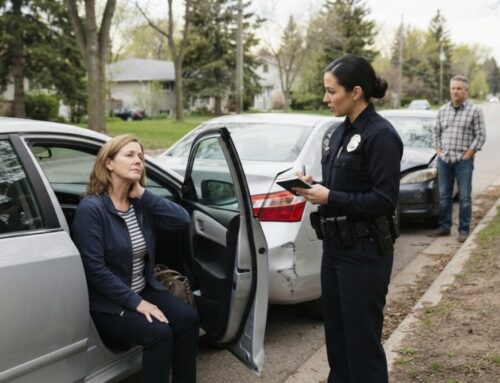
Why Admitting Fault After an Accident Can Cost You

You are shaken up, the airbags have deployed, and your heart is pounding. In the chaos after a car crash, your first instinct might be to apologize or say, “It was my fault.” This is a natural human response, but it is one of the costliest mistakes you can make. Saying you are sorry or accepting blame at the scene can destroy your legal case, void your insurance coverage, and leave you personally liable for thousands of dollars in damages. Understanding why you should not admit fault accident circumstances is critical to protecting your financial future and your legal rights.
When adrenaline is high, you do not have all the facts. You might not see the driver who ran a red light, the hidden stop sign, or the mechanical failure that caused the crash. By admitting fault, you are making a legal statement that can be used against you in court and by insurance adjusters. The other driver’s insurance company will seize your words and use them to deny your claim or reduce your settlement. This article explains the legal, financial, and strategic reasons to keep your mouth shut and let the evidence speak for itself.
The Legal Consequences of Admitting Fault
Admitting fault at the scene is not just a polite gesture. It is a legal admission that can have binding consequences. In many jurisdictions, an admission of fault can be introduced as evidence in a civil lawsuit. If you say, “I’m sorry, I didn’t see you,” that statement can be used to prove negligence. The other party’s attorney will argue that you already acknowledged responsibility, making it harder for your lawyer to dispute liability.
Even a casual apology can be interpreted as an admission of guilt. Some states have “apology laws” that protect people from having apologies used against them in court, but these laws are limited. They typically cover expressions of sympathy, not admissions of fault. For example, saying “I’m sorry you are hurt” might be protected, but saying “I’m sorry I ran the stop sign” is not. The safest approach is to say nothing about fault and focus on safety and exchanging information.
In our guide on why you need a lawyer for accident insurance claims, we explain how early statements can complicate your case. An admission at the scene gives the insurance company a weapon to use against you. They can argue that you are partially or fully at fault, reducing or eliminating your compensation. This is why you should not admit fault accident situations regardless of how certain you feel about your role.
How Insurance Companies Use Your Words Against You
Insurance adjusters are trained to look for any statement that minimizes their payout. When you admit fault, you are doing their job for them. They will record your words, take notes, and use them to deny liability or reduce your settlement. The adjuster’s goal is to protect the insurance company’s bottom line, not to help you. If you say “It was my fault,” the adjuster will close the file and offer you nothing or a fraction of what you deserve.
Even if you later realize you were not at fault, the admission can be difficult to retract. Insurance companies treat admissions as evidence of liability. They will argue that your initial statement was more reliable because it was made closer to the accident, before you had time to “rehearse” or “coordinate” with a lawyer. This is why you should not admit fault accident details to anyone except your attorney and the police when required by law.
Consider this scenario: You rear-end another car at a stoplight. You immediately apologize and say, “I was distracted by my phone.” Later, you discover that the other driver’s brake lights were broken, which contributed to the crash. Your admission of distraction, however, makes it nearly impossible to argue that the broken brake lights were a factor. The insurance company will focus on your admission and ignore the other driver’s negligence. This is a classic example of why you should not admit fault accident scenes until you have all the facts.
The Danger of Speaking Without All the Facts
Accidents are chaotic events. You cannot know every detail in the first few minutes. You might not see the car that ran the red light, the pedestrian who darted into traffic, or the road hazard that caused you to swerve. Admitting fault before you have investigated the scene is like pleading guilty to a crime before seeing the evidence. It is premature and dangerous.
Police officers are trained to investigate accident scenes and determine fault based on evidence, not emotions. They will look at skid marks, vehicle damage, witness statements, and traffic laws. Your opinion about fault is not necessary and can actually hinder the investigation. If you admit fault, the officer may stop investigating and simply write the report based on your admission. This can leave important evidence undiscovered and unfairly assign blame to you.
Furthermore, the other driver may be at fault but will happily let you take the blame. People are not always honest after accidents. They might exaggerate your role or downplay their own. By admitting fault, you remove any incentive for them to tell the truth. You are essentially giving them a free pass. This is a key reason why you should not admit fault accident situations without legal guidance.
What You Should Do Instead of Admitting Fault
Instead of apologizing or accepting blame, focus on the following steps to protect yourself legally and financially. These actions will help you build a strong case without saying anything that could be used against you.
- Check for injuries and call 911: Your first priority is safety. Call for medical help if anyone is hurt. Do not move injured people unless there is an immediate danger like fire.
- Move to a safe location: If possible and safe, move your vehicle to the side of the road. Turn on hazard lights and set up flares or warning triangles.
- Exchange information: Get the other driver’s name, phone number, insurance details, and license plate number. Also get contact information for any witnesses.
- Document the scene: Take photos of the vehicles, damage, skid marks, road conditions, and traffic signs. Write down your own recollection of events as soon as possible.
- Contact a lawyer: Before making any statements to insurance companies, speak with an attorney. They can advise you on what to say and what not to say.
These steps shift the focus from blame to evidence. By documenting the scene and gathering information, you give your lawyer the tools they need to prove liability. This is far more effective than admitting fault in the heat of the moment. Remember, the other driver’s insurance company is not your friend. They will use any admission against you. Following these steps helps you avoid that trap.
How Admitting Fault Affects Your Settlement
Your settlement amount is directly tied to the percentage of fault assigned to you. In states that follow comparative negligence rules, your compensation is reduced by your percentage of fault. If you are found to be 20% at fault, your settlement is reduced by 20%. If you admit fault and are found to be 100% at fault, you get nothing. In fact, you could owe money to the other driver for their damages.
Admitting fault also affects your insurance premiums. Most insurance policies include a clause that allows the company to increase your rates after an at-fault accident. If you admit fault, the insurance company will likely classify the accident as chargeable, leading to higher premiums for years. In some cases, they may even cancel your policy or refuse to renew it. This is another reason why you should not admit fault accident scenes without understanding the long-term financial impact.
Additionally, if the other driver files a lawsuit, your admission of fault can be used against you in court. Juries are influenced by admissions. They may view you as dishonest if you try to change your story later. The admission becomes a powerful piece of evidence that is hard to overcome. Even if you have a good explanation, the jury may focus on your initial words. This is why attorneys almost always advise clients to say nothing about fault at the scene.
Frequently Asked Questions
What if I clearly caused the accident?
Even if you believe you caused the accident, do not admit fault at the scene. There may be factors you are unaware of, such as a mechanical failure, a medical emergency, or the other driver’s negligence. Let the investigation determine fault. Your admission can be used against you even if you later discover you were not at fault.
Can an apology be used against me in court?
It depends on your state’s laws. Some states have apology laws that protect expressions of sympathy, but they do not protect admissions of fault. It is best to avoid apologizing for the accident itself. Stick to expressing concern for injuries without saying “I’m sorry” in a way that implies responsibility.
What should I say to the police at the scene?
When speaking to the police, provide factual information only. Give your name, address, license, and insurance information. Describe what you saw and did, but do not speculate about fault. If the officer asks who is at fault, say “I’m not sure yet” or “I need to review the evidence.” Do not guess or admit fault.
Will my insurance company drop me if I admit fault?
Admitting fault can lead to higher premiums and possibly non-renewal, but it depends on your policy and the severity of the accident. However, it is not just about your policy. The other driver’s insurance company will use your admission to deny or reduce your claim. It is better to remain silent and let the evidence speak.
How can a lawyer help me avoid admitting fault?
A lawyer can advise you on what to say and what not to say to the police and insurance companies. They can also handle all communications with the other party’s insurance company, so you do not have to speak to them directly. In our article on why you need an attorney for accident compensation, we discuss how legal representation protects your rights from the very beginning.
What if the other driver admits fault?
If the other driver admits fault, do not argue with them or accept their admission as final. The admission can be retracted later. Document the admission in writing or on video if possible, and share it with your lawyer. Do not let their admission lead you to make your own admission. Stay focused on your own case.
Protect Your Rights After an Accident
Your words after an accident can have lasting consequences. Admitting fault, even casually, can cost you thousands of dollars and complicate your legal case. The smartest thing you can do is stay calm, gather information, and consult with a lawyer before making any statements. Remember that insurance adjusters and opposing attorneys are looking for ways to minimize your recovery. Do not give them a gift by admitting fault.
If you have been in an accident, contact a qualified personal injury attorney who can guide you through the claims process and protect your rights. For more information on navigating complex accident claims, such as those involving rideshare vehicles, read our guide on navigating a Lyft accident claim and why you need a lawyer. Taking the right steps now can make the difference between a fair settlement and a financial disaster. Stay silent, stay safe, and let the evidence do the talking.