Who Pays If an Accident Involves Multiple Cars
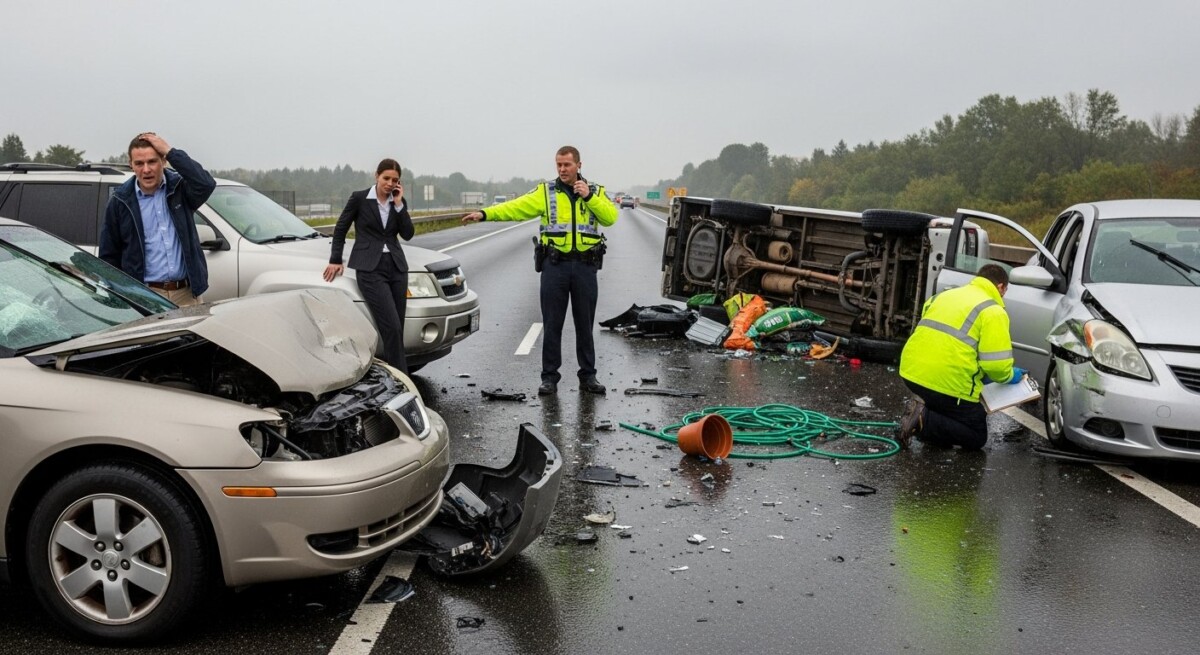
Being involved in a multi-car accident is a disorienting and stressful experience. When the dust settles and the wreckage is cleared, one question dominates every driver’s mind: who pays if an accident involves multiple cars? Unlike a simple two-car collision, a pile-up or chain-reaction crash creates a complex web of liability that can involve several insurance policies, multiple at-fault drivers, and even shared responsibility. Understanding how fault is assigned and how insurance coverage stacks up is critical to protecting your finances and securing the compensation you deserve.
The answer is rarely straightforward. In many multi-vehicle accidents, more than one driver bears some degree of fault. Insurance adjusters and attorneys must reconstruct the sequence of events to determine which driver initiated the chain reaction, which drivers contributed to the severity, and whether any drivers were completely innocent. State laws, particularly those regarding comparative or contributory negligence, also play a major role in who pays and how much. This article breaks down the key factors that determine financial responsibility in multi-car accidents, so you know what to expect and how to proceed.
How Fault Is Determined in a Multi-Car Accident
Insurance companies do not simply divide the cost evenly among all involved drivers. Instead, they investigate the crash to assign a percentage of fault to each driver based on their actions. Common causes in multi-car accidents include distracted driving, tailgating, speeding, sudden lane changes, and driving under the influence. The driver who caused the initial collision may be held primarily liable, but subsequent drivers who failed to stop safely may also share blame.
For example, consider a three-car pile-up on a highway. Driver A rear-ends Driver B, pushing Driver B into Driver C. In most cases, Driver A is at fault for the initial impact. However, if Driver B was following too closely, Driver B might share some responsibility for failing to maintain a safe distance. If Driver C was driving recklessly, Driver C could also be partially at fault. The insurance adjuster will review police reports, witness statements, traffic camera footage, and vehicle damage patterns to allocate fault percentages.
Comparative vs. Contributory Negligence Laws
The state where the accident occurs dictates how fault percentages affect payouts. In pure comparative negligence states (like California or Florida), each driver can recover damages reduced by their own percentage of fault. So if you are 20% at fault, you can still collect 80% of your damages from the other at-fault drivers. In modified comparative negligence states (like Texas or Colorado), you can only recover if your fault is below a certain threshold (usually 50% or 51%). In pure contributory negligence states (like Alabama or Virginia), any fault at all, even 1%, bars you from recovering any damages. This makes it especially important to have an attorney who understands your state’s specific rules.
Which Insurance Policies Pay in a Multi-Car Crash
When multiple cars are involved, several layers of insurance may come into play. The primary source of compensation is the at-fault driver’s liability insurance. However, if there are multiple at-fault drivers, you may be able to claim against each of their policies up to the policy limits. If the at-fault drivers do not have enough coverage, your own policy’s underinsured motorist (UIM) coverage may step in. Your personal injury protection (PIP) or medical payments (MedPay) coverage can also pay for your medical expenses regardless of fault.
Here is a breakdown of the most common insurance coverages that apply in multi-car accidents:
- Liability insurance of each at-fault driver. This pays for property damage and bodily injury to others. You can file claims against each at-fault driver’s policy.
- Uninsured/underinsured motorist (UM/UIM) coverage on your own policy. This pays if an at-fault driver lacks insurance or has insufficient limits to cover your damages.
- Personal injury protection (PIP) or medical payments (MedPay). These cover your medical bills and lost wages regardless of fault, up to your policy limit.
- Collision coverage on your own policy. This pays for repairs to your vehicle regardless of fault, minus your deductible. Your insurer may later seek reimbursement from at-fault drivers.
- Commercial insurance if any vehicle involved is a commercial truck, rideshare, or delivery vehicle. These policies often have higher limits and different claims procedures.
Understanding how these coverages interact can be confusing, but it is essential to maximize your recovery. For instance, if you have strong UIM coverage and the at-fault drivers have low limits, you may be able to tap into your own policy to make up the difference. An experienced attorney can help you identify all available sources of compensation.
The Role of the At-Fault Driver’s Insurance Limits
Each at-fault driver’s liability policy has a maximum payout per accident and per person. In multi-car accidents, those limits are shared among all injured parties. If Driver A has a $30,000 per-person policy limit and three people are injured, the total available from that policy is $30,000 for all three, not $30,000 per person. This can quickly become inadequate for serious injuries. If multiple at-fault drivers exist, you can claim against each policy separately, potentially recovering a larger total amount.
For example, if Driver A is 60% at fault with a $30,000 policy and Driver B is 40% at fault with a $50,000 policy, your total available coverage is up to $80,000, minus any reductions for your own fault. However, insurance companies often try to pay as little as possible, which is why it is crucial to document all damages thoroughly and negotiate aggressively. If you are facing severe injuries or significant property damage, consulting with a legal team can level the playing field.
What Happens When Multiple Drivers Are at Fault
In many multi-car accidents, fault is distributed among several drivers. Each driver’s insurance company will pay only their share of the damages based on the assigned fault percentage. If you are a completely innocent victim, you can recover 100% of your damages from the at-fault drivers collectively. But if you are partially at fault, your recovery is reduced accordingly.
For instance, suppose a four-car crash occurs because Driver A slammed on brakes, Driver B rear-ended Driver A, and Driver C rear-ended Driver B, pushing all three into Driver D. If the investigation finds Driver A 10% at fault (for sudden braking), Driver B 50% at fault (for following too closely), and Driver C 40% at fault (for distracted driving), then Driver D (innocent) can claim against all three policies. If Driver D’s total damages are $100,000, Driver D can collect up to $10,000 from Driver A’s policy, $50,000 from Driver B’s policy, and $40,000 from Driver C’s policy, subject to each policy’s limits.
This process can become entangled in disputes between insurance companies. Each insurer may try to shift blame to others to reduce their payout. As a result, multi-car accident claims can take longer to settle than simple two-car crashes. Patience and documentation are key. If negotiations stall, a personal injury lawsuit may be necessary.
How Your Own Insurance Can Help
Your own auto insurance policy is not just for when you cause an accident. It can provide critical support when you are injured in a multi-car crash caused by others. As noted earlier, your PIP or MedPay can cover immediate medical bills. Your collision coverage can get your car repaired quickly, even while fault is being sorted out. And your UIM coverage can fill gaps left by at-fault drivers with low limits.
One important strategy is to notify your own insurance company immediately after the accident, even if you believe you are not at fault. They can begin investigating and preserving evidence. However, be cautious about giving recorded statements without legal advice. Insurance adjusters may ask questions designed to minimize their liability. If you are unsure how to handle communication, it is wise to speak with an attorney first.
In our guide on what happens if an accident involves injury, we explain how to document injuries and navigate medical claims. This knowledge is especially valuable in multi-car accidents where injuries may be severe and multiple insurers are involved.
Steps to Take After a Multi-Car Accident
Taking the right steps at the scene can make or break your claim. First, ensure everyone is safe and call 911. Do not move vehicles unless necessary for safety. Wait for police to arrive and file an official accident report. Exchange insurance information with all drivers involved, but avoid discussing fault or apologizing. Take photos of the entire scene, including vehicle positions, damage, skid marks, traffic signs, and road conditions. Get contact information from witnesses.
Second, seek medical attention even if you feel fine. Adrenaline can mask injuries, and delayed symptoms are common in whiplash and soft tissue injuries. A prompt medical evaluation creates a record linking your injuries to the accident. Third, notify your insurance company and provide them with the police report number and your documentation. Do not accept any settlement offers until you have a full understanding of your injuries and the total value of your claim.
Finally, consider consulting with a legal professional who specializes in multi-vehicle collisions. An attorney can handle communications with multiple insurance companies, calculate the full extent of your damages (including future medical costs and lost earning capacity), and ensure you do not settle for less than you deserve. If the accident involved a large truck or commercial vehicle, additional regulations and higher policy limits may apply. Our article on what happens if an accident involves a truck covers specific considerations for those scenarios.
Frequently Asked Questions
Can I sue multiple drivers in a multi-car accident?
Yes, you can file a lawsuit against each driver who was partially at fault for the accident. Your total recovery is limited to the total damages you suffered, and you cannot collect more than that amount. An attorney can help you identify all potentially liable parties and pursue claims against them.
What if one of the at-fault drivers has no insurance?
If an uninsured driver is at fault, your own uninsured motorist (UM) coverage can pay for your damages, up to your policy limit. If multiple uninsured drivers are involved, you may still recover through UM coverage. Some states require UM coverage, while others offer it as an option.
How long do I have to file a claim after a multi-car accident?
The time limit (statute of limitations) varies by state, typically ranging from one to six years for personal injury claims. Property damage claims often have shorter deadlines. It is best to start the claims process as soon as possible to preserve evidence and avoid missing the deadline.
Will my insurance rates increase if I am not at fault?
In many states, your rates should not increase if you are determined to be not at fault. However, some insurers raise rates after any claim, even no-fault ones. Check your policy and ask your agent. If you are partially at fault, a rate increase is more likely.
Do I need a lawyer for a minor multi-car accident?
Even in minor accidents, dealing with multiple insurance companies can be confusing. If injuries are involved or if fault is disputed, legal representation can help protect your rights and ensure fair compensation. Many personal injury attorneys offer free consultations, so it costs nothing to get an opinion.
For those injured in a multi-car crash involving a motorcycle, special considerations apply regarding vulnerability and bias from other drivers. Our resource on what happens if an accident involves a motorcycle provides tailored guidance.
Getting the Compensation You Deserve
Multi-car accidents are among the most complex personal injury cases to resolve. The question of who pays if an accident involves multiple cars depends on a careful analysis of fault, applicable state laws, and the insurance policies in play. Without proper legal guidance, you risk accepting a lowball settlement or missing out on compensation from one of the at-fault drivers. Take the time to document everything, seek medical care, and consult with an experienced attorney who can navigate the maze of liability and insurance claims. Your financial recovery and peace of mind depend on it.