
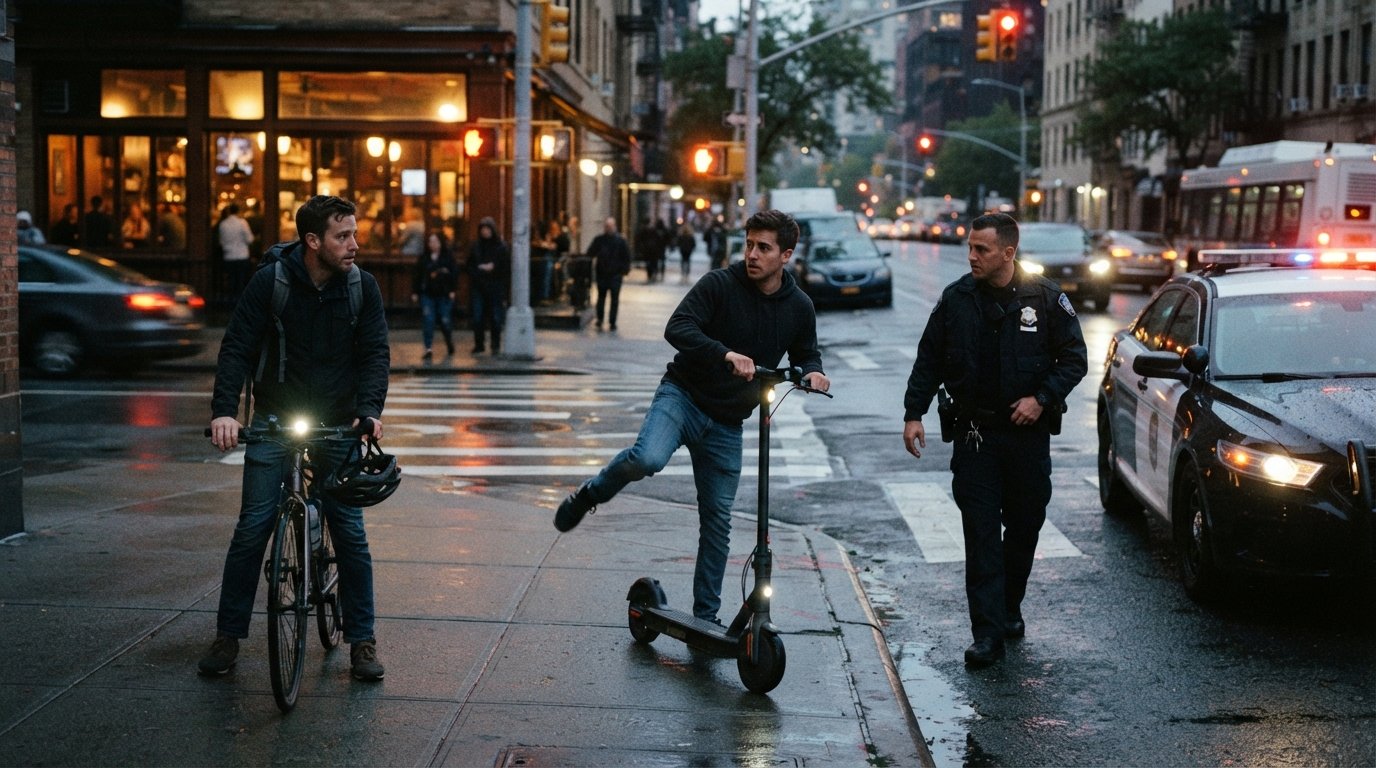
Can You Get a DUI on a Bicycle or Scooter? Vehicle Code Realities
Can you get a DUI on a bicycle or scooter under vehicle codes? Find out the risks and defenses. Call (855)-545-2917 for a free attorney match.

By Arden Flux
You hop on a bicycle after a few drinks, thinking you are being responsible by not driving a car. Or you rent an electric scooter for a quick ride home from the bar, believing the worst that can happen is a minor ticket. The question many riders ask is simple: can you get a DUI on a bicycle or scooter under vehicle codes? The answer is not as straightforward as you might hope, and it varies dramatically depending on where you are, what you are riding, and how local laws define a vehicle. In many states, the vehicle code treats bicycles and scooters differently from cars, but that does not mean you are automatically in the clear. In fact, a growing number of jurisdictions are applying impaired driving statutes to non motorized and low speed vehicles, and the consequences can include fines, license impacts, and even jail time. Understanding the legal landscape is essential before you assume that pedaling or scooting home is a safe legal choice.
How Vehicle Codes Define Vehicles for DUI Purposes
At the heart of the matter is the definition of vehicle in your state vehicle code. Most DUI statutes prohibit operating a vehicle while under the influence of alcohol or drugs. The critical question is whether a bicycle or scooter qualifies as a vehicle under that definition. In some states, the vehicle code broadly defines vehicle as any device capable of transporting a person or property on a roadway, which can include bicycles and scooters. In others, the DUI statute specifically refers to motor vehicles, which typically excludes human powered bicycles and sometimes excludes low speed electric scooters. This distinction is not academic: it determines whether you can be charged with DUI at all, and what penalties you face.
For example, California Vehicle Code Section 21200.5 makes it unlawful to ride a bicycle on a highway or public bicycle path while under the influence of alcohol or drugs. That is a specific bicycle DUI statute, separate from the general DUI law that applies to motor vehicles. Other states, like Florida, have statutes that expressly include bicycles in the definition of vehicle for DUI purposes. Meanwhile, some states have no explicit bicycle DUI law, leaving courts to interpret whether a bicycle is a vehicle under the general DUI statute. This patchwork of rules means that the answer to can you get a DUI on a bicycle or scooter under vehicle codes depends heavily on your location.
Similarly, electric scooters and mopeds occupy a gray area. Many state vehicle codes classify e scooters as motorized devices or motor vehicles, especially if they can exceed certain speed thresholds or have motors above a specified wattage. Mopeds, which typically have pedals and a small motor, are often treated as motor vehicles for DUI purposes. The classification can hinge on technical details like engine displacement, maximum speed, and whether the device requires registration. For riders, this means that the same act of riding an e scooter after drinking could be a minor infraction in one city and a full misdemeanor DUI in another. Consulting a local attorney is the only way to know for sure, but understanding the general framework helps you assess risk.
Bicycle DUI Charges and Whether a Driver's License Is Affected
One of the most common misconceptions is that a bicycle DUI will not affect your driver's license because you were not operating a car. In reality, many states impose license suspensions or revocations for bicycle DUI convictions, particularly if the offense is charged under a statute that treats the bicycle as a vehicle. For instance, in California, a bicycle DUI under Vehicle Code 21200.5 is a misdemeanor that can result in a fine of up to $250, but it does not typically result in a driver's license suspension because it is not a motor vehicle violation. However, if the rider is under 21, the offense can lead to a one year license suspension under the state's zero tolerance law for underage drinking and driving. In other states, like Oregon, a bicycle DUI can be charged as a Class A traffic violation, and while it may not directly suspend your license, it can still appear on your driving record and influence insurance rates.
The impact on your driver's license often depends on whether the bicycle DUI is considered a moving violation or a criminal offense. Some states explicitly provide that a conviction for bicycle DUI results in the same penalties as a motor vehicle DUI, including license suspension. For example, in South Dakota, a bicycle DUI is a Class 1 misdemeanor, and the court may order a license suspension. In New Jersey, the DUI statute applies to any vehicle, including bicycles, and a conviction can lead to a license suspension of up to two years. These are serious consequences that many riders never anticipate. If you are facing a bicycle DUI charge, it is crucial to understand the specific license implications in your state and to seek legal guidance promptly.
Beyond license effects, a bicycle DUI conviction can have collateral consequences. It may appear on background checks, affect employment opportunities, and increase your auto insurance premiums even if the offense did not involve a car. Some employers, especially those in transportation or safety sensitive industries, may view a DUI conviction negatively regardless of the vehicle type. Additionally, if you are ever charged with a subsequent DUI, a prior bicycle DUI might be used to enhance penalties. The bottom line is that a bicycle DUI is not a trivial matter, and the assumption that your license is safe is often wrong.
E Scooter and Moped Classifications Under Impaired Driving Laws
Electric scooters and mopeds have exploded in popularity, and lawmakers are scrambling to keep up. The classification of these devices under vehicle codes varies widely. Many states have adopted the three tier classification system for e bikes and e scooters, based on top speed and motor power. A low speed e scooter might be treated like a bicycle, while a faster model could be considered a moped or motorcycle. For DUI purposes, the key is whether the device is a motor vehicle. If it has a motor and can propel itself, it is more likely to fall under the DUI statute. Some states, like California, have specific laws for motorized scooters that require a valid driver's license to operate, and operating one while impaired can lead to a DUI charge. In contrast, a human powered scooter (like a kick scooter) is generally not a vehicle for DUI purposes, though public intoxication laws might apply.
Mopeds, which typically have pedals and a small motor (usually under 50cc), are often classified as motor driven cycles or motor vehicles. In most states, you need a driver's license or a moped permit to ride one on public roads, and DUI laws apply fully. Riding a moped after drinking can result in a standard DUI charge with all the associated penalties, including jail time, fines, and license suspension. The same is true for e scooters that meet the state's definition of a motor vehicle. Riders should not assume that because a scooter is small and slow, it is exempt from DUI laws. The trend is toward stricter regulation, and courts are increasingly unwilling to accept the argument that a scooter is not a vehicle.
To add complexity, some cities have their own ordinances that prohibit riding scooters while intoxicated, even if state law does not. For example, many scooter share companies have terms of service that prohibit riding under the influence, and violations can lead to account bans and fines. But local ordinances can also carry legal penalties. It is wise to check both state and local rules before you ride. If you are unsure about how your scooter is classified, a consultation with a traffic attorney can clarify your risks. The cost of a consultation is minimal compared to the potential consequences of a DUI conviction.
Penalties and Defense Options for Non Motor Vehicle DUI
The penalties for a bicycle or scooter DUI vary significantly by jurisdiction. In states where a bicycle DUI is a minor infraction, you might face a fine of a few hundred dollars and no jail time. In states where it is a misdemeanor, penalties can include up to six months in jail, fines of up to $1,000, probation, and mandatory alcohol education programs. If the offense is charged as a felony (for example, if you have prior DUI convictions or caused injury), the stakes are much higher, with potential prison time and large fines. Even a seemingly minor bicycle DUI can lead to a criminal record, which can affect housing, employment, and education opportunities.
Defense options for a non motor vehicle DUI are similar to those for a standard DUI, but with unique angles. First, the defense may argue that the device you were operating does not meet the legal definition of a vehicle under the applicable statute. This is a common and often successful strategy when the law is ambiguous or when the device is clearly not motorized. Second, the defense can challenge the stop or arrest itself. If the police lacked reasonable suspicion to stop you, any evidence of intoxication may be suppressed. Third, the defense can attack the reliability of field sobriety tests or breathalyzer results, especially if the tests were not administered properly or if the device was not calibrated. Fourth, the defense may argue that you were not actually operating the vehicle when the police observed you, or that you were not under the influence to the degree required by law.
It is important to remember that you have the right to remain silent and to speak with an attorney before deciding how to proceed. Do not plead guilty without understanding the full consequences. Many people assume that because they were on a bicycle, the case is trivial and they should just pay the fine. But a conviction can have lasting effects. An experienced DUI attorney can evaluate the strength of the prosecution's case, negotiate with the prosecutor, and potentially get charges reduced or dismissed. If you are facing a DUI charge for riding a bicycle or scooter, you should contact a qualified attorney as soon as possible. If you are not sure where to start, you can use a service like GoFreeLegal to connect with attorneys who handle DUI cases in your area.
Collateral Insurance and Civil Liability Consequences
Beyond criminal penalties, a bicycle or scooter DUI can have serious collateral consequences for your insurance and civil liability. If you are involved in an accident while riding under the influence, your auto insurance may not cover the incident because the policy typically covers motor vehicles, not bicycles or scooters. However, if you have homeowners or renters insurance, it might provide liability coverage for accidents caused by you on a bicycle, but intentional or illegal acts are often excluded. More importantly, if you cause injury to another person while riding impaired, you can be held civilly liable for their damages, including medical bills, lost wages, and pain and suffering. Your insurance might not cover these damages, leaving you personally responsible for potentially thousands of dollars.
In addition, a DUI conviction (even for a bicycle) can affect your auto insurance rates. Many insurers check driving records, and a DUI conviction of any kind can flag you as a high risk driver, leading to increased premiums or even policy cancellation. If you are required to file an SR 22 form after a DUI, the insurance implications can last for years. For those who rely on their vehicles for work, this can be devastating. It is also worth noting that if you are injured in a bicycle accident while intoxicated, your ability to recover compensation from the other driver may be reduced or barred by comparative fault or contributory negligence laws. In other words, your intoxication could be used against you in a civil lawsuit, even if the other driver was primarily at fault.
Furthermore, if you are charged with a DUI after a bicycle or scooter accident, the civil case may be put on hold until the criminal case is resolved. This can delay your ability to recover damages for your own injuries. If you are the victim of a drunk driver while you were riding sober, you may have a personal injury claim. In that situation, you should consult a personal injury attorney who can help you pursue compensation. For those dealing with whiplash or other injuries from a car accident, resources like Can You Get Settlement for Whiplash After a Car Accident can provide helpful guidance. But if you were the impaired rider, your focus should be on mounting a strong defense and mitigating the fallout.
What to Do If You Are Charged
If you are charged with a DUI on a bicycle or scooter, the first step is to take the charge seriously. Do not dismiss it as a minor issue. Contact an attorney who has experience with DUI defense and who understands the specific vehicle code definitions in your state. Gather any evidence that might help your case, such as witness statements, video footage, or maintenance records for the device you were riding. Write down everything you remember about the stop, the arrest, and any tests you were asked to perform. This information can be valuable to your attorney. Avoid discussing the case with anyone other than your lawyer, and do not post about it on social media.
Next, consider the potential defenses and the likely outcomes. Your attorney can explain the range of penalties you face and help you decide whether to fight the charge or negotiate a plea. In some cases, attending a diversion program or completing community service can lead to reduced charges. In others, challenging the constitutionality of the stop or the accuracy of the tests may result in dismissal. The right strategy depends on the facts and the law in your jurisdiction. Be honest with your attorney about how much you had to drink, what you were riding, and any prior convictions. Withholding information can only hurt your case.
Finally, think about the long term consequences. A DUI conviction, even for a bicycle, can affect your driving privileges, your insurance, and your reputation. If you are a commercial driver, a DUI of any kind can jeopardize your CDL. If you are under 21, you may face a license suspension under zero tolerance laws. If you are not a U.S. citizen, a DUI conviction could have immigration consequences. These are all reasons to take the charge seriously and to seek professional help. The earlier you involve an attorney, the better your chances of a favorable outcome.
Riding a bicycle or scooter after drinking may seem like a safer alternative to driving a car, but the legal risks are real and can be significant. The answer to can you get a DUI on a bicycle or scooter under vehicle codes is often yes, depending on your state's definitions and the specific device you are operating. Penalties can include fines, license suspensions, and even jail time, not to mention the collateral consequences for insurance and civil liability. If you find yourself facing such a charge, do not navigate it alone. Reach out to a knowledgeable attorney who can protect your rights and help you move forward. Your future self will thank you for taking action today.