
Can You Refuse a Roadside Field Sobriety Test in Every State?
Can you refuse a roadside field sobriety test in every state? Learn the rules and call (855)-545-2917 to protect your license and rights.

By Theron Skye
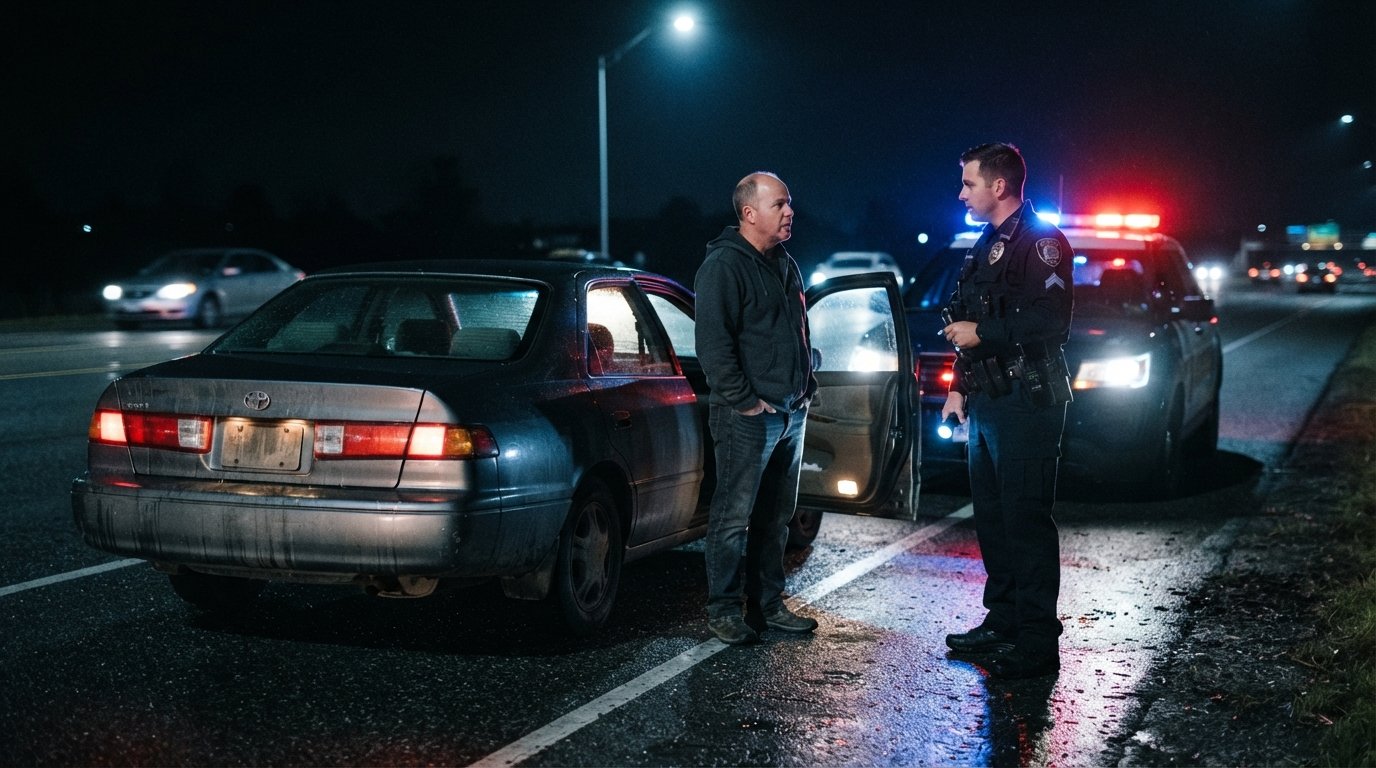
You see the flashing lights in your rearview mirror, and your heart sinks. After pulling over, the officer asks you to step out of the vehicle and perform a series of roadside maneuvers. Your mind races: can you refuse a roadside field sobriety test in every state, and what happens if you do? The answer is not a simple yes or no. It depends on the type of test, the state you are in, and the specific consequences written into that state's laws. Understanding these distinctions before you are in that situation can protect your rights, your license, and your future.
This guide breaks down the legal landscape across the United States, focusing on the difference between field sobriety tests and chemical tests, the implied consent laws that govern refusals, and the administrative deadlines that can quietly cost you your driving privileges. We will also explain how refusal can be used against you in a criminal case and how an experienced DUI defense attorney evaluates the record. If you need personalized legal guidance, connecting with a qualified attorney through a platform like CarInjuryAccident's DUI attorney directory can help you understand your options. For law firms seeking to reach clients facing these urgent issues, services such as AttorneyLeads provide a B2B lead generation platform that connects motivated consumers with qualified legal professionals.
Field Sobriety Tests vs. Chemical Tests: The Critical Distinction
The phrase "roadside field sobriety test" usually refers to the standardized physical maneuvers an officer asks you to perform before any arrest: the horizontal gaze nystagmus (HGN) test, the walk-and-turn, and the one-leg stand. These are voluntary in the sense that no state criminalizes a simple refusal to perform them. However, the consequences of refusal vary dramatically from state to state, and in some jurisdictions, a refusal can be used as evidence of consciousness of guilt in a criminal trial.
Chemical tests are a different matter entirely. Once you are lawfully arrested for suspicion of DUI, every state has an implied consent law. By driving on public roads, you have already agreed to submit to a chemical test of your breath, blood, or urine. Refusing a chemical test after arrest triggers automatic administrative penalties, typically a license suspension, and those penalties are separate from any criminal DUI charge. The confusion often arises because people conflate the voluntary field tests with the mandatory chemical tests that follow a lawful arrest.
To clarify, here is how the two categories break down in practice:
- Field sobriety tests (pre-arrest): Physical coordination tests performed at the roadside. Refusal is generally allowed but may be used as evidence in court.
- Portable breath tests (pre-arrest): Preliminary breath tests (PBTs) used to establish probable cause. Many states allow refusal, but some impose penalties.
- Evidentiary chemical tests (post-arrest): Breath, blood, or urine tests at the station or hospital. Refusal triggers implied consent penalties, including license suspension.
Understanding this distinction is the foundation for answering whether you can refuse a roadside field sobriety test in every state. The short answer is that you can refuse the physical field tests in all fifty states without facing automatic criminal penalties, but you cannot refuse a post-arrest chemical test without facing administrative consequences. The details, however, matter enormously, and they vary by jurisdiction.
State-by-State Refusal Rules for Field Sobriety Tests
No state imposes a criminal penalty for declining to perform the standardized field sobriety tests before arrest. However, the evidentiary use of that refusal differs. In some states, prosecutors may argue that your refusal shows you knew you would fail. In others, the refusal is inadmissible in the criminal case. A few states have specific statutes addressing the issue. For example, in California, a refusal to perform field sobriety tests is generally admissible as evidence of consciousness of guilt, but the jury is also instructed that the tests are voluntary. In Texas, the refusal is admissible, but the state cannot comment on it as a direct admission of guilt. In Florida, the refusal to submit to field sobriety exercises can be used against you at trial.
The variation is significant enough that a blanket answer is misleading. What is consistent across all states is that the officer will likely note your refusal in the police report, and that note will become part of the evidence the prosecution uses to build its case. The absence of field test results does not mean the absence of evidence. Officers are trained to document other indicators of impairment: slurred speech, bloodshot eyes, the odor of alcohol, fumbling with documents, and admissions made during the stop. Those observations often form the backbone of a DUI prosecution even without field test data.
For a deeper look at the consequences of refusing these voluntary tests, including how courts treat the refusal at trial, see this guide on field sobriety test refusal consequences. It explains how a refusal that feels protective in the moment can become a liability in the courtroom, and why the decision should be made with a clear understanding of your state's rules.
Implied Consent Laws and Chemical Test Refusal Penalties
While you can refuse a roadside field sobriety test in every state without automatic license suspension, refusing a chemical test after a lawful DUI arrest is a different story. All fifty states, plus the District of Columbia, have implied consent laws. These statutes provide that by obtaining a driver's license and operating a vehicle on public roads, you consent in advance to chemical testing if an officer has probable cause to believe you were driving under the influence. When you refuse, you are deemed to have breached that consent, and the state imposes administrative sanctions.
The penalties for a first chemical test refusal typically include a license suspension ranging from ninety days to one year, depending on the state. In many states, the suspension is longer than the suspension you would face for a first DUI conviction. Some states require the installation of an ignition interlock device before you can regain your license. A few states, such as Minnesota and North Dakota, have criminalized test refusal in certain circumstances, making it a separate crime from DUI. The severity of these consequences is why attorneys often advise clients to submit to the chemical test and fight the charges later, rather than refuse and face automatic administrative penalties that are difficult to undo.
The administrative process is separate from the criminal case and operates on a much shorter timeline. When you refuse a chemical test, the officer typically confiscates your license and issues a temporary permit. You then have a limited window, often seven to thirty days, to request an administrative hearing to challenge the suspension. Miss that deadline, and the suspension takes effect automatically, regardless of what happens in criminal court. This dual-track system is one of the most overlooked aspects of DUI defense, and it is where many people lose their license before they even speak to a lawyer.
How Refusal Can Be Used as Evidence in the Criminal Case
Even though field sobriety tests are voluntary, the prosecution can often use your refusal against you. The legal theory is that a person who believes they would pass the tests has no reason to refuse them, so refusal suggests consciousness of guilt. Courts across the country have generally allowed this inference, though the specific rules vary. In some states, the judge must give a special jury instruction explaining that the refusal is not conclusive proof of guilt but may be considered alongside other evidence. In others, the prosecutor can argue the point directly during closing statements.
The evidentiary use of refusal is not limited to the field tests. Refusing a chemical test can also be introduced at trial in many jurisdictions, and some states allow the prosecutor to comment on the refusal during opening statements. This is why a blanket strategy of refusing everything is rarely advisable. The decision to refuse should be made with a clear understanding of how that refusal will be characterized in court and what administrative penalties will follow. An experienced DUI attorney can evaluate the specific facts of your case, including the officer's observations, the legality of the stop, and the accuracy of any testing equipment, to determine the best defense strategy.
It is also important to recognize that the officer's decision to arrest is not based solely on field test performance. The totality of the circumstances, including driving behavior, physical signs of impairment, and statements made during the stop, will be documented in the report. Even if you refuse the field tests, the officer may still have probable cause to arrest based on those other factors. Once arrested, the implied consent law applies, and the chemical test refusal penalties kick in.
Administrative License Hearing Deadlines Triggered by Refusal
One of the most time-sensitive consequences of refusing a chemical test is the administrative license suspension. When you refuse, the officer will serve you with a notice of suspension and confiscate your license. You then have a short window to request a hearing to contest the suspension. The deadline varies by state: in California, you have ten days from the date of arrest; in Texas, fifteen days; in Florida, ten days; in New York, fifteen days. Missing the deadline means the suspension goes into effect automatically, and you may have no further opportunity to challenge it.
The administrative hearing is separate from the criminal case and focuses on whether the officer had reasonable suspicion to stop you, whether there was probable cause to arrest, and whether you refused the test. It is a critical opportunity to protect your driving privileges, and it is one that many people miss because they are focused on the criminal charges. An attorney can request the hearing on your behalf, gather the necessary evidence, and represent you at the hearing. Even if the suspension is upheld, the attorney may be able to negotiate a restricted license for work or other essential purposes.
If you are facing a DUI charge and a license suspension, seeking legal representation early is essential. Platforms like CarInjuryAccident connect individuals with experienced DUI attorneys who understand the administrative and criminal processes and can help you meet the deadlines. A free case evaluation can provide clarity on your options and the steps you need to take immediately.
How a Defense Attorney Evaluates Refusal on the Record
When a defense attorney reviews a DUI case involving a refusal, they look at several factors to determine the strength of the prosecution's case and the best defense strategy. The first factor is the legality of the stop. If the officer lacked reasonable suspicion to pull you over, the entire case may be suppressed, including any evidence of refusal. The second factor is the probable cause for arrest. If the officer arrested you without sufficient evidence of impairment, the chemical test refusal may be inadmissible, and the administrative suspension may be challenged.
The attorney will also examine the officer's training and the administration of the field sobriety tests. Even though you refused the tests, the officer may have noted that you exhibited signs of impairment during the interaction. The attorney will review the report for inconsistencies, subjective observations, and any evidence that the officer failed to follow proper procedures. If the officer administered a preliminary breath test before the arrest, the attorney will scrutinize the calibration and maintenance records of the device.
Finally, the attorney will evaluate the refusal itself. Was it unequivocal? Did you agree to a blood test but refuse a breath test? Did the officer explain the consequences of refusal? Some states require the officer to give a specific admonition about the penalties for refusal, and if the officer fails to do so, the refusal may not be valid. These nuances can make the difference between a conviction and a dismissal. A thorough review of the record by an experienced attorney is the best way to identify weaknesses in the prosecution's case and build a defense that protects your rights.
Practical Steps to Protect Your Rights at a DUI Stop
Knowing the law is only part of the equation. In the moment, you need a clear plan. Here are practical steps to consider if you are stopped on suspicion of DUI:
- Stay calm and be polite. Provide your license and registration when asked. Avoid arguing or making statements that could be used against you.
- Understand the distinction between field tests and chemical tests. You can generally decline the physical field sobriety tests, but refusing a post-arrest chemical test will trigger automatic license suspension.
- Ask for a lawyer. If you are arrested, you have the right to speak with an attorney. Be clear that you want to consult with a lawyer before deciding how to proceed.
- Document everything. Write down what happened as soon as possible, including the officer's name, the time of the stop, and any statements made. This information can be valuable to your attorney.
- Act quickly on administrative deadlines. If your license is confiscated, request an administrative hearing within the deadline. Do not wait for the criminal case to resolve.
These steps are not a substitute for legal advice, but they can help you avoid common mistakes that complicate a DUI defense. The most important step is to consult with an attorney as soon as possible after an arrest. The sooner an attorney is involved, the sooner they can begin gathering evidence, interviewing witnesses, and preparing a defense.
Why Legal Representation Matters
The question of whether you can refuse a roadside field sobriety test in every state is just one piece of a much larger puzzle. The consequences of a DUI conviction can include jail time, fines, license suspension, mandatory education programs, and increased insurance premiums. A refusal can complicate the case, but it can also be challenged. An experienced DUI attorney understands the nuances of your state's laws, the administrative procedures, and the evidentiary rules that govern refusal. They can evaluate the strengths and weaknesses of the prosecution's case and develop a strategy tailored to your situation.
If you are facing a DUI charge, do not navigate the process alone. CarInjuryAccident offers a free, no-obligation case evaluation to connect you with a qualified DUI attorney in your area. The platform's patented attorney selection process identifies top-rated legal professionals who have the experience and knowledge to handle your case. You can request a complimentary case assessment and get clear answers about your rights and options. The review is private, and there is no obligation to hire. Taking that first step can make a significant difference in the outcome of your case.