
Marijuana DUI Charge Without a Blood Test: Your Defense
Facing a marijuana DUI charge without a blood test? Learn how prosecutors prove impairment and what defenses exist. Call (855)-545-2917 for a free case review.

By Zephyr Cade
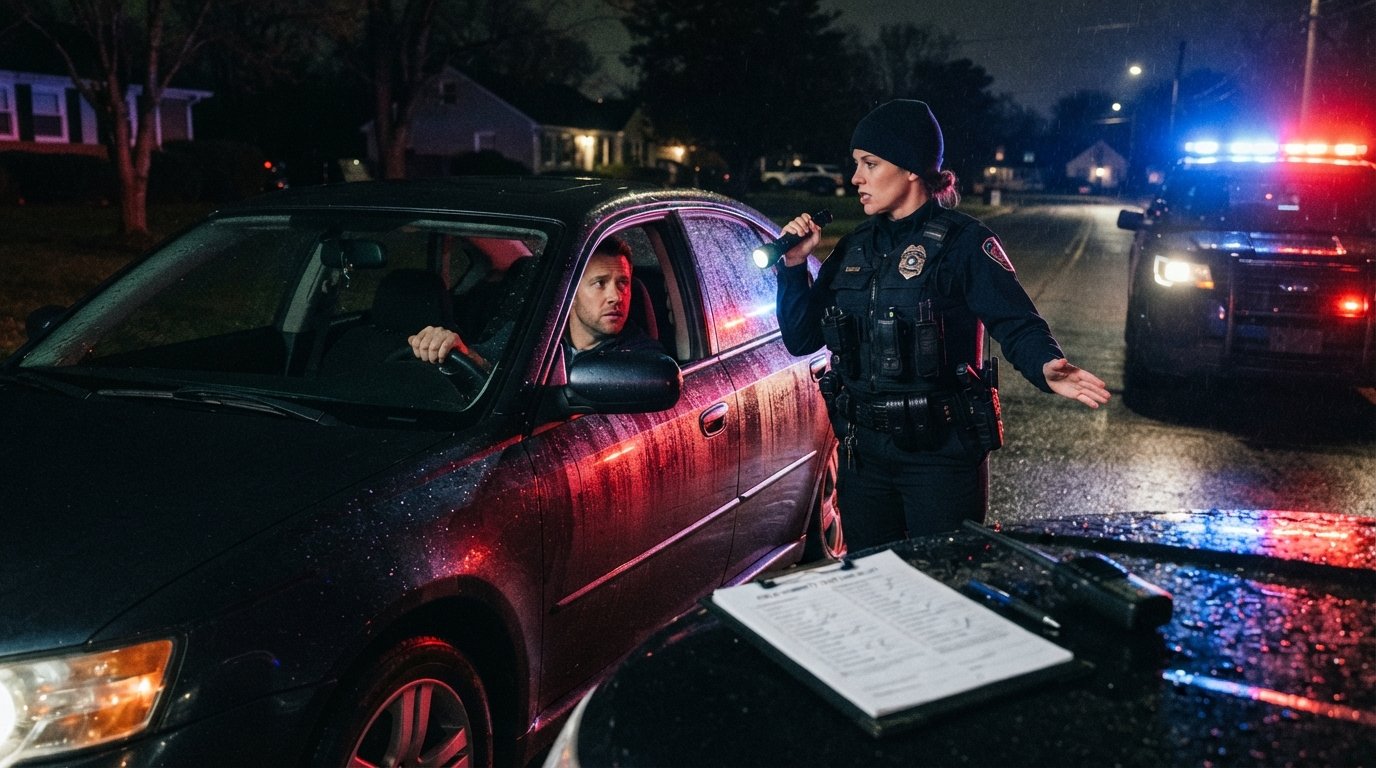
You see the flashing lights in your rearview mirror, and your heart sinks. The officer asks if you have been smoking marijuana, and before you know it, you are facing a marijuana DUI charge without a blood test. How can the state prove you were impaired if they never drew your blood? The answer lies in the observations, the field sobriety tests, and the legal arguments your attorney can raise. This guide explains how prosecutors build a cannabis DUI case without chemical evidence, what defenses are available, and what steps you should take immediately to protect your rights and your license.
How Officers Build a Marijuana DUI Case Without a Blood Test
When a driver is suspected of marijuana impairment, law enforcement officers often rely on a combination of subjective observations and standardized field sobriety tests (SFSTs) to establish probable cause. Without a blood test, the prosecution must paint a picture of impairment through detailed police reports, dashcam footage, and witness testimony. Officers are trained to document specific indicators such as red eyes, eyelid tremors, the odor of burnt cannabis, slow speech, and unsteady balance. These observations, while not scientific, form the foundation of many cannabis DUI cases.
In addition to physical signs, officers may administer field sobriety tests like the Horizontal Gaze Nystagmus (HGN), the Walk-and-Turn, and the One-Leg Stand. However, these tests were designed primarily to detect alcohol impairment and have limited reliability for cannabis. For instance, HGN is not validated for marijuana, and many cannabis users can pass the Walk-and-Turn despite being impaired. Prosecutors may also present the officer's opinion that the driver was under the influence based on training and experience, but such testimony is vulnerable to challenge. A skilled defense attorney can cross-examine the officer on the lack of scientific basis and the subjective nature of these evaluations.
Furthermore, if a blood test was refused or unavailable, the prosecution might introduce evidence of the driver's performance on a preliminary alcohol screening (PAS) device, even though it does not detect THC. They may also point to statements made by the driver, such as admissions of recent use. However, mere use does not equal impairment. The key is to separate evidence of use from evidence of impaired driving. Your attorney can argue that the officer's observations are consistent with legal cannabis use or medical conditions, and that the field sobriety tests were improperly administered or interpreted.
The Limits of THC Blood Levels as Proof of Impairment
Even when a blood test is available, THC levels are notoriously unreliable as proof of impairment. Unlike alcohol, which has a well-established correlation between blood alcohol concentration (BAC) and impairment, THC is stored in fat cells and can be detected in blood for days or even weeks after use. A person with a high tolerance may have a significant THC level but show no signs of impairment, while an occasional user might be impaired at a much lower level. This variability makes it difficult for prosecutors to use a specific THC threshold as conclusive evidence.
Some states have enacted per se laws that make it illegal to drive with certain THC levels, but these laws are increasingly challenged in court. For example, in states like Colorado and Washington, the legal limit for THC is 5 ng/mL, but experts agree that this limit does not accurately reflect impairment. Defense attorneys often argue that the presence of THC in the blood only proves past use, not current impairment. Without a blood test, the prosecution's case is even weaker because they cannot rely on a chemical number to sway the jury. Instead, they must convince the jury that the driver's behavior and appearance alone demonstrate impairment beyond a reasonable doubt.
If you are facing a marijuana DUI charge without a blood test, your attorney can exploit the absence of chemical evidence to create reasonable doubt. They may argue that the officer's observations were influenced by bias or that the field sobriety tests were not properly conducted. They might also present expert testimony on the limitations of THC testing and the lack of correlation between THC levels and driving impairment. In some cases, the prosecution may offer a plea bargain to a lesser charge, such as reckless driving, especially if their evidence is weak. However, it is crucial to have an experienced DUI attorney evaluate your case and advise you on the best strategy.
Field Sobriety Evidence and Its Reliability in Cannabis Cases
Field sobriety tests are a cornerstone of DUI investigations, but their reliability in cannabis cases is questionable. The National Highway Traffic Safety Administration (NHTSA) has validated three standardized tests for alcohol impairment: the HGN, the Walk-and-Turn, and the One-Leg Stand. However, NHTSA does not endorse these tests for detecting marijuana impairment. Studies have shown that cannabis users may exhibit nystagmus (involuntary eye movement) differently than alcohol users, and the HGN test is particularly unreliable for cannabis. Similarly, the Walk-and-Turn and One-Leg Stand require balance and coordination, which can be affected by many factors unrelated to marijuana, such as fatigue, medical conditions, or nervousness.
Officers often administer these tests without proper training or under poor conditions (e.g., uneven pavement, poor lighting), which can lead to false positives. In court, your attorney can challenge the admissibility of field sobriety test results by questioning the officer's administration and interpretation of the tests. They may also point out that the tests are not designed to detect cannabis and that the officer's conclusion of impairment is subjective. If the officer recorded the tests on dashcam, the footage can be scrutinized for inconsistencies. For example, if you performed well on the Walk-and-Turn but the officer still arrested you, the video can support your defense that you were not impaired.
Moreover, the prosecution may rely on the officer's testimony that you displayed signs of impairment, such as bloodshot eyes or slow speech. However, these signs can be caused by allergies, fatigue, or other legal substances. Your attorney can cross-examine the officer on alternative explanations and highlight any inconsistencies in the police report. In some cases, the officer may have failed to note exculpatory details, such as your ability to follow instructions or produce documents without difficulty. By undermining the reliability of the field sobriety evidence, your attorney can create reasonable doubt and potentially get the charges reduced or dismissed.
Medical Marijuana Card Defenses and State Law Differences
If you are a medical marijuana patient, you may have additional defenses to a DUI charge. Many states with medical marijuana laws provide affirmative defenses or protections for registered patients who are not impaired. For example, in some states, the presence of THC in your system is not sufficient to prove impairment if you are a legal medical cannabis user. However, the laws vary widely, and some states have zero-tolerance policies for any detectable THC. It is essential to understand your state's specific laws and how they apply to your case.
In states like California, Washington, and Colorado, courts have recognized that medical marijuana patients should not be automatically convicted of DUI based solely on THC levels. Instead, the prosecution must prove impairment through other evidence. If you have a valid medical marijuana card, your attorney can argue that your use was lawful and that the officer's observations were consistent with your medical condition or tolerance. They may also present evidence of your medical history and your pattern of use to show that you were not impaired at the time of driving. However, even with a medical card, you can still be convicted of DUI if the prosecution can prove impairment beyond a reasonable doubt.
State law differences also affect the consequences of a DUI charge. Some states have per se laws for THC, while others rely on the traditional impairment standard. The legal limit for THC, if any, varies from state to state. For instance, Colorado has a per se limit of 5 ng/mL, but as mentioned, this is not a reliable measure of impairment. In states without per se laws, the prosecution must rely on behavioral evidence, which can be challenged. Additionally, the penalties for a marijuana DUI can range from fines and license suspension to jail time, depending on the state and whether it is a first or repeat offense. Consulting with an attorney who is knowledgeable about your state's marijuana DUI laws is critical.
If you are unsure about your rights as a medical marijuana patient, consider reaching out to a legal professional who can explain your options. Platforms like GoFreeLegal connect individuals with attorneys who handle DUI cases, and the initial consultation is often free. Understanding the nuances of your state's law can make a significant difference in the outcome of your case.
What to Do Before Your First Court Date and License Hearing
If you have been charged with a marijuana DUI without a blood test, the steps you take immediately after your arrest can impact the outcome of your case. First, write down everything you remember about the traffic stop, including the officer's questions, the field sobriety tests you were asked to perform, and any statements you made. Memory fades quickly, so do this as soon as possible. Second, contact a DUI attorney who has experience defending cannabis-related charges. Many attorneys offer free consultations, and they can evaluate the strength of the prosecution's evidence and advise you on the best course of action.
Third, request a hearing with the Department of Motor Vehicles (DMV) to challenge the suspension of your driver's license. In most states, you have only a short window (often 10 days) to request this hearing after your arrest. If you miss the deadline, your license may be automatically suspended. At the hearing, you can contest the legality of the stop and the arrest, and your attorney can cross-examine the officer. The burden of proof at the DMV hearing is lower than in criminal court, but a victory can help your criminal case. Fourth, avoid discussing your case with anyone other than your attorney, and do not post about it on social media. Prosecutors can use your statements against you.
Finally, consider the long-term consequences of a DUI conviction. A marijuana DUI can result in fines, license suspension, mandatory education programs, and even jail time. It can also affect your employment, insurance rates, and ability to travel. If your case involves a car accident, you may also face civil liability. In our guide on DUI charges dismissed, we explain how to clean up your arrest record after a dismissal, which can be crucial for your future. An experienced attorney can help you navigate both the criminal and administrative processes and work to minimize the impact on your life.
Before your first court date, your attorney will likely negotiate with the prosecutor. They may file motions to suppress evidence, such as the officer's observations or the field sobriety test results, if they were obtained unlawfully. They may also challenge the lack of a blood test as a violation of your rights if you were not properly advised of the consequences of refusal. In some cases, the prosecution may drop the charges if their evidence is weak. However, it is essential to have realistic expectations and to follow your attorney's advice. With the right defense strategy, you can protect your rights and achieve the best possible outcome.