
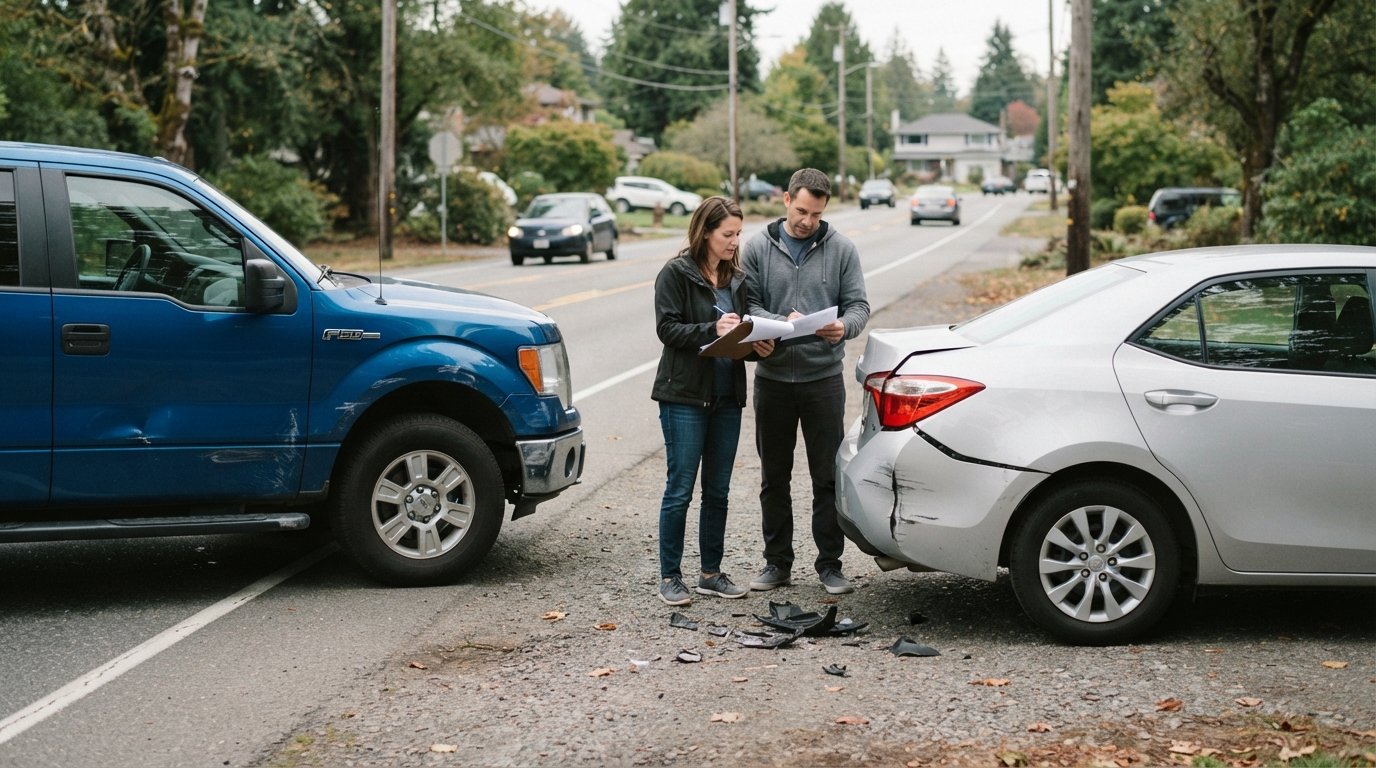
Hit by an Undocumented Driver: Insurance and Claim Options
Facing a car accident with an undocumented driver? Insurance and claim options exist. Call (855)-545-2917 for a free case review and protect your recovery.

By Elvara Quinn
A car crash is stressful enough. When the other driver is undocumented or unlicensed, the questions multiply fast: Will insurance pay? Can I file a claim? Does immigration status matter? The answers are more practical than you might think. Insurance companies care about fault and coverage, not paperwork status, and your own policy often holds the key to recovery. Below is a clear walkthrough of how liability coverage responds, why uninsured and underinsured motorist coverage is your safety net, how to document the crash, and when to bring in a lawyer. If you are an injured rideshare driver, our guide on rideshare driver injury claims and workers' comp explains how those overlapping rules work.
First, a reality check: the at-fault driver's lack of a valid license does not erase your right to compensation. It changes the collection strategy. You still have a bodily injury claim, but you may need to lean on your own uninsured motorist coverage, pursue the owner of the vehicle, or explore other responsible parties. Understanding these pathways early helps you avoid signing away rights for pennies.
How Liability Coverage Responds When the At-Fault Driver Lacks a License
Liability insurance follows the vehicle and the driver's permission in most states. If the at-fault driver was driving someone else's car with permission, the owner's policy typically responds first. If the driver had no permission, the owner's policy may deny coverage, but your uninsured motorist coverage can step in. The driver's own policy, if one exists, may also apply, though an unlicensed driver often has no active policy. The key point is that a license status issue does not automatically void the other driver's liability coverage. Insurers must still evaluate fault and damages under the policy terms.
However, there is a catch. Some auto policies contain clauses excluding coverage for unlicensed drivers, but those clauses are not universally enforceable, especially when the vehicle owner gave permission. State law varies widely. In some states, an owner who knowingly lends a car to an unlicensed driver can be held negligent. That gives you a second target: the vehicle owner. A personal injury attorney can review the police report, the rental or ownership records, and the policy language to identify every available pocket of coverage.
If the at-fault driver has no insurance at all, you are dealing with an uninsured motorist situation. This is where your own policy becomes critical. Do not assume the other driver's lack of documents means you have no claim. It means you need to pivot to your own coverage and any other liable parties.
Uninsured and Underinsured Motorist Coverage: Your Practical Fallback
Uninsured motorist (UM) coverage pays for your injuries when the at-fault driver has no insurance or cannot be identified in a hit-and-run. Underinsured motorist (UIM) coverage pays when the at-fault driver's policy limits are too low to cover your damages. These coverages are not mandatory in every state, but many drivers carry them without realizing it. Check your declarations page or call your insurer to confirm your limits. If you have UM/UIM, you can file a claim directly with your own insurance company, and they stand in the shoes of the at-fault driver.
Filing a UM/UIM claim is not always smooth. Insurers may dispute fault, argue that your injuries pre-existed, or undervalue your damages. You should treat it like a third-party claim: gather medical records, lost wage documentation, and evidence of the crash. A common mistake is giving a recorded statement to your own insurer before you understand your coverage. You are contractually required to cooperate, but you can politely decline a recorded statement until you have spoken with counsel.
Here is a practical checklist for pursuing UM/UIM benefits:
- Report the crash to your insurer promptly and confirm your UM/UIM limits in writing.
- Obtain the police report and the other driver's information, even if it appears incomplete.
- Document your injuries with medical treatment and keep all bills and records.
- Do not sign a release or accept a quick settlement before reviewing all coverage options.
- Consider a free case evaluation to understand whether your UM/UIM claim is being undervalued.
If you do not have UM/UIM coverage, you may still have a claim against the at-fault driver personally, but collecting from an uninsured driver is difficult. That is why identifying other responsible parties, such as the vehicle owner or a commercial employer, matters. In some cases, a bar or restaurant that overserved the driver may also share liability.
Does Immigration Status Matter in a Personal Injury Claim?
Immigration status generally does not bar an injured person from filing a personal injury claim or recovering damages in civil court. The civil justice system focuses on fault and damages, not residency documentation. Courts in many jurisdictions have held that a plaintiff's immigration status is irrelevant to liability and may be excluded from evidence. The same principle applies to the at-fault driver: their status does not create an automatic defense to negligence. Insurance companies may try to use status to intimidate or discourage a claim, but that tactic often fails in court.
There are practical considerations. An undocumented defendant may be difficult to locate, may lack assets, or may face immigration consequences that affect their willingness to participate in litigation. These are collection challenges, not legal bars. A skilled attorney can evaluate whether the claim is collectible and whether other insurance sources, such as the vehicle owner's policy or your UM/UIM coverage, offer a better path. Do not let fear of the other driver's status stop you from seeking medical care and legal advice.
For injured workers and rideshare drivers, the interaction between immigration status and workers' compensation can be more nuanced, but personal injury claims are generally status-neutral. If you are unsure how your situation fits, a confidential consultation can clarify your options without obligation.
Risks of a Direct Settlement Agreement Without Counsel
Insurance adjusters may approach you quickly after a crash, especially when the other driver lacks a license or insurance. They might offer a small check and a release. Signing that release can end your claim forever, including for injuries that have not yet fully manifested. Without counsel, you may not know the full value of your claim, the extent of your UM/UIM coverage, or whether the vehicle owner shares liability.
Common pitfalls include releasing the at-fault driver without preserving claims against the owner, settling for less than your medical bills, and agreeing to a recorded statement that mischaracterizes the crash. An attorney can handle communications, negotiate with multiple insurers, and ensure all liable parties are included. Even if you ultimately settle, having counsel review the agreement protects you from hidden traps.
If you are a law firm looking to connect with motivated personal injury clients, platforms such as AttorneyLeads provide pre-screened legal leads, but for injured people, the priority is finding independent representation. A free case assessment through a trusted legal directory can help you compare options without pressure.
How to Document the Crash and Preserve Evidence Early
Evidence disappears quickly. The other driver may leave the scene, witnesses may scatter, and surveillance footage may be overwritten. Start documenting immediately, even at the scene if it is safe. Call the police and request a report. Take photos of vehicle damage, license plates, road conditions, and any visible injuries. Exchange information with all drivers and witnesses, but do not discuss fault or insurance details beyond what is required.
If the other driver cannot provide a license or insurance, note that in the police report. Ask the officer to record the vehicle owner's information and whether the driver had permission. If there is a language barrier, use a translation app or ask the officer for assistance. Seek medical attention the same day, even if you feel fine. Soft tissue injuries often take hours or days to appear, and early medical records create a strong link between the crash and your injuries.
Follow up by preserving digital evidence: dashcam footage, traffic camera recordings, and text messages. Notify your own insurer and open a UM/UIM claim if applicable. Keep a folder with the police report, medical bills, wage statements, and correspondence. This organized file makes it easier for an attorney to evaluate your case and demand fair compensation.
If you are dealing with a crash involving an undocumented or unlicensed driver, remember that your claim options are broader than they first appear. Liability coverage, UM/UIM benefits, owner liability, and personal claims against the driver can all play a role. The right strategy depends on your policy, the evidence, and your injuries. A confidential case review can help you understand which pathways are realistic and what steps to take next. Call (855)-545-2917 to speak with a team that can connect you with experienced personal injury attorneys in your area.